All posts by admin

The most reliable new full-size SUVs in 2025

Full-size SUVs remain a staple for families, road-trippers, and anyone needing a spacious, capable vehicle. But with an average price of over $80,000, choosing the right SUV is more important than ever.

According to a new study by iSeeCars, which analyzed prices and life expectancy of over 3.8 million new vehicles, some large SUVs offer significantly better long-term value than others. By comparing the purchase price to the expected lifespan, the study highlights the models that provide the most reliable years on the road for the least amount of money. Here’s what they found.

Related: Nissan Z markups are officially over — is now the time to buy?

1. Buick Enclave

2025 Buick Enclave

Buick

The Buick Enclave tops the list as the most reliable full-size SUV for the money, with an average price of $53,448 and an expected lifespan of 9.6 years. That translates to an annual cost of ownership of $5,555—well below the segment average of $7,888 per year. While it may not have the ruggedness of body-on-frame competitors, the Enclave’s refined ride and comfortable interior make it a solid choice for families prioritizing space and value.

2. Nissan Armada

2025 Nissan Armada Platinum Reserve and Pro-4X

Nissan

The Nissan Armada is a strong contender in the reliability rankings, with an average purchase price of $65,654 and a lifespan of 10.2 years. This brings its cost per year to $6,408, making it one of the better values among large, truck-based SUVs. Known for its power engine, spacious cabin, and towing capability, the Armada appeals to buyers who need durability without stretching their budget too far.

Related: These are the last new vehicles sold with standard CD players in 2025

3. Lexus LX 600

2025 Lexus LX 600

Lexus

The Lexus LX 600 stands out with the longest expected lifespan of any full-size SUV in the study, clocking in at an impressive 16.4 years. That longevity helps offset its steep average price of $113,104, bringing its cost per year to $6,887—still below the segment average. Built on the same platform as the legendary Toyota Land Cruiser, the LX 600 combines luxury with serious off-road capability, making it a top pick for buyers who want a vehicle that will last well over a decade.

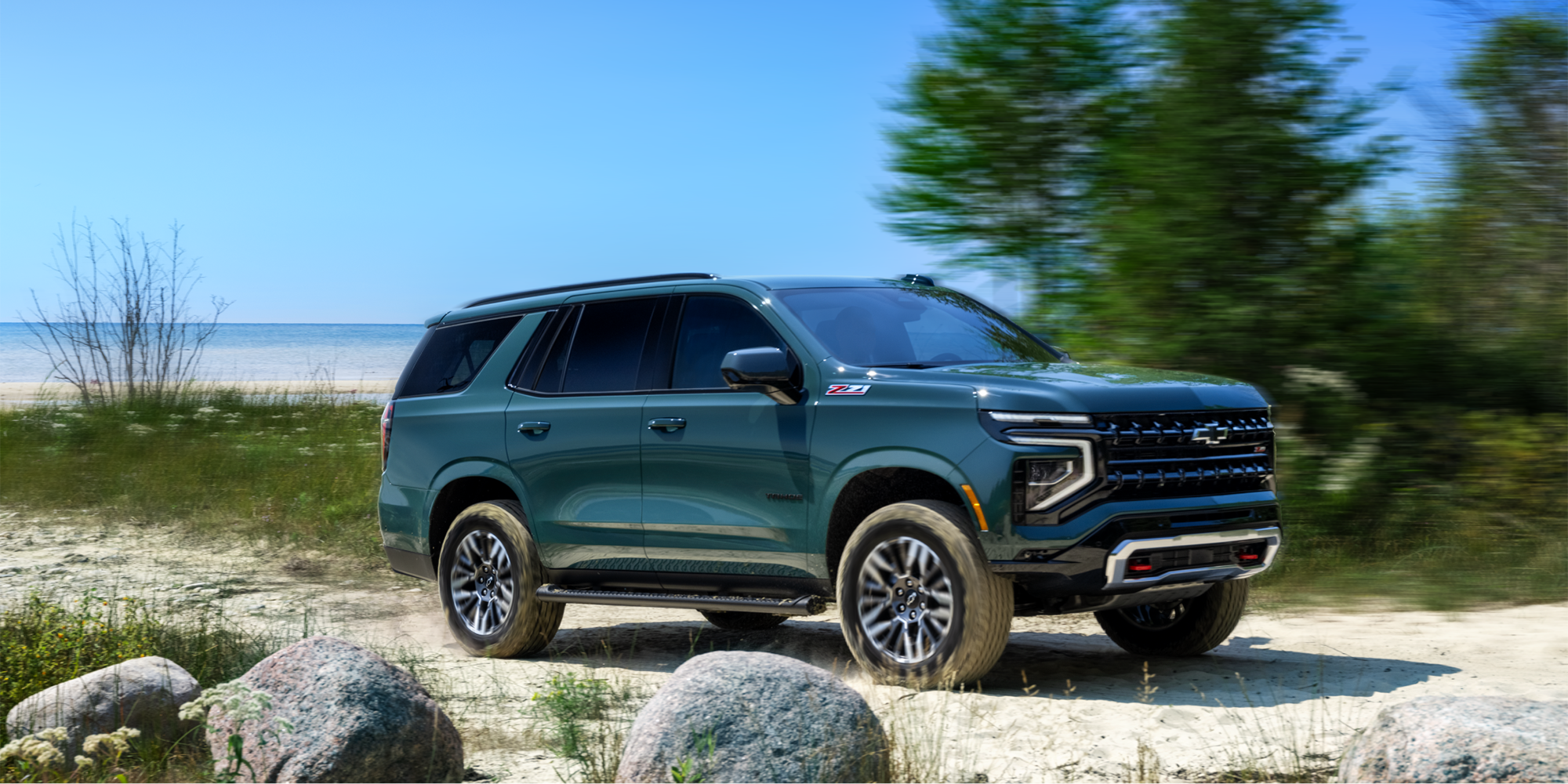
4. Chevrolet Tahoe

2025 Chevrolet Tahoe

Chevrolet

The Chevrolet Tahoe remains a go-to option for those seeking a reliable, full-size SUV. With a price of $73,574 and an expected lifespan of 10.5 years, the Tahoe’s cost per year comes out to $7,037. While that’s slightly higher than the top-ranked models, it’s still a solid figure for a vehicle known for its durability, strong resale value, and ability to handle everything from daily commutes to heavy towing.

Related: This Chinese vehicle outsold the Tesla Model 3 in China

5. GMC Yukon

2025 GMC Yukon AT4 Ultimate

GMC

Closely related to the Tahoe, the GMC Yukon offers similar reliability with an average lifespan of 10.9 years. However, with a higher price tag of $83,509, its annual cost of ownership rises to $7,645—just under the segment average. Buyers looking for a slightly more upscale experience than the Tahoe will find the Yukon an appealing option, but they’ll pay a premium for it.

Final thoughts

For buyers looking to maximize their investment in a full-size SUV, the Buick Enclave, Nissan Armada, and Lexus LX 600 offer the best balance of affordability and long-term dependability.

While vehicles like the Tahoe and Yukon remain strong choices, their higher annual costs make them slightly less attractive from a value standpoint. With full-size SUVs being some of the most expensive vehicles on the market, understanding which models will last the longest while costing the least over time can make all the difference in finding the best deal.

Love reading Autoblog? Sign up for our weekly newsletter to get exclusive articles, insider insights, and the latest updates delivered right to your inbox. Click here to sign up now!

Related: Why the 2025 Toyota Tacoma TRD Pro is the coolest midsize truck

The best-value full-size trucks in 2025

Finding a full-size truck that balances cost, reliability, and durability can be a challenge. With vehicle prices on the rise and interest rates still high, buyers need trucks that offer the best long-term value. Thankfully, new research from iSeeCars, which analyzed prices and life expectancy of over 3.8 million new cars, has identified the full-size trucks that provide the best price per year of expected lifespan.

Whether you’re looking to purchase a truck for the first time or are just considering a switch, you’ll want to see how the options rank against each other.

Related: Is the 2025 Corvette Z06 worth $112,100?

1. Toyota Tundra

2025 Toyota Tundra TRD Rally Package

Toyota

The Toyota Tundra tops the list as the best-value full-size truck. With an average price of $61,794 and an expected lifespan of 15.6 years, it costs just $3,966 per year to own. Toyota’s reputation for reliability and durability holds strong, making the Tundra a solid choice for those looking for a truck that will last well beyond the average ownership period.

2. Nissan Titan

2024 Nissan Titan

Nissan

Coming in second is the Nissan Titan, priced at $58,080 with an expected lifespan of 13.1 years. Its price per year comes out to $4,447, making it a more cost-effective option than most other full-size trucks on the market.

Related: Is the 2025 Toyota Tacoma TRD Sport worth $40,895?

3. Chevrolet Silverado 1500

2025 Chevrolet Silverado

Chevrolet

The Chevrolet Silverado 1500 ranks third, with a slightly lower price tag of $57,872 but a shorter lifespan of 12.5 years. That results in a price per year of $4,637, still below the segment average.

4. GMC Sierra 1500

2025 GMC Sierra

GMC

GMC’s Sierra 1500 lands in fourth place with a price per year of $5,178. It costs more upfront at $65,909 but is expected to last 12.7 years. That puts it just above the segment average in terms of long-term value.

Related: This automaker files for Chapter 11 bankruptcy

5. Ford F-150

2025 Ford F-150 Lariat

Ford Motor Company

The Ford F-150, America’s best-selling truck, ranks fifth. Despite a relatively affordable list price of $59,584, its 11-year lifespan results in a price per year of $5,398, making it one of the pricier options when considering long-term value.

6. Ram 1500

2025 Ram 1500

Ram

Finally, the Ram 1500 takes the last spot on the list. With a price of $62,080 and a lifespan of 11.4 years, its price per year reaches $5,468—the highest among the six models. While it remains a popular option, it offers less value per year compared to its competitors.

Related: MINI’s drop-top icon returns: Here’s what’s new for 2025

Final thoughts

Full-size trucks remain a popular choice for buyers who need durability, towing capacity, and long-term reliability. The Toyota Tundra leads the pack with the lowest cost per year of ownership, while the Chevrolet Silverado 1500 and Nissan Titan offer lower average list prices compared to other options in the list.

Meanwhile, Ford and Ram’s strong brand appeal might not be enough to offset their higher costs over time. With careful research, truck buyers can find a model that delivers the best balance of cost, performance, and dependability for years to come.

Love reading Autoblog? Sign up for our weekly newsletter to get exclusive articles, insider insights, and the latest updates delivered right to your inbox. Click here to sign up now!

Related: Uncovered Tesla permit details how Tesla’s massive Semi will be charged

2025 GMC Acadia: 5 reasons to love it, 2 reasons to think twice

The GMC Acadia has had a bit of an identity crisis over the years, varying in size with each redesign. In its most recent rendition, the midsize SUV comes as family-oriented as ever, complete with seating for up to eight passengers and all the safety tech you could ask for. On top of that, it starts at under $43,000.

The GMC Acadia entered its third generation with a full redesign for the 2024 model year. Unsurprisingly, there’s not much on the docket for the 2025 model. The base Acadia Elevation trim switches out captain’s chairs for a standard second-row bench seat, and all models gain added towing capability.

2024 GMC Acadia

GMC

Related: Toyota Tacoma vs. Ford Ranger: which midsize truck wins in 2025?

Reason to love it #1: Spacious third row

Whereas the third row in most midsize SUVs is severely lacking in terms of space, that isn’t the case in the 2025 GMC Acadia. The latest model features enough third-row space that adults can sit in relative comfort.

The third-row headroom measures 38.23 inches, while the shoulder room is a pretty spacious 57.94 inches. Hip room comes in at 48.62 inches, and legroom rounds it out at 32.14 inches. Considering the GMC Acadia measures 203.96 inches in length, a rather spacious third row isn’t all that surprising.

2024 GMC Acadia

John Beltz Snyder

Reason to love it #2: Seating for up to eight passengers

The GMC Acadia rides on the same platform as its Buick cousin, but that doesn’t mean seating is identical in both models. While the Buick Enclave seats up to seven passengers, the Acadia offers seating for up to eight, putting it a step ahead of competitors like the Ford Explorer as well.

2024 GMC Acadia

GMC

Related: 2025 Lincoln Aviator: 5 reasons to love it, 2 reasons to think twice

Reason to love it #3: Plenty of cargo space

With a maximum cargo volume of 97.5 cu. ft. with both rear rows of seats folded down, the 2025 GMC Acadia boasts plenty of space for luggage and longer items. That’s more cargo space than most three-row competitors, including the Ford Explorer, which tops out at 85.8 cu. ft. in its most spacious trim level.

2024 GMC Acadia

GMC

The GMC Acadia allows you to travel with family and bring all your cargo along for the ride. With all three rows upright, the Acadia offers 23 cu. ft. of cargo space. Folding down the third row increases space to 57.3 cu ft. The Ford Explorer falls short on both measurements, with 16.3 cu ft. behind the third row and 46 cu ft. with the third row folded down.

Reason to love it #4: 328 horsepower comes standard

The GMC Acadia is a three-row midsize SUV, but it has enough power to avoid lagging behind. The standard turbocharged 2.5-liter four-cylinder engine rocks out with 328 horsepower and 326 lb-ft of torque.

2024 GMC Acadia

GMC


View the 10 images of this gallery on the
original article

Those who despise CVTs can breathe a sigh of relief as all that power comes channeled through an eight-speed automatic transmission. The base Elevation trim comes equipped with front-wheel drive, but you can upgrade to all-wheel drive.

Related: Is the 2025 Toyota Tacoma TRD Sport worth $40,895?

Reason to love it #5: Capable of towing up to 5,000 lbs.

For the 2025 model year, all GMC Acadia models come equipped with the Trailering package. In addition to a standard 5,000-lbs. maximum towing capacity, the Acadia also gains a Class III hitch and a hitch view in the rearview camera system.

With its new standard towing capacity, the GMC Acadia is on par with competitors like the Ford Explorer and Honda Pilot. Notably, the Chevrolet Traverse can also tow up to 5,000 lbs.

2024 GMC Acadia

John Beltz Snyder

Reason to think twice #1: Too similar to the Chevrolet Traverse

The 2025 GMC Acadia rides on the same platform as the Chevrolet Traverse and Buick Enclave, putting it in a rather tough spot. While it’s a step up from Traverse, it doesn’t quite match the luxury of the Enclave.

2024 GMC Acadia

GMC

The Acadia’s base price reflects that as well, with the 2025 model starting at $42,900. The 2025 Chevrolet Traverse rolls in at $40,700, and the Buick Enclave is available from $45,100.

Related: Mercedes reportedly working on “baby G-Wagen” variant

Reason to think twice #2: All-wheel drive isn’t standard

Despite its rugged design, all-wheel drive doesn’t come standard on the base Elevation or range-topping Denali trims. Upgrading to an AWD system will cost you an additional $2,000, pushing the base Acadia Elevation up to $44,900.

If you want the luxury-spec Denali trim with AWD, it’ll cost you $56,100. On the bright side, the mid-range Acadia AT4 trim comes with standard AWD, but it starts at a fairly hefty $51,400.

2024 GMC Acadia

GMC

Final thoughts

The 2025 GMC Acadia comes with plenty of standard amenities, but it’s up to the individual buyer to determine if the spec list warrants the price. Before you buy, I’d say the Chevrolet Traverse, Buick Enclave, and Honda Pilot warrant a test drive.

Love reading Autoblog? Sign up for our weekly newsletter to get exclusive articles, insider insights, and the latest updates delivered right to your inbox. Click here to sign up now!

Related: What if Hyundai revived the Tiburon to challenge Honda’s new Prelude?

Car Dependability Hits Historic Low, New Research Finds

Cars nowadays offer a lot more than they used to: semi-autonomous driving, better fuel efficiency, and greater safety features, to name a few. But new research found that there’s one quality in short supply across the industry: dependability.

According to J.D. Power’s latest Vehicle Dependability Study, owners of 2022 vehicles have reported more problems than any group since 2009. The study, which surveyed owners of three-year-old cars, found that quality issues from the COVID-19 pandemic era are still lingering in vehicle production, even as the industry makes progress on other fronts.

Related: 2025 Hyundai Ioniq 5 XRT review: Dancing with the desert dust in Hyundai’s new electric off-roader

Pandemic disruptions led to reliability issues

The study surveyed 34,175 owners of 2022 model-year vehicles, measuring the number of problems per 100 cars. The results show a significant drop in quality compared to previous years, which is not entirely unexpected.

A mechanic prepares to do a tire rotation during an oil change at a Pep Boys – Manny Moe & Jack service center in Clarksville, Indiana, U.S., on Wednesday, June 3, 2015.

Bloomberg/Getty Images

“While the increase in problems this year may be a thorn in the side of automakers and owners, it’s important to remember that today’s three-year-old vehicles were built during a time when the industry was grappling with major disruptions,” said Jason Norton, director of auto benchmarking at J.D. Power.

During the early 2020s, automakers faced factory closures, part shortages, and supply chain delays. This forced them to build cars under difficult conditions, and it appears those struggles are now showing up in long-term reliability ratings.

Software issues lead the list of complaints

The most common reliability issue reported? Problems with Apple CarPlay and Android Auto connectivity. These systems, which allow users to mirror their smartphone screens onto their car’s infotainment system, have been plagued by software bugs.

J.D. Power noted that while automakers promise fixes through over-the-air (OTA) updates, they don’t always work as intended. Of the owners surveyed, 36% said their car had received an OTA update, but only 30% saw an improvement. More than half (56%) reported no noticeable change after receiving an update.

Related: 6 vehicles we will miss the most when they leave in 2026

Hybrid vehicles prove to be the most reliable

Among different powertrain types, hybrid vehicles showed the fewest reported issues. Here’s how each category stacked up in terms of reported problems per 100 vehicles:

  • Hybrids: 199
  • Gas-powered vehicles: 200
  • Electric vehicles: 223
  • Diesel-powered vehicles: 233
  • Plug-in hybrids (PHEVs): 242

EV reliability is improving, with 33 fewer problems per 100 vehicles than in last year’s study. However, PHEVs saw a drop in quality, likely due to their complex dual powertrain system.

The 10 most dependable car brands

J.D. Power ranked car brands based on the number of problems per 100 vehicles. Here’s how the top 10 performed:

1. Lexus: 140 problems per 100 vehicles

2024 Lexus GX 550

Lexus

Lexus once again dominated the dependability study, cementing its reputation for long-term reliability. The brand’s best-performing model was the Lexus GX, which ranked as the most dependable midsize premium SUV.

2. Buick: 143 problems per 100 vehicles

Buick took second place, proving that General Motors’ premium brand knows how to build reliable vehicles. While no particular model ranked at the top of its category in reliability, the overall brand managed to make relatively dependable cars even in the midst of a pandemic.

Related: Thinking about buying a 2025 Ford Explorer? Here are other top choices to consider

3. Mazda: 161 problems per 100 vehicles

2025 Mazda CX-50

Mazda

Mazda continues to impress with simple yet durable engineering. Like Buick, none of Mazda’s vehicles ranked at the top of their respective categories, but the overall brand’s low number of reported problems still puts it among the best in the industry.

4. Toyota – 162 problems per 100 vehicles

Toyota’s reputation for reliability remains strong. The Toyota Camry, Corolla, Tacoma, and RAV4 all ranked as the most dependable vehicles in their respective segments.

5. Cadillac – 169 problems per 100 vehicles (tied)

2026 Cadillac LYRIQ-V

Cadillac

Cadillac tied for fifth place, showing that GM’s luxury brand is making strides in dependability. The Cadillac XT6 led the pack in the upper midsize premium SUV category.

5. Chevrolet – 169 problems per 100 Vehicles (tied)

Chevrolet also secured a fifth-place tie. Notably, the Chevrolet Silverado, Silverado HD, and Chevrolet Tahoe were ranked the most reliable in their respective segments.

Related: Thinking about buying a Toyota 4Runner? Here are other top choices to consider

6. GMC – 181 problems per 100 vehicles

GMC landed in sixth place, with the GMC Acadia named the most dependable upper midsize SUV. The brand’s focus on durability continues to pay off in long-term reliability.

7. Porsche – 186 problems per 100 vehicles

2025 Porsche Macan Electric

Porsche

Luxury performance brand Porsche showed strong dependability, proving that performance and complexity don’t always mean more problems.

8. BMW – 189 problems per 100 vehicles

BMW’s dependability ranking suggests that the brand is improving quality control, with the BMW 3 Series taking the top spot for the most reliable compact premium car.

9. Mini – 190 problems per 100 vehicles

Mini’s small cars have proven to be surprisingly durable. Although they can sometimes come at a premium, Mini remains a solid choice for drivers looking for a fun yet dependable vehicle.

10. Kia – 196 problems per 100 vehicles

2025 Kia K5

Kia

Kia rounded out the top 10, with the Kia Sedona winning the award for the most reliable minivan. Kia’s vehicles continue to improve in long-term quality.

Related: Wanna own an ex-California Highway Patrol truck? Now’s your chance!

The least dependable car brands

At the other end of the rankings, some automakers fared much worse in the study, struggling with high numbers of reported issues. Volkswagen, Chrysler, Jeep, Audi, and Land Rover had the highest number of reported issues per 100 cars, between 270 and 285 across the brands.

2025 Volkswagen Tiguan R-Line

Volkswagen

Tesla was left out of J.D. Power’s official brand rankings due to the company’s policy of not allowing surveys to be conducted in a handful of states. However, the study still gathered data from owners in other states, showing that Tesla vehicles had 209 problems per 100 vehicles, slightly above the industry average.

Final thoughts

While some brands showed strong dependability, the overall industry average rose to 202 problems per 100 vehicles—12 more than last year.

It will be interesting to see whether future vehicle generations improve as supply chains face potential new threats from a wave of proposed tariffs thanks to the Trump administration. For now, buyers looking for long-term dependability may want to stick with brands like Lexus, Toyota, and Buick, which have consistently performed well in these rankings.

Love reading Autoblog? Sign up for our weekly newsletter to get exclusive articles, insider insights, and the latest updates delivered right to your inbox. Click here to sign up now!

Related: Tesla sues customers, reporters to silence negative press

Thinking about buying a Ford F-150? Here are other top choices to consider

The Ford F-150 is America’s favorite truck, a title it’s held for 48 years, and its favorite vehicle overall for 43 years. That popularity comes from its ability to be many things to many buyers. The F-150 is currently offered in XL, STX, XLT, Lariat, Tremor, King Ranch, and Platinum trim with a Regular, Super, or Crew Cab and a 5.5-foot, 6.5-foot, and 8-foot bed. From work truck to plaything, there’s an F-150 that’s right for you. 

There’s also the battery-electric Lightning and high-performance Raptor, but those are different animals entirely and not addressed here.

Related: Dodge’s new CEO says a V8 Charger might return

Ford F-150 STX

Ford Motor Company

Powertrain choices include a base 325-horsepower twin-turbocharged 2.7-liter V6, a 400-horsepower 5.0-liter V-8, a 400-horsepower twin-turbo 3.5-liter V-6, or a 430-horsepower hybrid that employs a twin-turbo 3.5-liter V-6 and an electric motor. A ten-speed automatic transmission is standard for all.

When it comes time to yank something heavy, you’ll find the 400-hp twin-turbo 3.5-liter V-6 tows up to 13,500 pounds, 500 more than the 5.0-liter V-8. Even the hybrid can haul 12,700 pounds, and the payload tops out at 2,455 pounds.

Ford F-150 Platinum

Ford Motor Company

The cabin is filled with thoughtful touches, such as optional lie-flat front seats and a transmission lever that folds flat to create a workspace. There’s also an optional bed-mounted generator that provides 7.2 kW for powering tools or a flatscreen while tailgating. Changes for 2025 include a standard 12-inch infotainment display and two new options: Ford’s Blue Cruise semi-autonomous driving system and a head-up display.

Still, given that Ford’s reliability has slipped as of late, ranking in the bottom 10 of J.D. Power’s 2024 Reliability Index, you might want to consider some of these alternatives.

Ram 1500

With the top spot in J.D. Power’s Initial Quality Survey under its belt, Ram added a new flagship Tungsten trim for 2025, with a power tailgate, quilted-leather upholstery, massaging seats, suede headliner, a 14.5-inch touchscreen, 10.25-inch front passenger touchscreen, 12-inch instrument cluster, and a 23-speaker Klipsch stereo.

Related: Study confirms Tesla drivers really are the absolute worst

2025 Ram 1500

Ram

Available with either a Crew Cab and Quad Cab and a 5’7″ and 6’4″ bed, standard power comes from a 3.6-liter V-6 mated to a 48-volt hybrid system that generates 305 horsepower on the Tradesman, Tradesman HFE, and Big Horn/Lonestar trims. 

Ram also offers a 3.0-liter Hurricane twin-turbocharged inline six-cylinder engine rated at 420 horsepower on the Tradesman, Warlock, Big Horn/Lone Star, Laramie, and Rebel trims, and a High Out Hurricane with 540 horsepower on the RHO, Limited, Limited Longhorn and Tungsten models. The Hemi V-8 has been dropped for 2025.

The 2025 Ram 1500 Tungsten’s lavish cabin.

Ram

Maximum towing falls short of the F-150 at 11,550 pounds as does payload at 2,370 pounds. Thankfully, it makes up for it in other respects. Consider its suspension, which uses coil springs rather than the leaf springs used by its competition. You can even opt for an air suspension and adjustable ride height. Either way, Ram delivers a smooth ride and powertrain refinement lacking elsewhere, while offering the plushest cab. 

2025 Ram 1500 Tradesman

Ram

Ram also offers in-bed 110-volt outlets and an in-bed lockable toolbox. Uniquely, its 60/40 split-folding rear tailgate allows you to open one side or the other or fold it traditionally.

It all makes for quite an impressive rig and one that’s tough to beat.

Related: Have you ever wanted a Swiss sports car with an American V8?

GMC Sierra 1500

Just ask GMC. The Sierra 1500 is basically a Chevrolet Silverado with slightly nicer trim and a modestly differentiated exterior design. Prices are higher too. A 79.4-inch bed is standard with the Regular, Double, or Crew Cab. A 69.9-inch box is available for the Crew Cab, and a 98.2-inch bed can be fitted to the Regular Cab.

2025 GMC Sierra Denali Ultimate

GMC

Engine choices start with a 310-horsepower 2.7-liter turbocharged four-cylinder, a 355-horsepower 5.3-liter V-8, a 420-horsepower 6.2-liter V-8, or, uniquely, a 305-horsepower 3.0-liter Duramax inline-six turbocharged diesel engine that generates 495 pound-feet of torque, the most of any Sierra 1500. An eight-speed automatic is standard with the four, while the others get a 10-speed.

The towing capacity tops out at 13,300 pounds, although even the base model can yank 9,500 pounds. Payload maxes out at 2,280 pounds.

Only GM offers a diesel engine option in a light duty full-size pickup: the 3.0-liter Duramax Diesel.

GMC

Like the Ram, the GMC has a trick tailgate that’s also offered on its Chevrolet sibling. Dubbed the MultiPro Tailgate, it has a secondary smaller panel within the tailgate that swings down fully to make reaching inside the bed easier. It also acts as a step into the bed or as a bed extender stop.

While nicer than a Silverado, the Sierra trails the Ram in the plushness department. Yet the Sierra’s advantage is that it feels smaller than its size suggests, with an agility and feel that make it a pleasure to drive. In this, it’s like a lot of GM vehicles: well-engineered with interior trim quality that trails the competition.

Chevrolet Silverado 1500

If the 2025 Chevrolet Silverado has any advantage over its GMC twin, it’s the greater option flexibility. Its powertrains mimic those of its sibling, as do its cabs, beds, payload, and towing. 

However, it has a lower price, and as a result, overall trim quality has slightly deteriorated. This is a Chevrolet, after all. 

Related: Dodge hints at a sub-$30,000 sports car: Could it happen?

2025 Chevrolet Silverado

Chevrolet

Yet its handling is not significantly different from the GMC, so it merely comes down to a preference in dealer, design, and price. That last part is where Chevrolet holds an advantage: It has the lowest base price of any full-size pickup, starting at $36,800.

Notably, while the Ford F-150 is the bestselling pickup truck by brand, GM’s Chevrolet Silverado and GMC Sierra—basically identical trucks—together outsold the Ford in 2024 by 874,679 units to 765,649 units. Neither GM truck has a clear advantage over the Ford except for its diesel option.

Toyota Tundra

With the Tundra, Toyota has yet to significantly challenge Detroit-based automakers when it comes to full-size pickups, although every iteration gets closer. The Tundra isn’t offered in a Regular Cab. Instead, you get a Double Cab with a 6.5-foot bed or an 8.1-foot bed or a larger CrewMax cab with a 5.5-foot bed or 6.5-foot bed.

2025 Toyota Tundra Capstone

Toyota

New for 2025 are massaging seats and a power tailgate on all but base SR models. A TRD Rally Package enhances its off-road chops. Similar to the other trucks here, the Toyota Tundra has a 120-volt AC power outlet in the bed.

Power comes from either the base 389-horsepower “I-Force” twin-turbocharged V-6 or a 437-horsepower I-Force Max” twin-turbocharged Hybrid V-6 with an impressive 583 pound-feet of torque. A 10-speed automatic transmission is standard on all models.

The 2025 Toyota Tundra Capstone’s interior reflects its top-of-the-line status.

Toyota

While its abilities trail its rivals, it should be satisfactory for most buyers, with a 12,000-pound maximum towing capacity and a 1,940-pound maximum payload. While the Hybrid returns 20-22 mpg in combined city/highway driving, that’s less than the Ford Hybrid’s 23 mpg, Ram HFE’s 23 mpg, and the GMC/Chevrolet diesel’s 23-26 mpg.

Related: 2025 Volkswagen Golf R: 4 reasons to love it, 2 reasons to shy away

Where are they built?

The Ford F-150 is built in Michigan and Missouri, while the Ram 1500 is manufactured in Michigan. The GMC Sierra 1500 is made in Indiana, while its sibling, the Chevrolet Silverado 1500, is fabricated in Indiana, Michigan, Ohio, and Mexico. The Toyota Tundra is assembled in Texas.

Final thoughts

2025 Ram 1500 Rebel

Ram

While the 2025 Ford F-150 wins in pure numbers, aka towing and payload, all full-size trucks offer enough capability for most buyers. So, in the end, aside from design, dealer, and price, the decision comes down to a truck’s other aspects to seal the deal. With Ram, it’s luxury and refinement, not to mention its in-bed toolbox. With GM, it’s the vehicle’s driving dynamics that prove superior. Finally, Toyota offers the promise of reliability for the Detroit-phobic. 

But if we had to choose, the Ram 1500 would get our nod. 

Love reading Autoblog? Sign up for our weekly newsletter to get exclusive articles, insider insights, and the latest updates delivered right to your inbox. Click here to sign up now!

Related: Thinking about buying a Honda Accord? Here are the other top choices to consider

2025 GMC Canyon: 6 reasons to love it, 3 reasons to think twice

The 2025 GMC Canyon is not only one of the most capable off-road pickup trucks in its class; it’s one of the most powerful as well. Unfortunately, to get that top trim off-road performance, you’ll have to shell out a ton of bread. Fortunately, even the base models are mighty capable. 

GMC Canyon

GMC

Other than a cosmetic blackout package called the “Nightfall Edition,” the only exterior updates this year are a few new colors, namely Glacier Metallic, Desert Sun, and Rapids Metallic. The “ProGrade Trailering System” and the “Safety Plus Package” are also now standard on all Canyons.

Considering how new this generation is, we weren’t expecting that many changes, so this was a pleasant surprise for folks who want the base model Elevation trim. That being said, what are some of the Canyon’s best selling points, and what are some reasons that might lead you to shop elsewhere?

Optional goodies include underside cameras, AEV-built armor, and provisions for a winch. 

GMC

Related: Whatever happened to Canoo?

Reason to love it #1: This is one handsome devil 

This exterior design, which was introduced as the 2023 model, is bold and unique. Yes, the Chevrolet Colorado is its brother, but the Canyon has a unique nose, tail, and accessories. Even the base Elevation trim sits high and has a wide stance. 

Despite its midsize status, the Canyon looks big and has a presence in the real world. I would go so far as to say that when it’s loaded up with AEV accessories, it’s one macho-looking hombre. Still, even the bare-bones WT trim is handsome and distinctive. 

Only one engine, one transmission available – and it’s a brute. 

GMC

Reason to love it #2: The powertrains provide some top-notch grunt 

Even though General Motors ditched the excellent I4 turbodiesel when this new model came out, they replaced it with one of the most powerful gasoline engines in its class. Every trim of the 2025 GMC Canyon uses the same turbocharged 2.7-liter engine that makes 310 hp and 430 lb-ft of torque. While the horsepower is far less than the Ford Ranger Raptor’s 405 hp, it makes just as much torque. 

Thus, it’s not as fast as the Ranger Raptor, but it’s still quick. The Canyon’s 0 to 60 mph times have been reported to be well under 7 seconds. It’s also more efficient, with EPA ratings of 18 mpg city and 22 mpg highway, compared to the Ranger Raptor’s 16 mpg city and 18 mpg highway ratings.

Related: 2025 Lexus NX: 4 reasons to love it, 2 reasons to think twice

Several different colors and textures to make this pickup look special inside. 

GMC

Reason to love it #3: The interior is a step up from basic pickup trucks 

The Canyon comes with an 11.3″ diagonal touch-screen, an 11″ diagonal color Driver Information Center, and an optional 6.3″ diagonal multi-color head-up display in higher trims.

Many standard features are available on the lower models, while others, like heated & ventilated seats and a heated steering wheel, are optional on all but the Denali. 

Related: 2025 Toyota Corolla LE buyer’s guide review: Features, pricing and specs

I’m impressed with the nice details in the base model Elevation, such as the subtle and tasteful use of faux metal trim, excellent screen placement, and attractive interior design.

If you choose the next-level AT4, you will be upgraded to contrasting-color trim pieces with matching synthetic leather and cloth seating. The Denali adds leather throughout the cabin, real-looking wooden inserts, and lots of extra tech. Lastly, the AT4X uses lots of white and red leather with optional AEV badges, should you opt for that package.

The Canyon even offers best in class towing. 

GMC

Reason to love it #4: Towing and payload numbers are impressive 

When properly equipped, the GMC Canyon can tow a maximum of 7,700 lbs. That’s best in class, and I can attest it’s a great little truck to tow with. Its maximum payload of 1,720 lbs is second in its class, but it still rivals many full-size pickup trucks in the market. 

Keep in mind that those numbers drop when you go up to higher trims with additional hardware. The weight and drag coming from things like larger tires, beefier off-road suspension, and armor reduce hauling capability, 

Related: 2025 Ram 1500 Tungsten Review: An all-American deluxe truck

Reason to love it #5: Outstanding daily driver 

As great a work truck as it is, the GMC Canyon doubles as a terrific daily driver. Its overall size isn’t much smaller than that of a full-size pickup truck, but it’s easier to maneuver, park, and store. Its excellent power also makes passing, overtaking, and off-the-line speed a relative breeze.

Front and rear lockers, excellent ground clearance and chunky tires are only part of the package. 

GMC

Reason to love it #6: One of the best 4x4s on the market

Even the base model 4WD Canyon comes with the tried and true Eaton G80 automatic locking rear differential. It spools up and locks at low rpm, and it works automatically. A driver-selectable full-locking rear differential is available, and you can even add both front and rear lockers with the AT4X package. 

The Canyon has 9.6 inches of ground clearance right out of the box, which can be upgraded to 12.2 inches if you opt for the AT4X. That trim also includes the Dynamic Suspensions Spool Valve (DSSV) Multi-Matic shocks, which use proven racing technology to self-adjust for any terrain. 

Related: 2025 Nissan Leaf: 4 reasons to love it, 3 reasons to think twice

At the top of the off-road tree sits the Canyon AT4X AEV Edition. In addition to knobby Goodyear Wrangler Territory MT LT315/70R17 mud-terrain tires, the AT4X AEV Package delivers serious underside protection, advanced suspension, rugged tires, locking differentials, increased ride height, and impressive power.

One bed size, one cabin layout and just one powertrain. 

GMC

Reason to think twice #1: One size must fit all 

Some wish GMC would give the public more layout choices than the single cab configuration and five-foot bed.

The space inside the cab is also a bit tight in the back seat. Unexpectedly, the two odd ducks among the midsize pickup truck gang, the Jeep Gladiator and the Honda Ridgeline, have the most useable and comfortable backseat space.

The Chevy is a compelling alternative. 

Chevrolet

Reason to think twice #2: Its Chevrolet Colorado brother might be better

The bottom line is that you can get a comparable Chevrolet for thousands less. A Chevrolet Colorado WT 4WD with no packages will run up to $8,000 less than a GMC Canyon Elevation.  Even if you opt for the beefier engine on the Chevrolet, the savings remain in the thousands. 

Yes, the interior design is not quite as fancy as GMC’s setup, and there are fewer goodies available overall, but that’s not a dealbreaker for some. I would compare and contrast the GMC with the Chevrolet if you’re concerned about price. 

Speaking of price.

There’s nearly a $30,000 difference between the base model to the very top of the Canyon lineup. 

GMC

Related: It turns out that Akio Toyoda was right

Reason to think twice #3: Price, price, price… 

Buckle up, buttercup, because these prices are going to create turbulence. The base model Elevation starts at $39,995, and it’s a whopping $3,300 to get the 4WD option. The AT4 is $47,295 with standard 4WD, while the Denali is even pricier at $53,595, albeit also with standard 4WD. 

In terms of packages, the AT4X is priced at $6,980, while the Nightfall Edition comes in at $4,595. Both options are worth considering if you’re looking to enhance the functionality or add a touch of pizzazz to your Canyon. The good news is that the AT4X AEV Edition package was at least discounted from $10,000 to $8,000. 

2025 Ford Ranger Raptor

Ford

All in all, a fully loaded 2025 GMC AT4X AEV Edition will run you around $68,000. Add a few options, and you will be well into the $70,000 zone. Yikes. 

Just so we’re clear: a 2025 Ford Ranger Raptor, one of the best vehicles in this class, starts at about $56,000 and peaks at under $60,000. 

Final thoughts 

As I’ve said about the Ford Ranger Raptor, Toyota Tacoma TRD Pro, and similar trucks, resisting the allure of the top-tier models can still land you an outstanding pickup truck.

If you do opt to pay to play, then you will get one of the most capable off-road vehicles sold in the United States right out of the box, a theory that also applies to the 2025 GMC Canyon.

Related: Meet the Cadillac that hits 0-60 in under 3.4 seconds

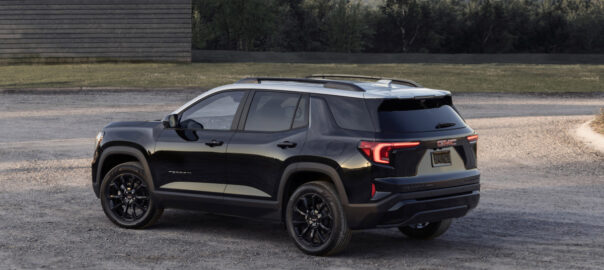
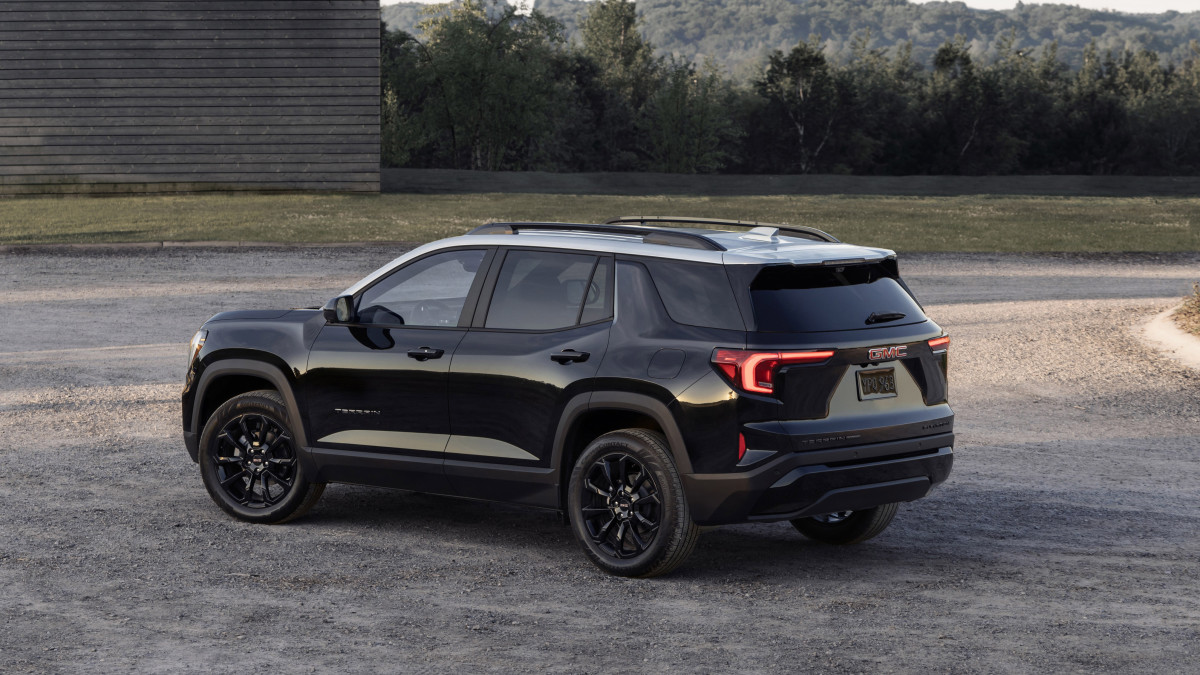
2025 GMC Terrain sees a $1,300 price hike thanks to a costlier base trim

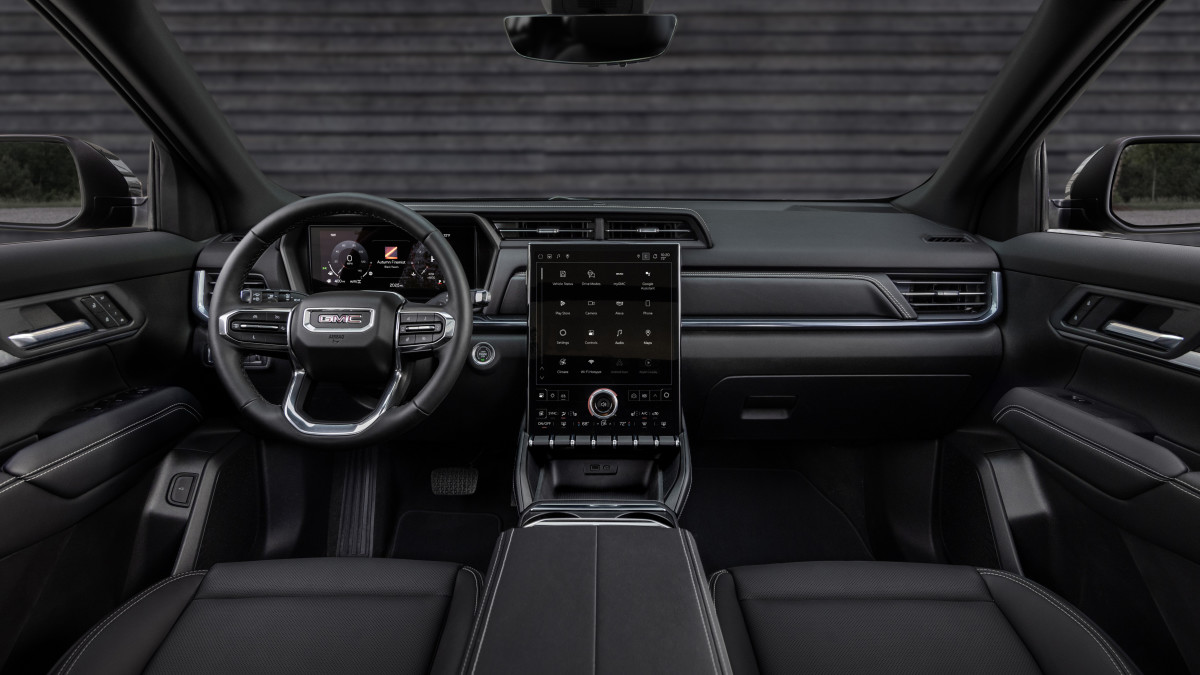
If you thought vehicles were already too expensive, you would not be a fan of the latest GMC price increase. The 2025 Terrain, with its new squared-off styling and redesigned interior, will start at $31,395 in FWD, which is a $1,300 increase over the previous model year. Adding all-wheel-drive hikes the price up by another $2,000, bringing the total to $33,395.

Related: 2025 Ford Expedition: 4 reasons to love it, 2 reasons to think twice

The higher-level AT4 and Denali will also get changes in 2026

2025 GMC Terrain Elevation

GMC

The base trim will also change from the SLE to the Elevation, which offers luxurious standard features such as a heated steering wheel, heated front seats, remote start, and adaptive cruise control. Redesigned versions of the AT4 and Denali will join the Elevation for the 2026 model year, but no new prices have been announced yet. Considering the Denali currently starts at $38,600, it’s likely to exceed $40,000 if the base trim’s price hike is any indication.

The GMC Terrain’s price increase does not mean a new powertrain

Despite the styling changes and price increase, the GMC Terrain’s powertrain remains the same. The small SUV is powered by a 1.5-liter turbocharged four-cylinder that puts out 175 hp and 203 lb-ft of torque in either front- or all-wheel drive. The transmission choices depend on the powertrain configuration, with the front-wheel-drive Terrain getting a CVT and the all-wheel drive getting an eight-speed automatic.

2025 GMC Terrain Elevation

GMC

Related: Honda CEO struggles to justify a merger with Nissan

The price increase makes alternatives more attractive

The GMC Terrain’s sibling, the Chevrolet Equinox, is powered by the same 1.5-liter turbocharged four-cylinder with the same power output. It, too, can be equipped with front-wheel drive or all-wheel drive and the same transmission choices. The FWD Equinox starts at $29,995, while the AWD starts at $31,995. It even has the same heated seats and steering wheel as the Terrain.

That’s a $1,400 price increase for essentially the same car underneath. The styling of both cars is drastically different; however, the Equinox takes on a sharper, more modern vibe than the squared-off Terrain.

2025 Chevrolet Equinox

Chevrolet

Final thoughts

The price increase alone would have made the Terrain less desirable to most. However, compared to the package you get with the largely similar Equinox, it gets even worse.

The choice ultimately comes down to aesthetic preferences. If you’re after an SUV that looks a little tougher but has all of the modern amenities you’re accustomed to, go for the GMC Terrain. If you want an SUV that looks as modern as it is, get behind the wheel of a Chevy Equinox instead.

Related: Cybertruck sales tanking, Tesla offers free charging with major strings attached

GMC Sierra EV first drive: A shockingly agile elephant

The 2025 GMC Sierra EV is the newest electric pickup from GM’s luxury brand, combining practicality, performance, and a touch of premium appeal.

But how does it measure up against rivals like the F-150 Lightning, RAM 1500 REV, and Tesla’s Cybertruck? I traveled to California for a hands-on experience with this new electric truck, and it left a solid impression.

Dave McQuilling/Autoblog


View the 16 images of this gallery on the
original article

There’s plenty of power, should you need it

Night follows day, ducks float, and EVs have a good amount of power about them. These are all facts of life, and the Sierra EV is in no way an exception to the rule. You can go from 0-60 in 4.5 seconds in most ci,rcumstances and all of that power is pretty linear.

The only time this may be an issue is in a flat-out sprint. The Sierra EV doesn’t have any kind of launch control, and power delivery can be a bit inconsistent off the line. It’s undeniably quick, but keeping it in a straight line can be a struggle, and that’s not a lot of fun with something of this size.

Related: 2025 Ford Ranger: 4 reasons to love it, 2 reasons to think twice

Despite its size, the Sierra EV handles curves very well

Pickup trucks usually aren’t your first choice when it comes to something to maneuver along sweeping, curvy, mountain roads. A well-balanced, low-slung, sports car tends to be a better option for obvious reasons.

However, the Sierra EV didn’t do too badly when tasked with a series of winding mountain paths. I was very aware of the vehicle’s weight, so I didn’t try to push it too far, but the truck is more than capable of handling fairly tight curves at the posted speed limit thanks to its all-wheel-drive system and the increased level of control that comes with multiple electric motors.

GMC Sierra EV towing a trailer

Dave McQuilling/Autoblog

Four-wheel steering also makes a massive difference when turning corners, changing lanes, or navigating tight spaces. This truck may have the tightest turning circle of any on the market.

The Sierra EV borrows crab walk from the Hummer EV

One of the Sierra EV’s more unique features is its “crab walk” mode, which slides the vehicle sideways around obstacles. This mode previously premiered on the Hummer EV and works the same way in the pickup.

It does take some getting used to, though. During my drive, I found the Sierra’s back end catching cones on the crabwalk slalom that GMC set up. Driving is often about instinct, and most people are accustomed to the rear end sliding slightly during sharp turns. The trick here is to turn a bit later than usual, but it takes time to get the hang of it.

Related: 2025 Toyota Land Cruiser: a guide to the Land Cruiser’s top trim features and pricing

The luxurious cabin sports plenty of wood trim

Across GMC’s lineup, Denali denotes a certain level of quality. Although the company is pretty clear about not trying to compete with Cadillac, the truck’s top trim is adorned with leather, high-quality plastic, and “open-pore wood.” This luxury experience feels a little out of place in a pickup truck, but it turns a daily driver into a pleasant place to be.

GMC Sierra EV interior

Dave McQuilling/Autoblog

The 16.8-inch infotainment screen is about as big as you’ll get in any vehicle. It certainly makes navigating through the Sierra’s menus very easy, but GMC has also included physical buttons linked to the HVAC system for convenience.

Yes, you can power your house with it

As with the Silverado EV, F-150 Lightning, and Cybertruck, you can power your house with the Sierra EV. The duration depends on your power needs, but generally, you can get a few days out of it.

Your electrical infrastructure may need some initial updating, but after that, your truck will be capable of getting you through a power outage. You can even set it to power your house during peak times, reducing your bills and strain on the electrical grid, before recharging when power is a touch cheaper.

The midgate makes a massive space difference

GMC Sierra EV Split Gate

Dave McQuilling/Autoblog

The midgate absolutely transforms the Sierra’s carrying capacity and gives you an ultimate bed length just shy of 11 feet when the tailgate is down. 

However, there are some caveats. If you ponied up on the Denali trim, that beautiful interior is now essentially the end of your bed, so keep that in mind before loading any rough-edged decking or lengths of copper pipe.

The standard bed length is just shy of 6 feet, and with the tailgate up, dropping the midgate will bring it to 9 feet and 1 inch. There’s also a pretty generous frunk you can use if you need a covered compartment or just more space.

Related: Subaru’s 2025 Forester is going green

It’s also very easy to take down

The process of dismantling the midgate is also staggeringly simple. Two people can do it in minutes, and disassembling it yourself doesn’t take much longer. The rear window, thankfully, has a special storage space behind the back seats, so you can safely stow it away on the go. It can also be rolled down for extra airflow.

GMC Sierra EV

Dave McQuilling/Autoblog

Final thoughts

The GMC Sierra EV is essentially a Chevrolet Silverado EV underneath. The powertrains and dimensions are essentially identical, but the Sierra stands out as the more upscale variant. You’re likely to pay six figures for one with all the bells and whistles, though if you’re happy to sacrifice at least 70 miles of range, you can nab a Denali for $91,995.

Boasting up to 460 miles of range, the Sierra EV ranks among the longest-lasting electric vehicles on the market, but that’s only true if you’re not putting it to heavy use as a pickup truck. Tow its maximum of 10,500 pounds or fill up that bed, and your range will be impacted significantly.

GMC Sierra EV

Dave McQuilling/Autoblog

In terms of how it stands out against the competition, I’d argue that its sibling, the Silverado EV, may be the best electric pickup on the market. The differences are subtle, but it leads in terms of range and may offer superior handling.

The Sierra EV is essentially a more refined version of the Silverado EV, so if the extra comfort and luxury are a must for you, consider it instead.

Related: Massive VW Group flaw left 800,000 owners’ data publicly accessible since the summer

GMC Sierra EV Denali | Massive range, plush interior, and $100K price tag

2025 GMC Sierra EV Denali brings big power and an equally big battery

Powering the 2025 GMC Sierra EV Denali is GM’s Ultium platform, which they have announced will be renamed soon. They estimate that in Max Power mode, the Sierra EV Denali puts out 760 hp and 785 lb-ft of torque with a 4.5 second 0-60 mph time. 

A full charge provides a range of 440 miles, and with 800-volt DC fast charging at up to 350kW, GMC claims drivers can gain up to 100 miles of range in just 10 minutes of charging.

2025 GMC Sierra EV Denali Charging

GMC

The sizeable battery can also power your home for up to 21 days, provided that your daily energy consumption is lower than normal. The optional GM Accessories PowerBar+ also provides access to up to 10.2 kW of power for your equipment or tools when a standard electrical outlet isn’t available.

Related: ICE vehicles losing ground as consumers shift to hybrids and EVs

Sierra EV Denali sports an impressive towing capacity and extended bed

Towing should be a breeze thanks to its claimed 10,000 lb towing capacity. How much that will affect the range has not yet been disclosed. The Multipro Midgate extends the bed to a maximum length of 10′ 10″ when the rear seats are folded down and the rear window is removed, allowing you to haul more cargo. Given that it uses the same Ultium platform, the Sierra EV Denali inherits the 4-wheel steer and CrabWalk from the brand’s Hummer EV.

2025 GMC Sierra EV Denali Cabin

GMC

Luxurious cabin with plenty of upper-class amenities

The cabin houses the same 14” digital cluster and a 16.8-inch infotainment screen as the 2024 model. The interior surfaces are adorned with open-pore wood, a quilted pattern on the seats, and perforated accents on the doors. Overhead is an infrared and UV-coated panoramic glass roof for an “open-air ambiance.” All things considered, it looks like a pretty comfy place to be on long rides.

Working towards bridging the EV truck gap

2025 GMC Sierra EV Denali Cargo

GMC

The 2025 GMC Sierra EV Denali proves itself to be more than just a flashy badge. Yes, it’s an electric truck and yes, it starts pushing into six-figure territory, but you’re getting legitimate muscle to go along with that price tag. Its 10,000-lb towing capacity is no empty claim, and the sort of comfort and upscale detailing it brings to the segment were once found only in premium SUVs.

Yes, long-haul towing is still a challenge as EV infrastructure catches up, but the Sierra EV Denali demonstrates that we’re moving past the era where electrification meant compromising on real-world utility. As battery technology continues to evolve, the idea of a powerful, refined, and fully electric truck that won’t leave you stranded seems less like wishful thinking and more like the new normal.

Related: 2024 GMC 2500 AT4 vs 2024 Ford F-250 Tremor: Who takes the crown?

How do you handle the point of no return?

It was a mild spin followed by an off. No contact — not even a position battle. I’d merely overcooked a corner, tried to get my Miata turned before I ran out of track, and failed. I went straight off (albeit backwards) and found myself looking back at Summit Point’s turn five, watching the other drivers in my session zing in from house left at a yellow-flag pace. Upon receiving the go-ahead from the corner worker, I goosed the little roadster’s throttle just enough to coax it out of the soft grass, completed my lap, and reported back to my instructor. When I proudly informed him that my incident had gone as well as could be expected, he nodded with what I thought was approval before not-so-gently reminding me that no matter how gracefully handled, screwing up is still screwing up. Not his exact words, but apparently we’re still maintaining some level of decorum around here.  

What did I learn from that? Well, for starters, given how trashed Summit Point’s track surface once was, trail braking into turn five required more finesse. But more to the point, I learned a lot about how I behave once things go completely wrong. It was neither my first off-pavement excursion nor my last, but the first I’d experienced at high speed on a track. In many ways, it was even less noteworthy than some of my previous antics.

2001: Riding in the back seat of my buddy’s Isuzu Trooper. He hesitated when a trash can rolled into the road but kept his eyes on it too long. I saw the stopping distance to a conversion van ahead disappearing but didn’t open my mouth fast enough to warn him. He looked up but too late. We ate the back of the van at 30 miles per hour. Clean hit. Bruised ribs. Scratch one Trooper.

2003: Driving my parents’ 2001 TJ Wrangler in the mountains. I pulled out of a friend’s driveway and proceeded to make it all of half a mile before understeering through an accumulation of wet mush left over from the autumn leaves. I put the Wrangler into a rock wall about 6 feet off the side of the road. Only cost me a fender and some dignity.

2008: Riding shotgun with the same wiseass instructor, this time at Virginia International Raceway. His PTD Neon race car shat out a wheel bearing and spit us onto the grass. His distress over putting me in harm’s way was obvious, but I wasn’t upset. I knew what I had signed up for. That impressed him and he said as much. And he was the one I called when, in 2016, I blew a cold Pirelli coming out of Big Bend at Shenandoah and put my driver’s side rear fender into a concrete wall

But let’s stick with 2008 for a moment, because that was when I started writing about cars. I wouldn’t get my first professional gig until 2014, but broadly speaking, I’ve been doing this for the better part of 16 years. For the first 15 of those, I kept my nose completely clean. Sure, doors get dinged and tires get worn, and I’ve handed off loaners with muddy floor mats more times than I can count, but not once have I returned a press vehicle meaningfully worse for wear.

Believe it or not, that is remarkable. If you’re deep into this business, the odds are not on your side. Even the best professionals run into things; it’s the nature of pushing the envelope. Those who don’t make their own mistakes — or are simply fortunate enough that their errors result in no meaningful consequences — remain at the mercy of their surroundings, their peers and in some cases, their competitors. There are no guarantees in this world, but chances are, at some point, you’re going to experience what I did on that hot, sticky afternoon at the track: the distinct feeling of passing the point of no return.

And so, when I found myself dangling from my seat belt several feet above my co-driver in a 2024 GMC Sierra HD AT4X last year, the first thing that popped into my head was neither a stream of epithets nor the cold embrace of panic. Instead, it was, “I should really shut that motor off.”

Let’s back up.

GMC had invited me/Autoblog to Montana to drive not one, but three new trucks: the 2024 Canyon AT4X, the AEV variant of the same and of course, the Sierra HD AT4X. My review of the Canyon AT4X and its AEV counterpart made it to “print,” but for reasons that are hopefully becoming clear, my Sierra write-up did not.

Off-road trucks mean off-road stuff. Each of our stints so far had put the caravan of GMC-driving journalists off pavement to some degree or another. This was to be our last leg of the day. My drive partner and I had swapped the smaller Canyon for the Sierra and set off on a trail conveniently (deliberately) carved into the hills on the same property where we’d conclude our program later that evening.

Our attention began falling into the gravity well of quitting time; we’d been at it for nearly 10 hours at that point, maintaining a brisk cadence with multiple trucks to evaluate. The light was getting long, low and blinding. Before dusk in Montana, you must first contend with dust. My hand was casually resting on the A pillar handle, as much to block the glare as anything else.

From the driver’s perspective, the berm was likely invisible behind the pale cloud of dust kicked up by the caravan in front of us. We were the final truck in the queue. With the sun setting to our rear and dazzling off the fine haze in front of us, there was no telling one phase of dirt from another. The first sign of trouble came not from my eyes, but my ears. 

Technical driving has more in common with Can-Can than commuting. Whether you’re carving apexes or climbing a rock face, getting it right comes down to managing the weight of your automobile. Your sense of balance — as it relates to your fundamental spatial awareness — is secondary only to your vision when you’re fully committed.

And the driver was, in fact, committed. Unfortunately, too far to the right, inside of our line and setting us up to cut the corner. No big deal, right? It’s an off-road truck. But the trail falls away as it rounds this bend, and by not mere inches, but feet. We couldn’t see the extent of his mistake in the blinding glare. As we crested it, the driver’s side wheel reached for purchase. And reached. And reached.

Years of going beyond the point of no return has attuned my inner ear to three settings: “everything’s cool,” “maybe grab a handle” and “oh, this is happening.” Suddenly, my biological accelerometer told me that we were about to blast straight from “cool” to “this is happening” without time for a pit stop in “handle.” From there on out, my memory is quite vivid.

Everything became automatic. My right hand tightened its hold on the A pillar handle while my left thigh practically lunged for the center console. Brace in the cage, something way back there told me. I flinched to the left automatically. Why? The airbag, it said again. Before that thought had faded, sure enough, I heard the “pop.”

But that wasn’t my airbag, it was the driver’s. It went off just as the truck teetered past its equilibrium point on the driver’s side. At that point, three things occurred to me in quick succession: First, we’re on a narrow, single-lane trail on the side of a hill. Second, that hill gives way to a 30- or 40-foot drop somewhere off to the driver’s side. And third, this is a big, heavy truck …

But before I could finish those calculations, my inner alarm bell stopped ringing. Half a second later, the truck settled. I looked to my left — down, if you’re a stickler for absolutes — and saw the driver, surprised but unharmed. I peeked over my left shoulder and found our rear-bench occupant — a GM engineer along to answer questions — likewise disheveled but uninjured. Amidst a quick round of “You OK?” and some dazed affirmatives, I instinctively reached down and hit the ignition switch to kill the big Duramax.

It took me two tries to reassure the OnStar operator that we had the situation under control. And by that point, it was even true. GMC’s support staff surrounded us within seconds of the rollover. Just as I hung up with OnStar, the door behind me opened. In hopped our support EMT (seriously, I’ve never seen somebody more excited for the opportunity to do their job), who asked everybody to honestly evaluate their physical condition before we pivoted to an extraction plan.

Enthusiastic, certainly, but the consummate professional. At that point, she told us we could go out through the doors, windows or the windshield. Dealer’s choice, so to speak. Mind you, apart from the singular open rear door, those things were still very much closed, blocked and/or intact. Somebody clearly brought her toys.

We all opted to take the already-open rear door. This put me last in line for extraction, since I’d have to fall into the driver’s seat (more accurately, the dirt where the window used to be) in order to re-orient myself so that I could wiggle into the rear compartment. I waited patiently in my DOT-approved hammock while the rear passenger and driver made their way out. With them clear, I freed myself of the belt and used the steering wheel and driver’s seat to get myself upright, stepping then onto the sturdy leg of the still-beaming EMT. In her version of this, I was probably on fire or something. If I had been, I’m confident she could have handled it.

Once clear, I got my first good look at just how hinky things had gotten. The Sierra rested peacefully on its side in soft sand a few feet from the edge of the trail. We were so far off our ideal line that our mistake ended up being less costly than it could have. Another foot or two to the left, or a little more steering lock to the right, and our inertia could have taken us clear off the side of the hill.

While GM’s on-site crew went to work righting the truck and dragging it off behind a curtain, I conducted my own internal debriefing. From the point of no return until the dust both physically and metaphorically settled, the entire situation had been outside of my control. Nevertheless, I had emerged from the chaos already working the problem. 

The wellness checks? The conversation with OnStar? Shutting off the engine? Automatic, every bit of it. Why? Call it what you will — Experience. Practice. Old-fashioned repetition. Sure, we had support close at hand. I could have sat there in stunned silence awaiting extraction and nobody would have begrudged me the time and space necessary to process things. Auto journos aren’t expected to think for themselves under the best of circumstances, let alone in any sort of crisis.

And something as simple as thinking to kill the ignition can be the difference between a small screw up and a really, really big one. While the Duramax continued to idle dutifully despite its orientation, those diesels do not like being on their sides. Engine oil is a lot like diesel fuel, and while the oiling system utilizes hydraulic pressure to keep lubricant flowing, it relies in part on gravity to keep everything where it’s supposed to be. On its side, the engine can ingest oil into the cylinders, which can lead to diesel runaway — a potentially catastrophic feedback loop.

In exchange for the opportunity to tag along with the recovery crew, I agreed to keep some particulars of the accident follow-up to myself. I can, however, say this: After being righted, the Duramax’s dipstick was bone dry, meaning at minimum, it had ingested more than a quart of 15W-40. Despite its surprisingly minor exterior blemishes (see that last pic above), that Sierra did not leave the premises under its own power. It may never have been fired up again, in fact. Many evaluation trucks are technically pre-production and thus destined for the crusher anyway; this one simply had a shorter journey than most, though I wouldn’t be shocked if curious engineers stripped it for both parts and data after the incident. 

But far more importantly, thanks to quick thinking by all parties, that was the extent of the harm done. Most of what we learn from failure, we internalize with the goal of preventing the next one. That’s prudent and even noble. But sometimes, the recovery itself can be the lesson.

Whatever you do, if you’ve been doing it long enough, you develop a sense for when things have gone completely and irrevocably wrong. Maybe you lost control. Maybe you never had it to begin with. But whether you find yourself 2 feet too deep into a braking zone or simply on the receiving end of a calendar invitation marked “Business Update,” remember: life keeps happening past the point of no return.