Category Archives: Used Cars

Right turn on red? With pedestrian deaths rising, US cities are considering bans

CHICAGO — Sophee Langerman was on her way to a bicycle safety rally in Chicago’s Lakeview neighborhood in June when a car turning right rolled through a red light and slammed into her bike, which she was walking off the curb and into the crosswalk.

The car was moving slowly enough that Langerman escaped serious injury, but the bicycle required extensive repairs. To Langerman, it’s another argument for ending a practice that almost all U.S. cities have embraced for decades: the legal prerogative for a driver to turn right after stopping at a red light.

A dramatic rise in accidents killing or injuring pedestrians and bicyclists has led to a myriad of policy and infrastructure changes, but moves to ban right on red have drawn some of the most intense sentiments on both sides.

Washington, D.C.’s City Council last year approved a right-on-red ban that takes effect in 2025. New Chicago Mayor Brandon Johnson’s transition plan called for “restricting right turns on red,” but his administration hasn’t provided specifics. The college town of Ann Arbor, Michigan, now prohibits right turns at red lights in the downtown area.

San Francisco leaders recently voted to urge their transportation agency to ban right on red across the city, and other major cities such as Los Angeles, Seattle and Denver have looked into bans as well.

“Drivers should not have the option to decide for themselves when they think it’s safe,” said Langerman, 26. “People are busy. People are distracted.”

But Jay Beeber, executive director for policy at the National Motorists Association, an advocacy organization for drivers, called it a “fallacy” to assume such blanket bans would make streets safer.

He cited an upcoming study by his association that analyzed California crash data from 2011-2019 and found that drivers turning right on red accounted for only about one pedestrian death and less than one bicyclist death statewide every two years.

“What’s really behind this movement is part of the agenda to make driving as miserable and as difficult as possible so people don’t drive so much,” Beeber said.

Safety advocates counter that official crash reports are often mislabeled, undercounting the dangers.

The United States is one of few major countries that generally allow right turns on red. Concerned that cars idling at stop lights could compound an energy crisis, the U.S. government warned states in the 1970s that they could risk some federal funding should cities prohibit right on red, except in specific, clearly marked areas. Although another energy-conscious provision capping speed limits at 55 mph has long been abandoned, right on red has endured.

“It’s an example of bad policy,” said Bill Schultheiss, director of engineering at Toole Design Group, which consults with public transportation agencies. “It made sense in the context of the gas crisis, but it was way oversold on what it would achieve. It’s a mandate that doesn’t consider the full consequences.”

Right on red has never been allowed across most of New York City, where large signs alert Manhattan’s visitors that the practice is prohibited there. But it was the default policy practically everywhere else in the U.S. until last year’s vote in the nation’s capital.

Safety advocates who pushed for the change in Washington, D.C., are bracing for blowback from drivers, particularly if the city also allows the so-called Idaho Stop in which cyclists are permitted to go through a red light after stopping to make sure the coast is clear.

“There are just some battles, in terms of public opinion, where you have to be content to sacrifice that for the safety of the people,” said Jonathan Kincade, communications coordinator at the Washington Area Bicyclists Association. “It doesn’t make sense to treat cars and bikes the same. They’re not the same vehicle, and we’ve seen the outcomes of that.”

Critics argue that banning right on red will not only inconvenience motorists but also slow down commuter buses and deliveries. The United Parcel Service hasn’t taken an official position on right on red but has long directed its drivers to avoid left turns whenever possible, viewing them as inefficient.

Priya Sarathy Jones, deputy executive director at the Fines and Fees Justice Center, is concerned penalties from right-on-red bans will fall disproportionately on lower-income drivers who have to drive to work because they can’t afford housing near public transit. If there’s more enforcement at red lights, more cameras are certain to follow, she said. And in the Chicago area, any discussion of red light policy often conjures up memories of the region’s vilified red-light camera program, which spurred bribery charges against public officials accused of trying to influence the high-profit contracts.

“It generates a lot of money for the city, instead of our decisions being driven by safety strategies backed by evidence,” she said, suggesting that road infrastructure improvements would be a much more effective way to reduce accidents.

There are no recent, nationwide studies of how many people are hurt or killed by right-turning drivers.

According to a national report by the Governors Highway Safety Association, more than 7,500 people walking were struck and killed by automobiles in 2022, the highest number since 1981. The spike, which included all accidents — not just those involving right turns on red, was attributed in part to an increase in larger vehicles such as SUVs and pickup trucks on the road.

The Insurance Institute for Highway Safety found that the odds a pedestrian would be killed when struck by an automobile turning right were 89% higher when the vehicle was a pickup and 63% higher when it was an SUV, due to larger blind spots and the deadlier force associated with heavier models.

“These big, blunt front hoods, they knock people down and run over them, as opposed to before when people would crumple onto the hood,” said Mike McGinn, a former Seattle mayor who is the executive director of America Walks, a national nonprofit that advocates for pedestrian-friendly neighborhoods.

Much of the research looking directly at the impact of right-on-red policies is years if not decades old, but both sides argue it’s still relevant.

The National Highway Traffic Safety Administration in a 1994 report to Congress looked at four years of crash data from Indiana, Maryland and Missouri and three years of data from Illinois, counting a combined 558 injury crashes and four fatalities stemming from right turns on red. Advocates of a ban point out that study came before the nation’s vehicle fleet grew much larger and more lethal.

But Beeber said the National Motorists Association study of California found that even when there was an accident associated with right turns on red, at least 96% of the injuries sustained by pedestrians or cyclists were minor.

“One injury or death is too many,” said Washington state Sen. John Lovick, the primary sponsor of a bill this year that would have prohibited right on red statewide near schools, parks and certain other locations. “If it were me at that intersection crossing, I would want something done.”

Lovick’s bill didn’t make it out of committee, but Seattle this year made it the default policy to prohibit right on red when new traffic signals are added.

Melinda Kasraie testified on behalf of Lovick’s bill at a legislative hearing, sharing her experience being struck by a car turning right on red in Seattle. She needed a total knee replacement, had to give up her 20-year job and moved to a small town in part due to her newfound fears of crossing the street.

“He just needed to wait 20 more seconds and he would have had a green light, and that 20 seconds made a big impact on me,” Kasraie said.

Toyota Neo Steer Prototype First Drive Review: Feet-free motoring is pretty groovy

In addition to Toyota’s mind-bending simulated powertrains for EVs, the company had another unique driving prototype for us to try at its test center outside of Nagoya, Japan. Toyota calls it Neo Steer, and it was first revealed at the Japan Mobility Show. As you likely gleaned from the headline, the unique aspect of it is that all of the vehicle’s steering and propulsion is controlled from the yoke. The idea is that it could offer both interesting packaging options as well as open up driving to a wider group of people, specifically those without the use of their feet and legs. And while it may not be as unique as something like a manual EV, this one actually seems like it has more practical applications for the future.

The Neo Steer system leans heavily on the steer-by-wire steering yoke design that Toyota will be offering on the Lexus RZ electric car – we already tried that out once, but Toyota’s made some changes in between then and now. That said, the way it operates in principle is the same. Because there’s no physical connection between the wheel and the steering rack, it opens up the ability for Toyota to significantly shorten the ratio between steering wheel inputs and the resultant degree of front-wheel steering, all without resulting in super heavy steering, and with the ability to add other assists if needed. This is all important, as one of the targets Toyota wanted to hit for Neo Steer was to ensure that not only would you not have to go hand-over-hand for tight corners, but to also reduce the amount of steering lock necessary for people with limited shoulder and arm movement. And even without that in mind, with the throttle and brake controls on the yoke, Toyota wouldn’t want any driver getting crossed up or uncomfortable while using those other controls.

Toyota Neo Steer

Those “other controls” are extremely similar to motorcycle controls. The throttle consists of a twisting, spring-loaded collar on the right side of the steering yoke. For braking, there’s a bicycle-style pull lever on the left side. Presumably, there isn’t any reason these couldn’t be swapped, or even for Toyota to put redundant controls on each side. In fact, the more finished concept designs (shown here) show brake levers on each side. Additionally, controls that usually sit on steering column stalks such as the turn signals and wipers have buttons and switches mounted to the yoke for use via one’s thumbs. This is practical, as the idea is your hands are always in the same position on the wheel.

The prototype we drove had controls that were a bit more rudimentary than the concept. The yoke was just the same unit from the RZ, and the twist throttle was a simple gloss plastic piece with a raised section to offer some leverage and reference for the amount of throttle applied. The brake lever really did seem to be taken from a bicycle, though the lever movements were translated to a brake-by-wire transmitter that would send inputs to the receiver on the master-cylinder unit that would in turn operate the hydraulic brakes.

The first impressive thing we noticed pulling away from the prototype Toyota bZ4X‘s parking space was the smoothness and comfort of the twist throttle. Certainly, having a bit of motorcycle experience makes it feel a bit more natural, but light spring tension and plenty of throttle travel made it easy to find the right amount of throttle and hold it. Plus, inputs weren’t jumpy. The entire right handle doesn’t twist, either, just the collar at the top, so you can sort of roll it between your thumb and forefinger, which helps avoid uncomfortable wrist positions as well as ensuring you maintain a good grip on the yoke.

Toyota Neo Steer

The brake lever didn’t feel quite as polished. It didn’t have the precision or smoothness of operation of the throttle, and it was a little tricky to figure out just how much squeeze would engage the brakes. But the positioning was very comfortable, and it was easy to operate, which really is the most important aspect. There could be some very interesting potential in providing force feedback through the brake lever, too, similar to what you might find on modern PlayStation and Xbox controllers.

The steering was the biggest surprise. At low speeds and in tight maneuvers, it’s fast enough that it can be a little jumpy, with lots of steering resulting from small movements. But at quicker speeds with less steering lock needed, it was fun. The result is something that genuinely feels go-kart- or race car-like. And that shouldn’t be surprising, since that’s how those vehicles have their steering set up. But of course, the steering effort was extremely light, so you don’t need huge muscles to manage. On slightly wider corners, it didn’t take long to be smooth and steady holding the line. A little bit more weight and some of the progressive feedback from the regular RZ steer-by-wire system would be nice, but again, that’s an easy change.

So, what does this mean for the future of Toyota and Lexus? The really obvious potential of Neo Steer is as an accessibility device for people who can’t use foot pedals. And if steer-by-wire becomes more common, it could be a really easy way to offer that extra accessibility, since it could potentially only require different software and a different wheel plugged in to make a vehicle accessible. It would also eliminate bulky hand controls that have to work with existing vehicle inputs. There’s also potential for this system to play nicely with autonomous systems, since you could have all your manual controls packed away neatly in the wheel and retractable for autonomous driving, without having to fuss with pedals. It could even offer more foot room for the driver and more comfortable leg positioning for all drivers, since there wouldn’t be pedals in the way. Steer-by-wire in general, even without the hand throttle and brakes, offers the potential for freeing up space and improving packaging for car parts, people and cargo. There’s even the potential for offering a variety of different steering programs – that are much more varied than today’s common “comfort” vs. “sport” steering settings that largely just change steering effort – to adjust based on personal preference (speed, feedback, etc.).

With all the possible benefits and the fact that Toyota’s system feels well-developed as-is, we think we’ll see more about it in the coming years. And that should be good news for drivers of all kinds with all abilities.

Related Video:

.embed-container { position: relative; padding-bottom: 56.25%; height: 0; overflow: hidden; max-width: 100%; } .embed-container iframe, .embed-container object, .embed-container embed { position: absolute; top: 0; left: 0; width: 100%; height: 100%; }

Now you can join in on the Ford Bronco Off-Roadeo program without owning a Bronco

One of the perks of picking up a new Ford Bronco is the complimentary Off-Roadeo program, which is a 10-hour off-road school for new owners. But that was the only way to join in on the fun, until now. Ford has opened up the program at three locations with shortened programs for non-owners so that they can experience off-roading, as well as the big Bronco SUV.

The new program is shortened to four hours compared to the owner version, but is otherwise similar to the full thing. Participants get to drive the big Bronco at famous off-road locations with guidance from trail experts, and they get the same access to the main basecamp locations and provided amenities such as snacks. The other main difference is that Ford provides the Bronco for off-roading, rather than participants using the SUV they just purchased.

While participants may not have their own Bronco for this experience, Ford is definitely hoping that they might pick one up after. According to a Ford representative, just over 8% of guests to the regular events ended up buying a new Ford not long after, and 63% of those purchases were Broncos.

Since this public Off-Roadeo program doesn’t involve buying a Bronco, Ford does have a fee to join in. The company charges $795 per vehicle, and that includes the driver and up to three guests. Drivers must be at least 18 years old with valid drivers’ license to book a reservation and drive in the program. Up to three guests can come, and they must be at least 12 years old. Guests can drive also, but unless they book a vehicle separately, your time will be split up among all the drivers in the vehicle. For an extra $75, you can get a damage waiver that will limit the costs you’re liable for in the event of some crash to $3,500. And there are three locations open to the public: Mt. Potosi, Las Vegas; Moab, Utah; Horseshoe Bay, Texas. Ford is taking reservations now.

Related Video:

.embed-container { position: relative; padding-bottom: 56.25%; height: 0; overflow: hidden; max-width: 100%; } .embed-container iframe, .embed-container object, .embed-container embed { position: absolute; top: 0; left: 0; width: 100%; height: 100%; }

When Is The Right Time To Buy A Used Car

grapevine cars, used cars dfw, used cars fort worth

There’s a right time for just about everything, right? Like the right time to get married. The right time to buy a house. The right time to plant a garden. You get my point. And right now it’s the right time to buy a used car at Freeman Grapevine and here’s why:

  • you have an old car that costs more to repair than it’s worth
  • it would make the best present ever
  • you’ve had a lifestyle change
  • there are tons of vehicles available
  • you can get a smokin’ deal

These are truly some things to really think about. If your car has become unreliable and you seem to always be taking it in to get fixed then now is a great time to buy a used car. Not only is your car taking up a lot of your time being fixed every other week, but it can also be unsafe.  You should also take a look at the amount of money you’re spending on fixing it compared to the amount it’s currently worth today. You don’t want to be throwing money down the drain. Sure you may have an attachment to your current car, but believe me, when you find the perfect used car you won’t even look back.

With the holiday seasons coming up, you may want to consider getting one of our great used cars as a gift. This is the ultimate present.  Imagine how excited the person receiving the gift will be! The look on their face will be priceless. So if you are getting a used car as a gift, we would love for you to capture the moment and send us a picture!!

It may be time to consider buying a used vehicle if you have had a recent lifestyle change. This can be anything from getting a new job that now takes you on a commute to a new teenager that’s ready to drive.

Remember, it might be a used car, but it’s still new to you!

Save

Do you Know What Steps to Take When you Sell your Car

buying used car, selling used carsBuying and selling a car can be a laborious and often frustrating task. It’s not like you can just knock on your neighbor’s door and sell them your vehicle. The State of Texas has certain requirements and protocols that must be followed or your risk voiding the transaction. That’s when the real mess starts.
Of course, if you decide to sell your vehicle it is much easier to bring it to Freeman Grapevine. We have bought and sold a countless number of vehicles, so we have a pretty firm grip on the State of Texas Requirement for vehicle trans actions.

If you are considering buying a new vehicle, but are looking to sell your old car on your own, there are a few things that you need to know. First, before you do anything check the FAQS section of the Texas Department of Motor Vehicles web site. They answer almost all of the questions you may have when deciding to sell. The also have the answers to the question you never even thought about asking, so check there.

I pulled this excerpt from txdvm.gov for your convenience. Take a look at it, so you know what you are in for when trying to sell your Dallas or Fort used car.

Keep your license plates and transfer them to your new vehicle.

When you keep your license plates, the buyer has to transfer the vehicle title and this helps to protect you.

When you take off the plates, the buyer will need a Vehicle Transit Permit to drive the vehicle to the county tax office to re-title the car or truck.

Provide the buyer with all the documents needed to transfer the title:

  • A signed title
  • A signed vehicle title application
  • The vehicle’s latest registration receipt
  • Any other supporting documents, such as a release of lien, power of attorney, etc.Then, accompany the buyer to the county tax office to verify the buyer files a new vehicle title application under his/her name. If you sell or trade in your vehicle to a dealer, or if the buyer can’t go to the tax office, you need to notify us of the sale by filing a vehicle vehicle transfer notification within 30 days of selling the vehicle.

Now this was a dealership video, but the same information holds true. Be honest and understand the laws inherent in selling a used car in Texas. Expect to make multiple phone calls to the tax office in regards to transferring your title and relinquishing ownership of your vehicle.

Of course, If you’d rather not go through the hassle of selling your car yourself, you can bring it to Freeman Grapevine and we’ll buy it from you and get you a great price towards a new Buick Or GMC.

Is Your Steering Wheel Covered In Bacteria?

clean steering wheel
How clean is your steering wheel?

The short answer is, “Yes.” Keeping the last theme of car cleanliness going from my last post, have you ever thought about how much bacteria and unpleasant microbes are covering your Buick or Gmc’s steering wheel? Probably not. When was the last time you actually gave your steering wheel and antibacterial rub down? Never? Think about this scenario for a second…it’s happened to all of us. You get in the car and turn the steering wheel and you feel something sticky on the back of it which probably came from your hands in the first place. Remember that big greasy burger you ate in the car before your last meeting? However, you kind of just ignore it but eventually your hand touches it again, and again, and again. When you stop touching it and realize that you should probably clean it off? Or, do you even care? Maybe you should.

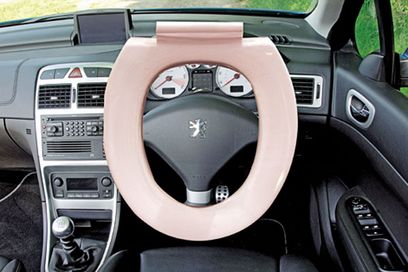
Researchers at Queen Mary University in London claim that there are, on average, 700 different kinds of bacteria per square inch of steering wheel. That compares to 80 distinct bacteria types on a public toilet seat. Even worse, the trunk has 1,000 bacteria types per square inch. The most common form of bacteria was bacillus cereus, which can cause food poisoning.

The reason cars are filthy is simple; we simply don’t clean them. While we vacuum, dust and disinfect our home on a semi-regular basis, only one third of study participants cleaned their vehicle once a year or more. That sounds pretty crazy (and a bit lazy), but think about it. You may jettison the trash and vacuum the carpet on a somewhat regular basis, but how often do you wipe down that nasty steering wheel? And when you think about how many Americans regularly eat in their vehicles, our cars could be a reason why we are sick as often as we are. Now we know why valet parking attendants tend to wear white gloves.

As a side note, even beyond cleanliness, the study also shows that many drivers know next to nothing about their vehicles. For example, two-thirds of us don’t know how to change a tire, while one third of those surveyed don’t even know how to put air in the tires. It’s a sad, sad world.

So are you officially grossed out? You better run and get your car cleaned!! Let me know if you are interested in keeping your Buick or GMC bacteria free.

Texas Heat, Cars and Pets Don’t Mix

“…not even for a minute”

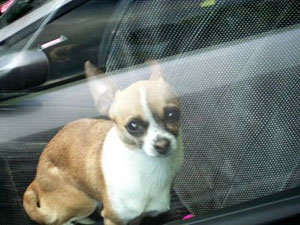
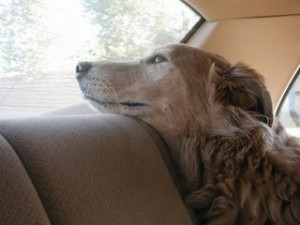
With Summer temperatures recently reaching over the 100 degree mark all across Texas, our cars are easily reach temperatures of 150 degrees or more. That’s hot enough to melt plastic and is certainly not an environment for your pets to be in.

I don’t like the fact that I have to write articles like this, but every year it seems that Texas drivers and pet owners need a reminder. It pains me…strike that…INFURIATES me when I see dogs left in cars by themselves. First off, your dog’s temperature is already roughly 100.5°F to 102.5°F. In order for them to diffuse heat, they have to pant and cool the blood flow through their tongue since they have no sweat glands and do not perspire. As if that isn’t enough, they are wearing a fur coat!

What many people don’t know is that even on moderately cool days, the temperature inside a car can be fatal. Even when its only 70 degrees outside, in just one hour, the temperature inside a car can soar to over 110 degrees, and cracking the windows doesn’t really help.

If you think that your four-legged friends would be “OK” for a few minutes as you ran in to a store, think again. In fact, don’t think about it. Go ahead and sit in your car with no air running for 10 min. and then see if you feel the same way. I’ll even let you crack the windows. Sweat much?

No one is immune to catching a case of “the stupids”. You may think it will only take a few minutes to grab those groceries or chat with a friend, but that few minutes can translate into life threatening heat exhaustion for your best friend:

Symptoms of Heat Stroke

If your dog has heat stroke he will progressively show these signs:

  • Excessive panting;
  • Pale gums, bright red tongue;
  • Disorientation and your dog doesn’t respond to his name;
  • Increased heart rate;
  • Thick saliva;
  • Vomiting;
  • Breathing difficulties;
  • Collapse;
  • Coma;
  • Death

httpv://youtu.be/Rpqqmv5Puhg

Dogs Prone to Heatstroke

  • Young puppies and older dogs;
  • Overweight dogs;
  • Dogs with an existing illness or recovering from illness or surgery;
  • Dog breeds with short faces – Bulldogs, Shar pei, Boston Terriers, Pugs – have narrow respiratory systems that easily get overwhelmed in hot and humid conditions;
  • Double coated breeds such as Chow Chows; and
  • Dogs bred for cold climates such as Malamutes, Huskies and Newfoundlands.

If you suspect that your dog may have heat stroke:

Make sure your dog is out of the sun and has access to water but don’t let him drink too much.

Cool him with cool/tepid water – either immerse him in a bath, gently hose him or apply cool towels to his body. Importantly do not leave wet towels on your dog and do not use very cold water – both prevent your dog form being able to cool himself.

Move your dog to an area where there is cool air circulating, such as an air conditioned room or stand him in front of a fan. The cool circulating air will help your dog to reduce his temperature.

Remember, your dog can’t tell you that he is uncomfortable, so you’ll have to use common sense. Under no circumstance should you leave your dogs unattended in a car. Regardless of how hot you believe you car will “actually” get, you are going to be wrong. Then you will be left with a tragedy that is not only emotional, but quite possibly legal as well. You will get fined for endangering an animal by leaving them in a hot car, or could even be arrested for animal cruelty if they die.

Keep your pups safe, keep them out of your hot vehicles. If you have any comments, questions or advice, leave a comment below or see me at Freeman Grapevine!

How to Escape a Sinking Car

how to escape a sinking car

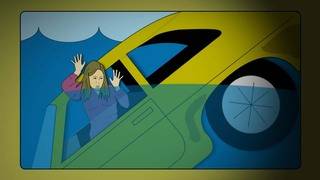
This is something we hear on the news from time to time. A car loses control, crashes through a retaining barrier and into a body of water. Would you know what to do if this happened to you?

This type of accident is rare, but that doesn’t mean it can’t happen to you. Thinking back on what you know or what you’ve heard, do you think that you would have the presence of mind to recollect the escape tactics that you’ve “heard” about and not panic? For sake of argument, I’m going to say “no”, you won’t. That’s OK, because until I did a little refresher research, I would have fallen into the same category as you: Knowing the theory of escape, but that’s about it.

Check out the video for a visual refresher:

httpv://www.youtube.com/watch?v=Vynyy5lqkZE&feature=related

Here’s a website dedicated to this very subject written from a person who’s experienced being trapped in a submerged car first hand. It’s definitely worth looking at.

The bottom line is that you have to remember to stay calm and memorize this simple course of action:

Here’s one more thing to consider. There are small, inexpensive, and convenient-to-carry tools available to the public that are made specifically to shatter a car window to free a trapped victim. I suggest you look into getting one for your vehicle.

From Saveyourlife.us

One is called a LifeHammer. It is only 7 ½ inches in length and weighs 4.9 ounces. It is shaped like a small hammer but with a dual conical shaped hardened steel point at one end. A strike with medium force will shatter a side window. I had my 10 year old daughter try it and she broke the window on the first try. The LifeHammer also has a seatbelt cutter built into the other end. The LifeHammer should be mounted in the vehicle either on the side of the console or anywhere it can be easily reached in an emergency. You can view one by clicking anywhere you see the word “LifeHammer”.

The other tool is called ResQMe. It performs the same functions as the LifeHammer but it is only 3 inches long, weights just over ½ oz. and easily attaches to your keychain. One advantage of ResQMe is that it can go with you wherever you go as long as you have your keys. You can view one by clicking anywhere you see the word “ResQMe”. The Life Hammer is a little more robust and can be used to clear out some of the shattered glass once the window is broken. I keep ResQMe on my key chain and a LifeHammer in my car.

Be prepared, stay calm and know your escape routes. If you have any questions or comments, let me know. If you’d like to share any experience you may have had that is similar, tell us that too…you may save some one’s life one day with your information.

Everybody, drive safely.

New Car and Brake Safety…What to look for.

A lot of cars have been involved in accidents because of brake failures, one leading indicator is the feel of the brake pedal, so if your car pulls left or right when braking, or if the front end shakes, then these are definite signs of excessive brake wear. If the brake pedal in your new car begins to feel spongy, it could be a sign that air has entered the brake system or fluid is low. Do not ignore these warning signs!

httpv://www.youtube.com/watch?v=0PFiCV2BG2Y

A spongy brake pedal, together with a decrease in brake fluid, may also indicate brake wear, so when you check the brake fluid reservoir, make sure it’s topped off. If not, then brake fluid is most probably remaining at the wheel to fill the space caused by wear. Many vehicles purchased from car auctions experience this kind of problems because of being stocked for a long time in car garage or showrooms. Simply replacing the brake fluid and letting it flow throughout the wheel by pumping the brake pedal a few times before your run the used automobile helps in ensuring safety for you and your passengers.

Many new cars have ABS (Automatic Braking System) which initiates a rapid- fire pumping sequence to the brakes, keeping the car straight during sudden or hard braking. If the ABS light illuminates on your instrument panel, then it’s likely that the wheel sensors have detected excessive build-up of metal particles from the brake system. Most cars are designed to shut down the ABS when excessive particle build-up occurs, but a shutdown ABS does not prevent you from stopping, it just means that the ABS feature isn’t working.

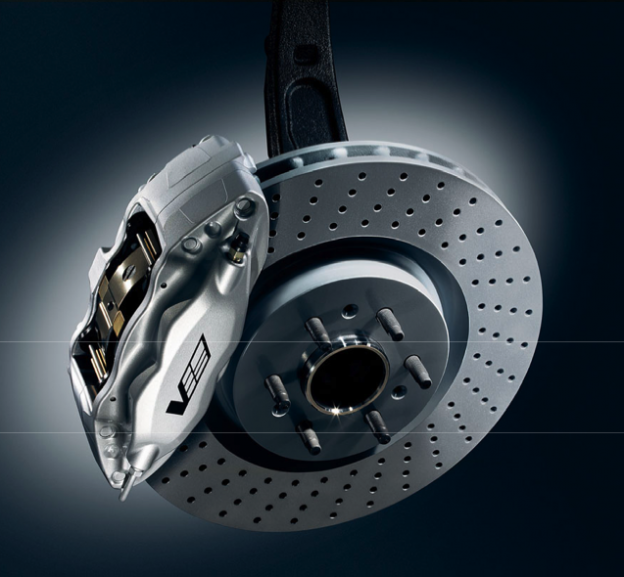
Wheels should be pulled and brakes checked once a year by an experienced brake specialist. These guys have experts who can fit your new car with high quality, high performance braking components. Whether it’s used car or not.

An inspection typically includes the rotors, calipers, drums, pads, pistons and brake lines. Brake systems should be flushed and brake fluid replaced every two years.

Brake fluid absorbs moisture in the system and becomes acidic after about two years. Check your owner’s manual or ask your technician to see what kind of brakes your car has and how they are adjusted. .

Remember, how and where you drive will greatly influence when your brakes must be replaced. If you have any questions about your brakes, come and see me.

How Much is Your New Car Worth in 5 years?

What I’m about to tell you is nothing you don’t already know. Buying a car is a “Catch 22” meaning, you have to have one, but for the most part, they are bad investments in terms of recouping your money. Their value isn’t really based on how much you can get for it when you want to sell it, but how much you get from it you while you own it. But of course, we want a good trade value for our old stuffs. Though old and used, we surely had bought it in a good price, so we also expect a better deal.

Well, I hate to break it to you, but unless your daily commuter is a high-end sports car or luxury suv, you aren’t going to recoup all of your money. No problem, we already knew this. So, what can you do to help add some value back into your vehicle? take a look at the video:

httpv://www.youtube.com/watch?v=EU6a5ffizkg

Have any other hints on keeping the value of your new car intact? Let me know!