All posts by Ozzie

What’s the Deal With All Of These Roundabouts?

Photo Courtesy of RoundaboutsUSA.com

I’ve started noticing a trend. 2 trends actually. One of them is the number of roundabouts at intersections, the other is the number of people complaining about them. Roundabouts are mainly used in Europe where they are just about everywhere and here within the last couple of years, we’ve started seeing them pop up in Grapevine and Colleyville. There are currently over 3700 roundabouts in the US and that number is only going to get bigger. The reason for the roundabout gaining popularity is pretty simple, it relieves traffic congestion. In many parts of the DFW metroplex, there are problematic or dangerous intersections that have utilized the roundabout and made giant leaps in progressing towards less fatalities and crashes.

So why all of the confusion regarding them? Well, it’s pretty simple, we just aren’t used to them. We are used to 4 way stops at most intersections and that’s what we were taught in driving school. The roundabout is completely foreign to us.

Here are the rules of driving in a roundabout (via RoundaboutsUSA)

  • As you approach a roundabout there will be a YIELD sign and dashed yield limit line. Slow down, watch for pedestrians and bicyclists, and be prepared to stop if necessary. (Editors Note: On some intersections, there will be a protected lane that will allow you to make an immediate right turn without having to yield or stop for other cars.
  • When you enter, yield to circulating traffic on the left, but do not stop if the way is clear.
  • A conventional roundabout will have ONE-WAY signs mounted in the center island. They help guide traffic and indicate that you must drive to the right of the center island.
  • Upon passing the street prior to your exit, turn on your right turn signal and watch for pedestrians and bicyclists as you exit.
  • Left turns are completed by traveling around the central island

Get used to navigating a roundabout, because they’re here and they aren’t going anywhere. Have you gotten used to the roundabouts yet?

Buckle Up, It Could Save Your Life

Photo Courtesy of TexasClickItOrTicket.com

The modern automobile has come a long way since the first mass produced car came off the Oldsmobile line in Lansing, Michigan in 1902. There were no restraints of any kind, no seat belts, airbags, or back up sensors. Seat belts were just an option until 1958 when SAAB began putting them in all of their cars, the rest of the automotive world followed suit. In fact, the law states that every car manufactured after This is the single most important safety aspect of your vehicle and has saved millions of lives. Yet we still have people who don’t wear a safety belt. I was just in the car the other day with a friend who, I noticed, didn’t have his seat belt on. I quickly told him to buckle up or walk (we were just going around the corner). Buckling up is a no-brainer, and should be the first thing you do when you get in the car. I can point you to multiple studies done that prove that driving with a seat belt is a smart idea, but I shouldn’t have to.

Texas has recently changed the law regarding buckling up in the back seat of a vehicle. Previously, adults had the option of whether or not to wear their seat belt. This is no longer the case. All adults and children must be restrained when the vehicle is moving.   I’ve heard plenty of excuses about how seat belts could trap you if there was a fire or the dismissal of seat belts because of air bags being widespread, but those are all bad reasons. In fact, airbags are designed to work in conjunction with your seat belts, they make your car safer if they are all working together.

When you get caught without your seat belt on, you’ll also get a nice ticket and fine to go with it.  Here in Texas that’s about $$250, depending on where you are, plus court costs. If you get caught with a unrestrained child under 15 years old in the car, guess who gets the ticket. The driver does. Being vigilant about making all of your passengers buckle up is the only way to be.

There’s a lot of confusion regarding antique cars that did not have seat belt installed when they were manufactured. Here in Texas the law states:

A motor vehicle required by Chapter 548 to be inspected shall 
be equipped with front safety belts if safety belt anchorages 
were part of the manufacturer's original equipment on the vehicle

That means if the car didn’t have them when it was new then you are not required to. But let’s be honest, why wouldn’t you install seat belts? It’s the smart thing to do.

Check out this video and then visit your state’s Department of Transportation website to check your state’s seat belt laws.

Time To Replace Those Windshield Wipers

With the threat of freezing behind us, it’s time to take stock of our vehicles and replace any worn parts that may have been damaged from the cold. The first one that came to my mind was your windshield wipers. Ice is tough on your wipers, ripping and tearing the rubber that is needed to make sure you can see where you’re going. We all do it, when we get out to our cars the morning after a freeze, we try to wipe away the ice with our wipers, We’ll turn the heater on and wait a few minutes, then try again. The jagged edges from partially melted snow and ice are what destroys those wipers.

I was out driving around last weekend and noticed that my wiper blade was so torn up that about an inch of the blade was no longer even attached to the wiper arm. I figured it was time to get a new set and bite the bullet.

Did you know that you can’t buy just the wiper blades anymore? You have to buy the entire unit, bracket and all. I came across a new product from Bosch called Icon. They are wiper blades that claim to last 40% longer than normal wiper blades. With that in mind, I bought a pair. These things are awesome. Not only are they contoured to fit firm against your windshield without the use of a metal frame with springs and arms, but they’re also designed to use the wind resistance to hold it firm against it.  I can go on and on about them but, I’d rather let the video do the talking.
)

Don’t Get Stranded With A Dead Battery

Photo Courtesy of Moneycrashers.com

Your car battery generally lasts anywhere from 2 to 5 years, depending on the climate. Here in Texas, they last 2-4 since we have to deal with 110 degree summers. Truth be told, heat and vibration are a car battery’s worst enemies. Overcharging and undercharging, lack of regular maintenance and excessive current drain are also a battery’s silent killers. There’s a short list of things we can do to make sure we don’t get stuck with a battery that won’t turn the starter over.

Combine trips

If you travel less than 20 minutes a day, your alternator may not have enough time to charge the battery to capacity. At least 30 minutes gives it enough charging time to avoid undercharging, which gradually worsens your battery’s ability to hold a charge.

Avoid battery drain

Most vehicles nowadays cut off the electric supply when the key is off, but there are some out there that still provide power to the outlets. If you keep a phone charger plugged in, or you have a security light, it’s constantly getting power, and draining your battery and taking money out of your pocket. A little known fact about alternators is that they are designed to maintain a battery’s charge, not recharge it.

Avoid overcharging

Your alternator’s current is controlled by a voltage regulator or a computer control module, of one of them is faulty, your battery will suffer. Overcharging shortens a battery’s life by accelerating the aging process.

Avoid undercharging

Undercharging is the result of not charging your battery enough after being severely discharged. If you do end up with a dead battery, it should be charged using a bona fide battery charger.

Secure your battery

Vibration shortens your vehicle’s battery life. All cars nowadays use secure systems that hold it in place and minimize the vibrations that are transferred to your battery. If you aren’t tightening down your battery,  you’re running a risk of waking up to a dead battery.

It’s easy to forget about your battery, after all, if it’s not causing any problems, why worry about it? Keeping your battery maintained and checking to make sure it’s holding a charge will keep your battery in service as long possible and keep you on the road. Of course, if you have any questions about your battery, swing by and talk to some of our service guys.


Is It Time For A Wheel Alignment?

Photo courtesy of chopperautomotive.com

You may not think of it very much when it’s not bothering you, but tire alignment is very important to the way your car runs and handles out on the road. Is your car veering to the left or right when you hold your steering wheel straight? Is there noticeable bouncing when you’re driving around town? Are your tires wearing unevenly? These are all signs of a car that could use some tender loving care in the form of a steering alignment. After all, if you’re wheels and tires aren’t pointing in the same direction, they’re working against each other. That means bad news for your wallet, and your car.

Common Signs of Needing a Tire Alignment

Uneven Tire Wear – If you have uneven wear on your tires, your tires may need to be rotated, but more than likely, a steering alignment will correct that.

Pulling To One Direction – When you are driving and your car drifts to one side when you’re holding the wheel straight, your wheels aren’t pointing in the direction they need to be. A tire alignment will solve that problem.

Shaking – Has your car been shaking while you’re driving down the road? That’s because your wheels are facing to separate directions. Even if it’s off a couple of degrees, it will cause your frame to shake and make your car harder to control.

Benefits of Getting A Tire Alignment

Rotating your tires – Keeping your tires rotated properly is a hallmark of getting the maximum miles out of them. With any tire alignment, the tires should be properly rotated to keep the wear even.

Better Handling – No more shaking and losing control of your steering wheel.

Better Gas Mileage – If all of your wheels are facing in the same direction, your engine works less to get it where it needs to go.

Savings In The Long Run – With your car running smoother, it will reduce the wear on all of the moveable parts, such as your shocks, and struts, steering column, and less wear on your tires.

Look out for the warning signs that you’re vehicle is our of alignment. Don’t hesitate to drop by our Service Department and have us check it for you.


Driving Apps To Help Your Wallet

With warmer weather coming up in a hurry, that can only mean one thing: Gas prices are going to go up. Every time I look down at my gas meter, I hope that I’ve got enough to last me a few more days. Filling up my car takes a good $50 and if I fill up 4 times a month, that’s $200! I’ve been on the lookout for ways to curb my gas-guzzling ways and also keep my eyes out for ways to spend less at the pump. Here’s a couple of useful apps for your smartphone that I’ve found to be a great help.

GasBuddy

This is a particularly useful app when you’re trying to find the cheapest gasoline in relation to where you are. Sure, there are other apps out there like it, but I’ve found this one to be the easiest to use. Just start up the app and within seconds, it shows you how much the gas prices are in relation to where you are located. You can sort it by distance from you and by price. It’s always helpful to know that if you drive a little bit further down the road, you could save 5 cents per gallon instead of settling on the first gas station you see.
Automatic

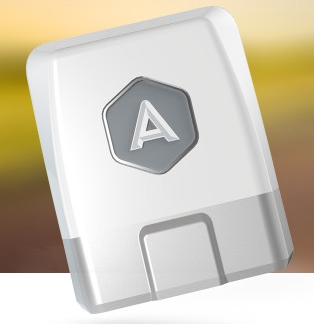
AutomaticThis is a brand new app that looks promising. For $99.95, it includes a device that you plug in under the dash and it monitors your driving habits, gas mileage, even your check engine light! It’s also a parking reminder for those of us who sometimes forget where we parked. Automatic can also detect when you’ve been in a crash and will notify the authorities of your location. One of the best features of Automatic is the driving adjustment suggestions. If you tend to have a lead foot or like jumping out from a stop sign too quickly, it will recommend ways to improve your gas mileage. By keeping track of your trips via GPS and transferring them to your smartphone via Bluetooth, you can see exactly how well you’re doing and what improvements can be made with your driving habits. Here’s the video for more details:

What apps do you use in regards to driving?

Car Seat Safety Is Always Important

Photo courtesy of dlglawfirm.com

There may be nothing in the world that angers me more than to find out that someone has their child’s car seat improperly installed or not safely restraining their children before driving. Child safety seats are designed to lessen the risk of injury or death when in an accident, but they must be used and installed properly, or all of the science and research that goes into the production of them is all for naught. Some studies I’ve read suggest that 7 out of every 10 car seats are installed incorrectly.

  • If your child is young enough to require a car seat or booster, you want to place them in the back seat of the vehicle. The back seat offers more protection in the event of an accident and could safe the life of your child.
  • Read the car seat owner’s manual to determine how to correctly restrain your child.
  • If there is any slack or movement in your child’s harness, seat, or buckles, then you have not installed it properly. There should be no slack anywhere.
  • Be sure to eliminate any twists in the belts and harnesses to reduce the chance of injury.
  • Always wear your seat belt as an example of the behavior that is to be expected when riding in a car.

I recommend reading your owner’s manual from cover to cover before you ever even install the seat in your vehicle. Once you have it installed, visit a car seat safety specialist to double check to make sure you’ve done it correctly. It won’t take any time at all and could mean the difference in life and death.

There are staggering numbers out there when it comes to child safety seats and the number of children saved by them. This is from the NHTSA:

“From 1975 through 2011, NHTSA estimates that approximately 10,000 lives were saved by child restraints for children under the age of 5 in passenger vehicles, with more than 260 lives saved in 2011 alone.” (Read the entire press release)

Making sure your child is properly secured for every trip, no matter how short, is an absolute must. There are no excuses for your child safety. If you would like to read further on this subject, I recommend visiting the safercar.gov website, it is an endless resource for child seat safety.


Spring Cleaning Your Vehicle

Photo Courtesy of CarCleaningGuru.com

Spring is almost here and that means sunny days, warmer weather and best of all, no more threats of ice and snow. Spring cleaning is a yearly occurrence in my house, I get the vacuum out, clean the bathroom, scrub the kitchen from top to bottom, even clean the windows. It does a world of good to start from scratch and actually see what my house looks like when it’s clean. The same goes for your car. We often forget about cleaning our cars since we’re only in it when we’re driving. For some people with long commutes, that’s quite a bit of time to be stuck in a dirty car, even if it’s just the Jack In The Box cup that’s been there for a few weeks. With the upcoming Spring right around the corner, I wanted to talk a little bit about some cleaning you should be doing to give you a fresh look at your car.

Vacuum the Inside

Most of us have a vacuum cleaner that uses attachments so you can reach under the seats and in between the cushions to get the last few months of Cheetos crumbs. If you don’t have a vacuum cleaner that does, try one of the do-it-yourself car washes. They usually have a vacuum cleaner station that may cost you a couple of dollars. Vacuum the seats, carpet and the floor mats. If you have plastic or rubber floor mats, get a water hose after them, no one wants to keep stepping in the Coca-Cola you spilled back in November. You’d be amazed how much better your car’s interior looks (and smells) after you give the inside a little bit of TLC.

Clean that Glass

I have a tendency to rest my arm on the ledge where the door and the window meets, so I have smudge marks where my elbow rests. There’s also streak marks from a bug I killed a few months ago. Get a good glass cleaner such as Windex and get that dust, dirt and bug guts off of your windows and windshield. I use Rain-X on my windshield and it’s amazing how much easier it is to see during a downpour.

Wash the Exterior

Get a cleaner specially formulated for automotive finishes and maybe even a good wax to put on your vehicle’s exterior. Spend some time getting in all the nooks and crannies in the body. Clean off your wheels, scrub down your tire’s sidewalls, scrub the grill (those bugs are getting in the way of fresh air getting to your radiator). A good wax job will keep your car shiny for months and keep dirt from sticking to your paint.

You’d be amazed how different your car looks after you spend a couple of hours on it. Every time I walk out to my car after I’ve washed it, I say to myself, “That’s a good looking car.”


Surefire Ways To Save Money On Gas

Gas is still hovering around $3 per gallon here in Texas and with the summer coming up, those prices are just going to get higher. There are a few things that are often ignored that we can do to keep our vehicles running at maximum fuel efficiency. These are simple fixes, nothing too complicated or that requires anything outside of regular maintenance. Give them a shot and see if it lessens the load on your wallet!

Tire Pressure

If your tires aren’t properly inflated, you’re losing money every time you fill up. Consider this: There’s a 1% loss of fuel efficiency for every 2 PSI under maximum pressure (usually in the 35-psi range). So if you’re currently at 26 PSI, you’re losing about 5%. In a truck or SUV, that’s about 1/2 MPG, but in a smaller car, that could conceivably be 1-2 MPG.

Slow Down

When were out on the highway, we often see people driving faster than the speed limits. Not only are they asking for a ticket, but they’re also draining their gas tanks quicker than needed. Higher speeds may get you there quicker, but at what cost. Keeping your vehicle at the speed limit and using cruise control makes sure your engine uses gas more efficiently to maintain a steady speed.

Regular maintenance

Replacing the belts, hoses, and oils in your vehicle ensures that most moving parts of your engine are properly lubricated and can move without hesitation. Once you start skipping tune-ups or oil changes, you’ll begin to notice your MPG heading south. Keep a regular schedule and make sure those moving parts get the proper attention they need to keep your car

Synthetic Motor Oil

Some people have reported seeing a 3-5% jump in their MPG since they have switched over to a synthetic oil. Better driving through science!

Lighten Your Load

Take that bowling ball that rolls around and bangs into the side of your trunk on every turn out of the car! We tend to use our cars as storage from time to time and it affects our gas mileage. For every 100 lbs, you’re losing about 2% in MPG.

What have you done to raise your MPG?


The Danger of Construction Zones

Photo courtesy of ThinkLafayette.com

We’ve seen our share of construction zones here in Grapevine. For the last couple of years, the road right outside our front door was under construction. It made getting to and from work a nightmare. Finally, all the work zones have slowly gone away and the commute is getting back to normal. For some people it’s even quicker. They’ve put in so many new features and roads, it looks completely different than it did before the start of the DFW Connector project. I, for one, am glad the roads are free and clear, but there’s also another group of people who are ever happier, the construction workers themselves. Not only do they have to work long, hard hours in the freezing cold or the brutal heat, they have to deal with drivers. I’ve driven by work sites and there are workers within a few feet of a car going 50-60 miles an hour. If that’s not unnerving, then I don’t know what is. The road construction crews work as hard, if not harder than any profession out there, and they deserve our attention when we are passing through a work zone. All you have to do is take your eyes off of the road for a split-second and a disaster could happen. In 2012, there were over sixteen thousand accidents that happen in a work zone, of those, there were 134 fatalities. That’s a number that scares me and it should scare you as well.

Not only is is a dangerous place to drive, it’s also a potentially costly one. In the state of Texas, your fine doubles if you are caught breaking the law in a construction zone. When they say “Slow Down”, they mean it. Do us all a favor when you’re out driving, pay attention to the work zones. They’re trying to get the job done so we can get to the places we go quicker and more efficiently. I recommend reading the TxDot report on driver safety and work zone awareness for more stunning statistics and facts.