Tag Archives: Used Car

Manhattan drivers may pay congestion toll starting April 2024

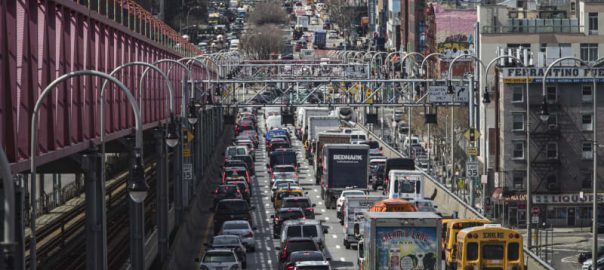
New York City may begin charging motorists traveling into major parts of Manhattan as soon as April 2024. 

The congestion pricing plan — the first of its kind in the U.S. — is expected to get final approval next month. It will charge E-ZPass motorists driving south of 60th street, the city’s central business district, as much as $23. 

The Metropolitan Transportation Authority, which runs the city’s subways, buses and commuter rail lines, released on Friday a final environmental assessment of the plan that includes new concessions for low-income motorists as well as Uber and Lyft drivers.

The transit agency anticipates the U.S. Department of Transportation will give final approval after a 30-day public review period, a significant milestone that will allow construction to begin on the tolling gantries. 

“Congestion pricing means less traffic, cleaner air, safer streets, better transit,” Janno Lieber, the MTA’s chief executive officer, said during a media briefing about the plan on Thursday.

MTA officials expect congestion pricing to bring in $1 billion in new revenue a year that the agency will bond against to raise $15 billion. Those funds will help finance major capital projects like expanding the Second Avenue Subway to Harlem, updating the subway signal system and adding more elevators and escalators to stations to make them accessible. 

A six-member Traffic Mobility Review Board will determine the specific tolling structure and discounts or exemptions. Drivers using an E-ZPass may pay as much as $23 during peak hours and $17 during off-peak periods. But the final environmental assessment includes concessions. 

Passenger cars, taxis and for-hire vehicles like Uber and Lyft would only be charged once a day. 

“The MTA’s solution for rideshare would be an infeasible logistical nightmare,” a spokesperson for Lyft said in an emailed statement. “Instead of burdening drivers further, the MTA should acknowledge that our industry has for years already paid them a congestion pricing fee and focus on ensuring the program is funded fairly across all who use our roadways.”

A spokesperson for Uber declined to comment. 

For the first five years of the program, E-ZPass drivers making less than $50,000 a year would get a 25% discount starting on their 11th trip within a calendar month. The MTA estimates there are about 16,000 drivers in the area who would qualify for that reduced rate, Lieber said.

Residents of the Manhattan district with incomes below $60,000 will be granted a state tax credit. The final review also includes lower overnight tolls than what the MTA projected in August, an attempt to encourage truck drivers to pay the new fee rather than bypass Manhattan and drive through the Bronx. 

Officials estimate the tolling plan will reduce the amount of daily vehicles entering the district by as much as 20% and help boost mass-transit ridership, according to the final environmental review. 

The MTA needs the additional riders. While subway usage has steadily increased since its pandemic-lows, weekday subway ridership is about 70% of 2019 levels, according to MTA data. And systemwide ridership may only reach 80% of pre-pandemic usage by the end of 2026, the transit agency estimates.

While New York Governor Kathy Hochul backs the plan, not everyone is on board. New Jersey Governor Phil Murphy has pledged to stop its implementation. He believes New Jersey residents shouldn’t have to pay for the MTA’s revenue troubles. US Representatives Nicole Malliotakis, a Republican from the New York City borough of Staten Island, and Josh Gottheimer, a Democrat from New Jersey, say congestion pricing would increase pollution and traffic in their districts while adding another toll for their constituents.

Lieber said the tolling initiative may face lawsuits.

“We studied the traffic intersections going down almost to Philadelphia, every possible air quality scenario, all the social justice and physical impacts,” Lieber said. “I’m confident that if anyone challenges this, this is going to stand up and that we’re going to implement congestion pricing for New York.”

GM recalls nearly 1 million vehicles for airbag defect

Filed under:
,,,,,,,

Continue reading GM recalls nearly 1 million vehicles for airbag defect

GM recalls nearly 1 million vehicles for airbag defect originally appeared on Autoblog on Sat, 13 May 2023 10:07:00 EDT. Please see our terms for use of feeds.

Permalink | 
Email this | 
Comments

Junkyard Gem: 1982 Buick Riviera Diesel Coupe

Filed under:
,,,,,

Continue reading Junkyard Gem: 1982 Buick Riviera Diesel Coupe

Junkyard Gem: 1982 Buick Riviera Diesel Coupe originally appeared on Autoblog on Fri, 12 May 2023 15:00:00 EDT. Please see our terms for use of feeds.

Permalink | 
Email this | 
Comments

Do you Know What Steps to Take When you Sell your Car

buying used car, selling used carsBuying and selling a car can be a laborious and often frustrating task. It’s not like you can just knock on your neighbor’s door and sell them your vehicle. The State of Texas has certain requirements and protocols that must be followed or your risk voiding the transaction. That’s when the real mess starts.

Of course, if you decide to sell your vehicle it is much easier to bring it to Freeman Grapevine. We have bought and sold a countless number of vehicles, so we have a pretty firm grip on the State of Texas Requirement for vehicle trans actions.

If you are considering buying a new vehicle, but are looking to sell your old car on your own, there are a few things that you need to know. First, before you do anything check the FAQS section of the Texas Department of Motor Vehicles web site. They answer almost all of the questions you may have when deciding to sell. The also have the answers to the question you never even thought about asking, so check there.

I pulled this excerpt from txdvm.gov for your convenience. Take a look at it, so you know what you are in for when trying to sell your Dallas or Fort used car.

Keep your license plates and transfer them to your new vehicle.

When you keep your license plates, the buyer has to transfer the vehicle title and this helps to protect you.

When you take off the plates, the buyer will need a Vehicle Transit Permit to drive the vehicle to the county tax office to re-title the car or truck.

Provide the buyer with all the documents needed to transfer the title:

  • A signed title
  • A signed vehicle title application
  • The vehicle’s latest registration receipt
  • Any other supporting documents, such as a release of lien, power of attorney, etc.Then, accompany the buyer to the county tax office to verify the buyer files a new vehicle title application under his/her name. If you sell or trade in your vehicle to a dealer, or if the buyer can’t go to the tax office, you need to notify us of the sale by filing a vehicle vehicle transfer notification within 30 days of selling the vehicle.

Now this was a dealership video, but the same information holds true. Be honest and understand the laws inherent in selling a used car in Texas. Expect to make multiple phone calls to the tax office in regards to transferring your title and relinquishing ownership of your vehicle.

Of course, If you’d rather not go through the hassle of selling your car yourself, you can bring it to Freeman Grapevine and we’ll buy it from you and get you a great price towards a new Buick Or GMC.

Need a new car, check out used first!


Let’s face it; when living in Texas, it is virtually mandatory that you own a car. Here in the Dallas/Fort Worth metroplex, that is especially true. With a limited public transportation system and long distances to cover to get to wherever you need to go, you are going to have a difficult time with travel without a reliable car.

Unfortunately, not everyone can afford to purchase, own and upkeep a brand new, fresh off the lot vehicle. However, that doesn’t mean you can’t own a reliable used vehicle. In fact, when you decide to buy a used vehicle, you are already taking a step in the right direction. “Why is that?,” you ask. Or, maybe you are thinking, “…but I don’t want to inherit someone else’s problems”. The fact of the matter is that a major advantage of buying a second-hand car is its lower price. The moment a vehicle leaves the lot as a “new” car and is driven on the streets, its value drops immediately. That’s just the way it is, although some automobiles are driven for only a few years, their prices are considerably less than the exact same car sitting on a dealer’s lot.

This is good news for the savvy used car buyer. Looking for a car that has just come off lease is an excellent way for you to get more car for less money. In fact, you are going to have more choices, with more of the options that would probably be way out of your budget if you bought the car new. Having more choices is great because it introduces more makes and models which means you won’t have to settle for an inferior vehicle or one you just can’t learn to love.

OK, so you’ve saved cash off the top just because you went the used car route. Where else are you going to save a few bucks? Good question.

In Texas, (as in every other state) you must carry insurance on your vehicle. You are responsible, at bare minimum, to carry liability insurance. On a new car, fresh off of the lot, your insurance coverage is automatically going to be on the higher end of the payment spectrum. Buying a used car will help keep some of the insurance costs down. This is a good thing, especially with gas prices continuing to climb.

The bottom line is that when looking for a new car, it doesn’t have to really be new…just new to you. Doing some serious research and conferring with your dealer about your budget and what you’d like to have in your driveway will not only save you money and time, but you’ll have a car you can be proud of. More importantly, you’ll have a car you can rely on.

If you have any questions about buying a used vehicle: What you should look for, what your should expect etc., give me a shout. I’d be happy to help!


Tire Tread Depth For Maximum Safety

Understanding tire tread wear and being able to read the signs of overuse, or excessive wear is extraordinarily important  in ensuring you are driving on the safest tires possible. I’ve written about it before, and no doubt you’ve read other articles on safe tire tread depth. But today I want to find out, specifically, how much tread is needed to safely bring your car to a complete stop?

Check out the video below. This will answer the question above.

A poorly maintained set of tires is nothing to mess around with. You have to always remember that they are they only things that are between you and the road. Stopping power just isn’t in your braking system, your tires must have enough tread available to actually grip the surface you are on. You can never tell when you are going to have to use emergency, or evasive maneuvers while on the road. Even a simple trip to the store can potentially be hazardous if your tires aren’t properly maintained.

Time for a new set of radials?  Freeman Grapevine has the tire you need for less than you think.

Help! My New Car Won’t Start Because it’s Too Hot Outside!

It is usually a cold engine, which is exposed to extreme weather that is most often difficult to start. However, hot engines sometimes have problems too. Hot engines can be tough to start, and many people do not know how to deal with this situation when it occurs to their cars. I live in Texas, it is important to know exactly why it happens and what to do.

The most common reason why a hot engine will not start is because the problem is related to fuel. When your new car engine is too hot, fuel cannot circulate well, due to the way vapor obstructs its workings and therefore the engine just will not start, as it should. To keep your engine running at the correct temperature and to protect its alloys and metals, you need to use a properly designed coolant.

A new car’s engine temperature will rise until it has been turned off. During this time,the highest concentration of vapor is being circulated and chances are that it may obstruct the engine to a greater extent. Obviously, when and if you are driving in hot weather and have just turned off the car engine you may experience start problems. Here’s a novel idea; wait for a few minutes until trying to start it again. Then go and get a high quality engine coolant.

Now here’s the good news…Fuel injected engines do not experience this problem as much

Now THIS is a hot engine!

as other engines, because the fuel remains inside the injectors under high pressure. Therefore, the vehicle does not have the same issues when it comes to starting a hot engine. For most of us this is the case, but if you are having a hard time starting your car under extreme heat conditions, then it may be time to change over your old car to a newer car with fuel injection.

Just a point of note, many of the older models or the used automobiles from the 90’s don’t have fuel injected engines. Proper maintenance of its engine was the best solution for the engine temperature. It is always best to have a record of the old car’s past problems or issues to be able to get an expert inspect it properly.

Another reason why you may have an engine, which is hard to start while hot, is that it may be due to seasonal weather as refiners change from one fuel blend to another. Gas refiners often change a higher volatility fuel to a lower one when summer approaches. This is simply because hot weather causes fuel to evaporate more quickly. If refiners change back to a higher volatility fuel, while cars are still exposed to days of extreme temperatures, this may cause swift evaporation of the fuel which, in turn would create too much vapor within the engine.

…And for goodness’ sake people, check your radiator water, and keep it at its advisable volume, this will help absorb a lot of engine generated heat.

OK, that’s it. Strange topic, but it’s one that seems to be a daily occurrence for some folks under the hot Texas sun. If you are having an issue like this, you can always bring your car by for the experts to check it out.

The Top 5 New Car Maintenance Issues

NEWS FLASH! You have to do more than just fill up your car with gas and occasionally clean the windows!

The American Automobile Association conducted nationwide clinics at 25 different AAA clubs that included inspecting 6,082 vehicles to find out the five most common car problems–all of which are easy to fix with just a little time and not too much money.

1. Tire pressure

Drivers should check tire pressure at least once a month to ensure tires are not under- or over-inflated. Low pressure in the tires can increase wear and fuel consumption, while having too much pressure may reduce traction. Keeping tires properly aligned will also help assure longer tire life and improve fuel economy.

2. Clean Air Filter

Maintain and replace air filters as often as is recommended in your owner’s manual to ensure better air flow through the engine. This, in turn, will improve engine efficiency and result in more power and better fuel usage. (This is probably one of the easiest and most overlooked general maintenance

3. Insufficient tire tread depth

For sufficient traction, tires should have a minimum of 5mm tread depth. Use a depth gauge to check. Most tires also have built-in tread wear indicators that let you know when tire replacement is necessary. If you happen too have a Quarter or Penny on you you can check the depth by placing the coin head down in the tread like the picture below:

4. Engine oil that is low or needs to be changed

Dirty oil will increase engine wear, while low oil levels can lead to overheating. If the oil level drops too low, lubrication will be lost and severe engine damage can result. Regular oil changes will add longevity to the engine.

5. Worn-out windshield wiper blades

Rigid, cracked or torn wiper blades can greatly reduce visibility when driving in rain and snow, which could increase your chance of having a crash. Examine and replace your windshield wiper blades once a year or sooner if streaking begins.

Your vehicle should be well taken care of. Whenever there is a need of the auto repairs you should contact the best auto repair facility in the town.

Front Wheel, Rear Wheel, All Wheel Drive: Their Pros and Cons

For many new car buyers, the drivetrain of their potential new car is just a given. Meaning that they buy the car for whatever reasons they may have and usually the type of drive train is a secondary consideration. I’m talking the commuter vehicles, sedans and light trucks and SUVs. If you have a perpetual mud stain on your truck or SUV from “goin’ muddin'”, then you know what section of the article to immediately skip to.

As I was looking around for some good information to really explain the pros and cons of all the different drivetrains, I ran across and article that has a pretty good desctiption. Take a look below and tell me what you think. Thank you National Motorist Association for the great article:

Rear Wheel Drive

There are two main advantages to owning a RWD car. The first is that RWD is both simple and rugged — especially if it’s a solid axle design — and can take a lot of abuse without needing expensive repairs. Accidentally run over a curb in a solid axle RWD car, for instance, and you probably won’t break anything. But hit a curb (or even a deep pothole) in a FWD car and the odds are much higher that something expensive will be damaged. This is why cop cars and other “service” vehicles are overwhelmingly RWD.

The other advantage RWD cars offer is better balance — and because of this, better handling. While a FWD car has most of the weight of the engine and transaxle (the transmission and axle assembly are one unit in a FWD car) over the front wheels, a RWD car spreads the weight of its drivetrain more evenly front-to-rear. This is why most sports cars — and virtually all race cars — are RWD.

And cons? As anyone who has owned one will tell you, RWD cars are at their weakest in poor weather — rain and snow. Even with modern traction control, a RWD car is more prone to loss of traction on slick roads. In snow, RWD cars are best left home.

Front Wheel Drive

As with RWD, FWD offers two main advantages — just very different ones. The first is economy. It is cheaper to design and build a FWD car. There are fewer parts — and the drivetrain is easier and cheaper to install as the car rolls down the assembly line. FWD also helps cut down the car’s weight by eliminating the separate transmission and axle assemblies used in a RWD car. This, in turn helps the car get better gas mileage. This is why FWD is most commonly found in economy-type and lower-cost cars.

The other FDW plus is better traction than a RWD car can deliver — especially in rain and snow. The front wheels pull the car instead of the rear wheels pushing it. And, the weight of the engine/transaxle sits on top of the (front) drive wheels, which further helps the car get a grip. FWD cars are typically very capable in poor weather — even excellent, when fitted with snow tires.

Cons? FWD cars are nose-heavy, which isn’t optimal for handling — especially high-speed, high-load handling. A related problem is that the front wheels have to do two things at once — put the power to the ground and steer the car. This, too, is not optimal for a performance/sporty car. In a high-powered FWD car, it can sometimes be difficult or awkward to keep the car pointed straight ahead as the car accelerates. The front wheels may jerk to the left or right — a problem called “torque steer.” Modern FWD cars are less prone to this thanks to electronic traction control, but it’s still not the hot set-up for performance applications — which is why very few “serious” performance cars are FWD.

The final thing to know about FWD is that it’s relatively fragile. Half-shafts and constant velocity (CV) joints are more susceptible to injury than a rugged lump of cast iron — as in a RWD car’s solid axle. While a RWD car’s axle may outlast the car and never require service beyond the occasional lube change, it is far more likely that a FWD car will need new CV joints/boots or something else as the years roll by.

All Wheel Drive

The best thing about AWD is that it gives you some of the advantages of both RWD and FWD — while minimizing the weaker points of either of those layouts.

The number one advantage of AWD is excellent traction — both on dry pavement and in poor weather. This is why AWD appeals to both the performance-minded enthusiast as well as the person who just doesn’t want to get stuck in the snow. Some AWD systems are based on RWD layouts (examples include the Mercedes Benz E-Class) while others are built around FWD layouts (such as any new Subaru). The RWD-based versions are usually more performance-oriented but all AWD vehicles do an impressive job of balancing handling/driving dynamics with “go anywhere, anytime” bad weather capability.

But there are downsides — the two biggest ones being weight and cost. AWD cars can weigh several hundred pounds more than an otherwise identical RWD or FWD car. This hurts the car’s acceleration — at least, when compared with an otherwise identical RWD or FWD version of the same car. And the added weight means the car will use more fuel — especially if the engine’s power has been increased to compensate for the added weight.

The last downside with AWD is the cost. AWD, when offered as an option, usually adds significantly to the car’s sticker price. If it’s standard equipment, the car will usually cost more than otherwise equivalent FWD or RWD cars. And because there are more components, there are more things that will need to be serviced — and which may eventually fail and hit you up with a big bill as the car gets older.

So, you’ll pay more up front — at the pump — and down the road. But that may be worth not getting stuck or losing control in hazardous weather conditions — and still being able to tear into corners when it’s nice out.

So, what do you prefer? We all know that Dallas Fort Worth has some very unpredictable weather, which drive train do you thing is better for TEXAS driving? Leave me a comment…better yet, come out and check them out for yourselves!

Do your homework to avoid buying a lemon

I know everyone’s fear of buying a use car is the potential of inheriting other peoples’ problems…buying the dreaded “LEMON”. It may look gorgeous on the outside, but it’s what’s under the hood that determines whether or not the car will be a money pit. Here are a few tips on what to look for when taking that potential used car for a test driving

1) Pull out the oil dipstick while the engine is running – DO NOT rev the engine! Watch the dipstick’s hole as the engine idles; if you hear or see any air, gas or oil escaping the dipstick holder it means the rings are worn. A slight escape of air from the dipstick is the first stage of ring failure which is not a serious problem but will get worse until gas and oil start escaping the dipstick holder. The result is less power and leaking oil in the sump. Look for white emulsification on the dipstick which would indicate a cracked cylinder head, which is a serious problem.

2) Look at the exhaust pipe while the car is running. White smoke from the exhaust indicates there’s engine oil remaining on the bore that the rings haven’t scraped off, which means oil could be leaking. Black smoke means the fuel injectors are dirty on a diesel engine.

3) Remove the radiator cap and check for oil. Oil in the water also means a cracked cylinder head.

4) Have a pre-purchase inspection performed! A compression test should also be done for failing rings on any used vehicle. This test requires a trained mechanic because of the equipment used and the test is complicated. The readings must be done ‘dry’ and ‘wet’, and it even depends on if you are above or below sea level.

The bottom line is, “Do your Homework!”

If you have any questions or comments, feel free to swing by and take a look at our great selection of pre-owned.