Tag Archives: Used Car

Make Your Tires Shine DFW!

Often overlooked, your tires need care too. Keep them looking sharp and turn some heads, DFW!

For most car owners and all car lovers, the look of their car is not only important, it’s an investment of time and care . It is not enough that the engine and the other parts are in mint condition, the exterior should do its job of looking fine and attractive as well.

Of all the exterior parts of the car, the tires are the ones that get dirty the most since they are in contact with the ground all the time. They get dirty whether you drive your car or not. Now, I’m not talking about just cleaning to maintaining their good looks, I’m talking about making them look like brand new.

What Can You Use?
There is more than one way to achieve that brand-new shine look on your car tires. It is just a matter of what suits your taste and preference (and your budget as well).

Spray-on
One of the most popular tire shine products available are the spray-on kinds. The solution is in a bottle with a sprayer and nozzle on top. Many prefer to use it because it is very easy to apply on the tires. You can just spray it directly on the tires and wipe it after a couple of minutes. To make an even distribution over the whole tire, do not spray too close to the tire. Also, spray with a sweeping motion to cover a bigger area of the tire and not just spray on one spot at a time. When applied correctly, you can achieve a nice wet look gloss off your car tires. However, some brands of spray-on tire shine leave stains when it gets on your side panels. You should wipe it off immediately. It would help if you apply it inside the garage so the breeze will not scatter the mist. If you keep getting it on your side panels and rims, apply it on a sponge or piece of cloth first and use it to apply the solution on your tires.

httpv://www.youtube.com/watch?v=fFfGNDYFy4g

Gel
In terms of long-lasting effect, many gel products do better than spray-ons. They last for more than a week even through the rain and even through carwash. They are not as easy to apply and may take longer since you need to use an applicator, a sponge or terry cloth but others prefer it that way since it  gives them control on how much of the gel is used. The gel gives a nice black color to the tires without a very glossy effect. However, if you do want more gloss, you can apply a second coating after a few minutes. Do not drive your car right after applying the gel. Many formulas are silicone-based and can attract dust and dirt when still wet. Gel tire shine products are usually more expensive than other similar products.

httpv://www.youtube.com/watch?v=qOmail_rxIY

Foam
Foam tire shine products also come with a spray nozzle. It is also very easy to apply, perhaps easier than the other spray-on kinds. It even helps clean your tires off from the dirt that your pre-wash was not able to remove. Just wipe the foam after a couple of minutes and your tires are clean and shiny. However, be careful with some products that may turn your tires brown or yellow. Some tires really do not agree with certain tire shine products so you may have to try a new product.

How To Do It

Most tire shine products have their own application procedures printed somewhere on the container, but in general, here are the steps in achieving that fine shine you want your car tires to have. Clean your tires first before the rest of the car. Even if you spray dirty suds or water on your side panels, it is fine since you will clean them next. Pay attention to the wells and grooves that your tires have. They collect a lot of dirt so they might need some extra scrubbing.

Wait till the tire is dry or at least not too wet from the washing. Spray your chosen tire shine product evenly on the side of the tires. Leave it on for a minute or two and then wipe it using a sponge or a terry-cloth, distributing it evenly across the tire wall and removing any overspray.

Making your tires look shiny is a very easy thing to achieve. But before trying on any product on your tires, ask your friends who might have used them, or look for some reviews online. Many car maintenance forums are eager to help and answer your questions with regard to tire shine products. Of course, if you want a professional opinion you can always swing by Freeman Grapevine and we’ll take a look.

An Insider’s Perspective

buying a car easy, Buick Dealer, buying used car, car apps, car brakes, dallas Buick Dealer, Dallas GMC Dealer, dallas GMC Truck, dallas new car, dallas Used Car, dallas Used Truck, dallas Used Truck. New Car, DFW Buick, dfw car dealer, dfw gmc, driving anxiety, engine dissection, Fort Worth Buick, fort worth gmc, Fort Worth Truck Dealer, Ft. Worth Buick, Ft. Worth car dealer, ft. worth gmc, GMC Dealer, GMC Truck, professional grade, Used Car, Used Truck, wear your seat belt

Recently a customer came to us at Freeman Grapevine and asked, “Why is car buying so difficult?”  I understand why she asked that, it can be very challenging, and can be as equally frustrating for both a customer and the dealer, but it doesn’t have to be.  As an insider, let me explain why,

There are three main components to buying a car: price, trade in and financing.  Let’s review each.

Price

This should be the easiest part of the car buying process.  When a customer researches a car, and inevitably gets quotes from multiple dealerships, they should compare apples to apples.  In other words, you want to make sure you’re comparing the same vehicle with the same equipment and options.  A simple way to do this is to make sure the MSRP’s are the same.

As a salesperson, the hardest question to answer for a customer is “what’s your best price?”  I’ve told my sales people to show customers the invoice when asked that question.  This shows what the dealer paid on that car.  Most good dealerships will gladly show you the invoice so you know where their numbers are coming from.  You should calculate in any rebates, as well as a small profit, which all dealers are entitled to make.  It’s that easy.

Trade-In

If you’re trading in a vehicle, you’ll want top dollar for it.  Determining the trade-in value isn’t an exact science.  The year, make, model, condition and mileage all factor in to the equation.  Most customers research their vehicle’s worth on Kelly Blue Book (kbb.com) or NADA Guides (www.nadaguides.com) to give them a ballpark estimate before bringing it to the dealership.

Financing

The last piece of the puzzle is financing.  A customer’s credit score is the biggest component of this.  Whether you have a good financial history including paying off creditors on time & every month, your monthly income and how many outstanding balances you have, all affect your credit score.  A dealer’s relationship with its lenders is also important.  If they work with several lending institutions that offer a variety of financial programs depending on a person’s credit, can make the difference between going to one dealership or another.

A tip if you’re credit isn’t as great as  you’d like:  the higher down payment, the better.

Of course this is the process in a nutshell, however, it really is this easy. There is no reason buying a car should be stressful, or uncomfortable. In fact, buying a new Buick, or GMC from Freeman Grapevine will be one of your most pleasant car buying experiences ever. Trust me. We know how to take car of our new Buick and new GMC customers.

Fishy Hit and Run: Cause…”New Car Smell”

I just ran across this story and it seems a little fishy to me. Let me first preface the quoted article below from the New York Times by saying, this is the first time I’ve EVER heard this happen…let alone used as a defense in court. Read the article and tell me your opinions, I curious.

Many drivers enjoy the so-called “new car smell,” a mix of volatile organic compounds that rise from the plastic, leather, cloth, wood and other interior components of cars fresh off the assembly line. The aroma is so popular that some companies even sell new car smell air fresheners.

But does new car smell have a dark side? More specifically, is it intoxicating?

That appears likely to be an element of the defense of a Colorado driver charged in a nighttime hit-and-run accident, according to court documents filed this week, The Vail Daily News reports. The driver, Martin Joel Erzinger, a financial manager, allegedly fled the scene of a crash with a cyclist in July.

The new car smell from a month-old Mercedes-Benz may have contributed to Mr. Erzinger’s losing consciousness before the accident, his lawyers say.

Really? Maybe Mr. Erzinger was tired and fell asleep, maybe he had been drinking or under the influence of an inebriant…He certainly had the presence of mind to flee the scene of the accident after being rendered incapacitated. Now, everyone is innocent until proven guilty, but I wonder if this will hold up in court? Has anyone ever experienced a loss of consciousness while driving due to your New Car Smell? I haven’t and I’ve been in 1,000’s of new cars…literally.

Ten Traffic Safety Improvements DFW takes for Granted

It’s really easy to complain about traffic. It’s really easy to complain and whine about construction. In fact it seems like Freeman Grapevine is in the epicenter of construction central. One thing that we have to try to keep in mind is that, for all of the inconvenience, our “problems” with traffic and construction are actually because improvements are being made. So that got me thinking, What are some of the GOOD things about improving the safety and conditions of our roads.

Some of these, I’m sure you haven’t even put second thought to as being developed for your benefit.

1.    Divided Highways

2.    Median dividers and barriers engineered to turn vehicle wheels back into the proper lane of traffic.

3.    Improved and increased lighting for roads and highways

4.    Energy absorbing crushable barricades around fixed objects

5.    Small grooves or buttons down the side of the highway to alert drivers drifting off the road.

6.    High speed, multi-lane interchanges (instead of intersections or traffic circles)

7.    Improved signage and use of reflective materials.  (If the buttons down the middle of the road in front of you are red reflectors, you are going the wrong way.)

8.    Expanded use of improved guardrails

9.    Brighter LED traffic signals with pedestrian control lights.

10.  Improved reflective paints for highway lanes, crosswalks, and directional arrows.

I know we’ve all noticed these improvements, so it’s not just our vehicles that are safer these days.  Highway safety engineers have been working overtime for years to improve both traffic flow and highway safety.  Improving traffic flow contributes to safer roads as well as getting you to your destination more quickly.

Before the Interstate Highway program began very few highways were divided.  Roads were one solid strip of asphalt divided only by a line painted down the middle. Learning to pass slower vehicles by moving into and back out of the on-coming lane of traffic was a very important part of driver training.

Short wooden poles, strung together by a single strand of steel cable, were all that separated drivers from the road and a deep ditch or sharp curve.  The guardrails and barriers of today weren’t yet invented.

There was much less street and road lighting and some of the light bulbs were always burned out.  Halogens and LEDs have been a huge improvement.

One of the big killers in the past was drivers dozing off while driving and drifting into on coming traffic or bridge supports. The addition of median dividers, crushable barricades, and road shoulder grooving has significantly reduced head on collisions.

Highway safety engineers will continue to make improvements, but we shouldn’t take all the improvements we have now for granted.  Despite all the traffic, our roads and highways are built to be a lot safer for us than for our parents and grandparents.

Let’s say something good about highway and road development! Leave me a comment if you can bring yourself to do it.

Dallas, Fort Worth: This is your wake up call

You know what? I don’t know about you, but I’ve had enough of hearing all of the DWI related accidents and injuries that we are bombarded with on our evening news channels. Let me rephrase that a little. I’m tired that the news continues to have DWI stories to report. I mean, what will it take for people to learn that the combination of alcohol and driving is not just stupid, it’s deadly…and guess who has to pay the price seemingly all of the time? Is it the intoxicated driver? Nope, it’s the family he just sideswiped. It’s the 16 year old who just got his license he t-boned at an intersection. It’s the bride and her parents on the way to her ceremony he ran off of the road.

You see, you don’t just affect your life when you lose control of your vehicle while under the influence, you affect others as well. You affect their family, their friends, their teachers and their employers. You destroy lives of people you’ve never met. You’ve change their futures with your short sightedness. You change your future because of your selfishness.

The “Think before you drink” campaign, or the “know when to say when” have been literally flooded into our brains, so much that I think we’ve become desensitized to the reality of Driving while impaired.

How many of you notice the memorial markers along our interstates and highways? How many of you think about what happened there? How many of you realized that the family of those memorialized had to erect that memorial and live with their loss daily for the rest of their lives?

It’s time for a change Dallas. It’s time for a change Fort Worth. It’s time for a change America.

Drunk drivers do not belong anywhere near a vehicle unless it is a cab and it is taking you home.

What’s a consequence of having one too many?

httpvh://www.youtube.com/watch?v=wX4ZZqW790s

We here at Freeman Grapevine take the hard line in regards to this very serious and ever growing epidemic.

Let me know your thoughts and tell me your stories.

Fort Worth, this is how you buy a used car

You won’t see this guy at Freeman Grapevine

So, you’ve gotten as many miles out of the old girl as possible. She’s starting to cost too much to maintain, but buying a new car is not an option. What do you do? We’ll you can drive that old beater until you finally decide to leave it, abandoned and forgotten on the side of the road as you hoof it to the nearest sign of life, or you could have thought about picking up a used car for less than new…and you still would have had something to trade in.

Here’s a step by step check list:

Step 1: Starting out.

If you’ve decided to buy a used car, you’ve already made a smart decision. You can get a car that’s almost as good as a brand-new one, without suffering the depreciation that wallops new car buyers as soon as they drive the car off the lot. Used cars — even those that are only one year old — are 20 to 30 percent cheaper than new cars.

Step 2: Locating the right used car.
At the beginning of the car-buying process, many people already have in mind the car they want. It’s possible that you need to expand your horizons when considering what to buy. You might want to think of other vehicles in the same class. These cars were built for the same market, but they often have different features at lower prices.

Step 3: Used car bargains.
The cost of a used car is based on its condition, mileage, reliability, performance and popularity. Of course, you want a car that is reliable and performs well.

Step 4: Research your prospective used car.
One vital step to getting a great used car deal: you have to run a vehicle history report on any used car you are considering buying. Several companies sell these reports, which are based on the vehicle identification number (VIN), but Carfax seems to be the most comprehensive. You will find out the vital information about the used car including whether or not it has a salvage title (it has been declared a total loss by the insurance company) or evidence to reveal if the odometer has been rolled back. This is also the time to decide if you want a Certified Used Car.

httpvh://www.youtube.com/watch?v=NsO-oqASUuI


Step 5: How much can you afford?
The smart shopper will consider how to finance the car at the beginning of the shopping process. This will avoid unpleasant surprises later in the game and help you make an unemotional decision that fits your budget.

Step 6: Set up financing for your used car.
You have three ways to pay for your used car: Financing through a bank, on-line lender or credit union, financing through the dealer, or cash.

Step 7: Used car markets.
There are advantages to buying a used car from a new car dealership. Many used cars, on new car lots, are trade-ins. Dealerships usually get these cars at rock-bottom prices. If you make a low offer — but one that gives them some profit — you just might get a great deal. Furthermore, many dealerships offer certified used cars that have been thoroughly inspected and are backed by attractive warranties.

Step 8: Test driving a used car.
Used car shopping will involve inspecting the vehicle to determine its condition. This process is simplified if you buy a certified used car that has passed a thorough inspection and is backed by a manufacturer’s warranty. But while buying a certified used car removes a lot of the guesswork about the vehicle’s mechanical condition, you pay for this service. Try to arrange your test drive so that you start the engine when it is completely cold. Some cars are harder to start when they are dead cold and, when doing so, will reveal chronic problems. Turn off the radio before you begin driving — you want to hear the engine and concentrate on the driving experience.

Step 9: Negotiating for a used car.
Whether you are buying a used car from a dealer or a private party, let them know you have the cash in hand (or financing arranged) to make a deal on the spot. Preface your offer with a statement like, “I’m ready to make a deal now. I can give you cash (or a cashier’s check) now. But we need to talk about the price.”

At this point, you need to have a persuasive argument about why the price is too high. So let’s talk about pricing. The foundation of successful negotiation is information. This is particularly true when buying a used car. And yet, the condition of used cars means prices will vary widely.

Step 10: Closing the deal.
Once the contract is ready, review it thoroughly. In most states, it will contain the cost of the vehicle, a documentation fee, a smog fee, a small charge for a smog certificate, sales tax and license fees (also known as DMV fees). Make sure you understand the charges and question the appearance of any significant, sudden additions to the contract.

Finally, you should inspect the car before you take possession of it. If any repair work is required, and has been promised by the dealer, get it in writing in a “Due Bill.” Make sure the temporary registration has been put in the proper place and — you’re finally on your way.

There you have it…trade secrets revealed. If you need a used car, show you appreciation for the tips above by swinging by and taking a few for a test drive.

Ultra-Easy New Car Maintenance Tips

What do we all want while driving? It’s not just to provide for our families and loved ones transportation, but a family car that is always 100% reliable. At least that’s what we strive to give our customer’s at Freeman Grapevine.

The most important thing you can do for your car is make regular auto maintenance check-ups, service all the automotive liquids. That means your oil, coolant, power steering fluid, and transmission liquids. Make checking your tires a habit too.

Refer to your new car owner’s manual often. The new car owner manual is like the bible of your vehicle. If you don’t already have one, get one. You’ll wish you had one if your car breaks down. There is a lot of trouble shooting you can do when you consult your manual.

Your car engine will thank you with better performance and quicker reaction times, which is an essential part of keeping you and your family and friends safe on the road. Make yourself aware of this info. It may save the life of your engine one day. It will save you money on gas and auto maintenance.

Choose the right fuel. Your vehicle is designed to take regular unleaded fuel, which will have this symbol (87) on the pump at the gas station. The 87 symbol refers to the level of octane in the fuel. Using lower grade of fuel will jack up your car engine and will cause heavy knocking, which could easily damage your engine.

Higher grade fuels will protect your fuel system from rusting and protect against fuel lock in the fuel system (causes engine to hesitate/stall and hard to restart). In addition, it will minimize fuel deposits in fuel injection system, and prevent your engine from knocking/pinging.

Finally, increase you gas mileage by not driving at life-threatening highway speeds. That can dramatically lower your fuel economy. Plus, gradually increasing your speed will save you precious fuel. And the way gas prices have been, it is nice not having to cram all your money into your gas tank. Extended idling of your engine will lower your miles per gallon.

I hope theses tips allow you to spend more time with your family and friends. As well as save money on gas, and auto maintenance.

How Much Do You Know About Your Brakes

OK, what do you do when you apply your brakes and there is minimal resistance resulting in the brake being depressed all the way to the floor? First, you read this, then you call Freeman Grapevine, you could have a very serious issue.

The best way I can explain brake problems is to quote some expert advice. My guys in the Freeman Service department know this stuff like the back of their hand. They can diagnose a brake issue almost as quickly as it takes to pull into the service bay. My guys are really busy, so I pulled to following information for 2carpros.com. It is a well rounded description of common…and not so common…braking issues. Thanks for the info guy!

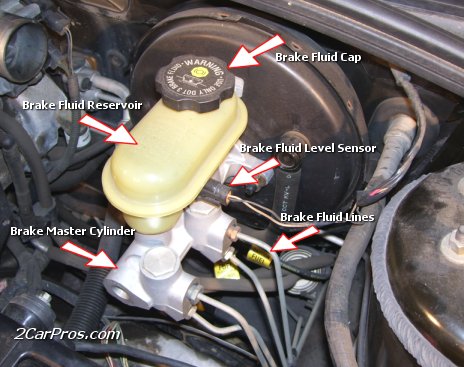
Check the Brake System Fluid Level – Check the level of fluid in the brake master cylinder. It is natural for fluid to be a low if the front or rear brake pads-shoes have worn down, but if they are in good condition and the brake master cylinder reservoir is empty you might have a brake fluid leak somewhere in the system. Inspect front brake calipers, rear wheel cylinders (drums) or rear brake calipers and flex hoses front and rear of vehicle and look for any sign of fluid leakage.

Also check the rear of the brake master cylinder for fluid leaks, if brake fluid is present the master cylinder seals have failed and the master cylinder needs to be replaced. Replace any parts that are leaking or show signs of previous leakage. Refill and bleed the brake system as needed. (Note: if brake fluid has contacted the brake components i.e. brake pads or brake shoes the brake lining material is contaminated and must be replaced) If the brake fluid in the reservoir is full proceed to the next step.

Brake Master Cylinder, Buick Dealer, buick gmc air condition, buying used car, dallas Buick Dealer, Dallas GMC Dealer, dallas GMC Truck, dallas new car, dallas Used Car, dallas Used Truck, dallas Used Truck. New Car, DFW Buick, dfw car dealer, dfw gmc, Fort Worth Buick, fort worth gmc, Fort Worth Truck Dealer, Ft. Worth Buick, Ft. Worth car dealer, ft. worth gmc, GMC Dealer, GMC Truck, Used Car, Used Truck
Brake Master Cylinder

Brake Master Cylinder is Full of Brake Fluid – If upon inspection the brake master cylinder is full of fluid, the brake master cylinder may be bypassing internally. This means the seals inside the master cylinder have failed allowing the fluid from the front of the master cylinder plunger to slip through to the rear of the plunger and back into the fluid reservoir. Allowing the brake pedal to go to the floor with out pressurizing brake fluid into the system. Replace master cylinder with new unit and bleed system as needed.

Failing Axle BearingsThe vehicle axle bearing holds the wheel true to the axle shaft while allowing the wheel to rotate. If the bearing fails it will allow the rotor to move back and forth, forcing the brake pads inward into the caliper. Then as you apply the brake pedal it will go to the floor as the caliper fills with fluid. In this case it may take one or two pumps to the brake pedal to regain normal operation. Inspect and replace failed axle bearings as needed, finish by bleeding and adjusting the system.

Air in Brake SystemWhen brake calipers or rear wheel cylinders fail they can allow air into the system when the brake pedal is released. Bleed the brake system by loosening the air bleeder, if air is observed from the bleeder replace the caliper or wheel cylinder and re-bleed system. This condition is rare but it does happen.

If you believe that you are experiencing any of these problems, bring your Buick, or GMC into Freeman Grapevine immediately so we can take a look at it. The last thing you what while cruising at 60mph on the highway is to encounter a brake failure.

Did You Just Blow a Gasket?

How do you know if you have a blown head gasket…aside from bringing it in to me to check it out? You can perform a test in your own driveway. Take a look at the video below for a step by step instruction.

httpv://www.youtube.com/watch?v=QA7KVQq9vKA&feature=related

Of course, if you find that you have blown a head gasket, I’d advise you to bring it too a service professional. There are a lot of mistakes that can be made when trying to go the home repair route. Just give me a shout and we can take a look at it for you.

What are the Best Tires for your Truck?

Are these the right Tires for your Truck?

If you own a GMC Truck, or any truck for that matter, you know that when it comes time for tire replacement it can be a costly venture in more ways than one. What exactly do I mean? Well, I know you’ve heard the saying, “You get what you pay for”. Well when it comes to new truck tires, this adage may be more truth than philosophy.

If there’s one part of your vehicle that demands attention, but usually doesn’t get as much as it should it’s your tires. Remember they are the only things that are between you and the road…I’d say that was pretty important.

So, when it comes time to replace your truck tires, Fort Worth, which are the best for you? What makes Tire A better than Tire B? What brands are the best? What type of performance do you expect to get out of your tires? To answer all of these questions and more, I turned to a trusted resource: Consumer Reports.

Our tread-wear test is more than double the mileage that’s required by the government for grading tires per the Uniform Tire Quality Grading System (UTQGS). While the government test is based on a total of 7,200 miles, we run on the same West Texas course to 16,000 miles. We believe the added mileage provides a better assessment of a tire’s true wear potential, upon which our ratings are based.

For the official UTQGS test, manufacturers assign the grades. A tire graded at “200” indicates it will wear twice as long as one graded “100.” The truck tires we tested have grades typically in the 500 to 600 range. Tire tread-wear grades can be found the on new tire label and embossed on the sidewall of the tire. (See our tire buying advice for more information on reading tires.)

In all, when viewing tire models that compete head-to-head, you may see similar warranties and UTQGS tread-wear grades. Often the differences are less impressive than what we find from our tread-wear test. For example, results from our test showed one tire model wore out at above 100,000 miles; the fastest wearing tire model lasted less than 50,000 miles. Despite the difference, you wouldn’t know it by the tread-wear warranties on those tires, which are only 5,000 miles apart (65,000 and 60,000 miles, for the long- and fast-wearing tires, respectively).

The longer-wearing tires do command a higher purchase price, however. A set of four tires cost us $673 in our test size (P265/70R17)—a premium of $145 over the fast-wearing model. Buying cheap tires is one way to go and a common practice of many consumers looking for new tires, based on our research. (Read: “Survey: Car tire shoppers satisfied with retailers, but their research falls flat.”) But that isn’t the best strategy for getting the performance and longevity you want.

Tire prices vary quiet a bit from model to model. But if you want to save lots of cash, don’t consider the initial purchase price alone without considering tire tread life. Think about it: Not only could you be replacing tires twice as often, but you will be doubling tire installation cost. If you plan on keeping your truck for years to come, the long-wearing tires are a bargain – with a $100 installation fee, the total comes to $743. But to get the same mileage with the cheaper, fast-wearing tires means buying two sets of four and two installation fees for a whopping $1,255. That’s an added cost of $512. So, spending more up front in this case is the smarter buy.

Don’t discount tire performance, either. Always put safety before price — even above tread life. When it comes time to buy, look for tires that do well in our tests for braking, handling, and resistance to hydroplaning. Winter traction should also be considered, if applicable. Let tread wear, ride comfort, noise, and rolling resistance be tiebreakers.

Make sure you check the tire-buyers guide provided by Consumer Reports. It will really shed some light on the many different styles, performance options and tread wear that can make choosing the right set a difficult task.

If you have any further questions, bring your GMC truck, or SUV by Freeman Grapevine and we can work together to get you the right set.