All posts by Ozzie

Fort Worth, this is how you buy a used car

You won’t see this guy at Freeman Grapevine

So, you’ve gotten as many miles out of the old girl as possible. She’s starting to cost too much to maintain, but buying a new car is not an option. What do you do? We’ll you can drive that old beater until you finally decide to leave it, abandoned and forgotten on the side of the road as you hoof it to the nearest sign of life, or you could have thought about picking up a used car for less than new…and you still would have had something to trade in.

Here’s a step by step check list:

Step 1: Starting out.

If you’ve decided to buy a used car, you’ve already made a smart decision. You can get a car that’s almost as good as a brand-new one, without suffering the depreciation that wallops new car buyers as soon as they drive the car off the lot. Used cars — even those that are only one year old — are 20 to 30 percent cheaper than new cars.

Step 2: Locating the right used car.
At the beginning of the car-buying process, many people already have in mind the car they want. It’s possible that you need to expand your horizons when considering what to buy. You might want to think of other vehicles in the same class. These cars were built for the same market, but they often have different features at lower prices.

Step 3: Used car bargains.
The cost of a used car is based on its condition, mileage, reliability, performance and popularity. Of course, you want a car that is reliable and performs well.

Step 4: Research your prospective used car.
One vital step to getting a great used car deal: you have to run a vehicle history report on any used car you are considering buying. Several companies sell these reports, which are based on the vehicle identification number (VIN), but Carfax seems to be the most comprehensive. You will find out the vital information about the used car including whether or not it has a salvage title (it has been declared a total loss by the insurance company) or evidence to reveal if the odometer has been rolled back. This is also the time to decide if you want a Certified Used Car.

httpvh://www.youtube.com/watch?v=NsO-oqASUuI


Step 5: How much can you afford?
The smart shopper will consider how to finance the car at the beginning of the shopping process. This will avoid unpleasant surprises later in the game and help you make an unemotional decision that fits your budget.

Step 6: Set up financing for your used car.
You have three ways to pay for your used car: Financing through a bank, on-line lender or credit union, financing through the dealer, or cash.

Step 7: Used car markets.
There are advantages to buying a used car from a new car dealership. Many used cars, on new car lots, are trade-ins. Dealerships usually get these cars at rock-bottom prices. If you make a low offer — but one that gives them some profit — you just might get a great deal. Furthermore, many dealerships offer certified used cars that have been thoroughly inspected and are backed by attractive warranties.

Step 8: Test driving a used car.
Used car shopping will involve inspecting the vehicle to determine its condition. This process is simplified if you buy a certified used car that has passed a thorough inspection and is backed by a manufacturer’s warranty. But while buying a certified used car removes a lot of the guesswork about the vehicle’s mechanical condition, you pay for this service. Try to arrange your test drive so that you start the engine when it is completely cold. Some cars are harder to start when they are dead cold and, when doing so, will reveal chronic problems. Turn off the radio before you begin driving — you want to hear the engine and concentrate on the driving experience.

Step 9: Negotiating for a used car.
Whether you are buying a used car from a dealer or a private party, let them know you have the cash in hand (or financing arranged) to make a deal on the spot. Preface your offer with a statement like, “I’m ready to make a deal now. I can give you cash (or a cashier’s check) now. But we need to talk about the price.”

At this point, you need to have a persuasive argument about why the price is too high. So let’s talk about pricing. The foundation of successful negotiation is information. This is particularly true when buying a used car. And yet, the condition of used cars means prices will vary widely.

Step 10: Closing the deal.
Once the contract is ready, review it thoroughly. In most states, it will contain the cost of the vehicle, a documentation fee, a smog fee, a small charge for a smog certificate, sales tax and license fees (also known as DMV fees). Make sure you understand the charges and question the appearance of any significant, sudden additions to the contract.

Finally, you should inspect the car before you take possession of it. If any repair work is required, and has been promised by the dealer, get it in writing in a “Due Bill.” Make sure the temporary registration has been put in the proper place and — you’re finally on your way.

There you have it…trade secrets revealed. If you need a used car, show you appreciation for the tips above by swinging by and taking a few for a test drive.

Ultra-Easy New Car Maintenance Tips

What do we all want while driving? It’s not just to provide for our families and loved ones transportation, but a family car that is always 100% reliable. At least that’s what we strive to give our customer’s at Freeman Grapevine.

The most important thing you can do for your car is make regular auto maintenance check-ups, service all the automotive liquids. That means your oil, coolant, power steering fluid, and transmission liquids. Make checking your tires a habit too.

Refer to your new car owner’s manual often. The new car owner manual is like the bible of your vehicle. If you don’t already have one, get one. You’ll wish you had one if your car breaks down. There is a lot of trouble shooting you can do when you consult your manual.

Your car engine will thank you with better performance and quicker reaction times, which is an essential part of keeping you and your family and friends safe on the road. Make yourself aware of this info. It may save the life of your engine one day. It will save you money on gas and auto maintenance.

Choose the right fuel. Your vehicle is designed to take regular unleaded fuel, which will have this symbol (87) on the pump at the gas station. The 87 symbol refers to the level of octane in the fuel. Using lower grade of fuel will jack up your car engine and will cause heavy knocking, which could easily damage your engine.

Higher grade fuels will protect your fuel system from rusting and protect against fuel lock in the fuel system (causes engine to hesitate/stall and hard to restart). In addition, it will minimize fuel deposits in fuel injection system, and prevent your engine from knocking/pinging.

Finally, increase you gas mileage by not driving at life-threatening highway speeds. That can dramatically lower your fuel economy. Plus, gradually increasing your speed will save you precious fuel. And the way gas prices have been, it is nice not having to cram all your money into your gas tank. Extended idling of your engine will lower your miles per gallon.

I hope theses tips allow you to spend more time with your family and friends. As well as save money on gas, and auto maintenance.

Dallas and Fort Worth cars, tell your owners when you need new shocks

That’s right, I’m talking to your cars. At Freeman Grapevine I’ve seen cars come in with serious suspension problems and whose owners obviously didn’t listen to their cars. Seriously, they will tell you when  you need replacement shocks. Shocks and suspensions are an often overlooked but vital aspect to your car in regards to safety. Make no mistake, recognizing when it is time to replace your shocks is very important.

First, let’s review the shocks and the suspension system:

httpv://www.youtube.com/watch?v=vcafJwewltY

Checking your shocks is actually a very simple thing to do. In fact, it is something you can do yourself  fairly easily.

The first thing you can do is pay attention when you are driving. For example, after hitting the bump does your Buick or GMC continue to bounce up and down? If the answer is yes then you  will almost certainly need new shocks. Start paying attention now, because this may start gradually and then worsen  over time until they are really bad. In fact, if you wait too long you can  damage other parts and components of you car.

A second way to check your shock’s life  is to physically look under your car  or truck. For a truck or van you may not be able to see them. In this  case you will need to push on the bumper and follow the steps the same  as you are physically looking at them. They  will bounce. Two or three bounces they are  fine. If they continue to oscillate, then they need replacing.

httpv://www.youtube.com/watch?v=jmLGKWWa1oo

As stated earlier, the reason it is so important to replace worn out shocks is because they are responsible for keeping your tires in contact  with the road. If you are driving down a rough road and the wheels are bouncing up and down, worn shocks will actually allow the wheels to  completely lose contact with the roadway. Considering that your tires are the only thing separating you from the road, this can be especially dangerous  if you hit a dip or a bump during a high speed corner. Good shocks will  also help to minimize body roll, also very important during cornering.

If you think that your shocks may be worn and just can’t figure it out on your own, swing by and we’ll take a look at them. Then we can recommend the right ones for your Dallas Buick or GMC.

How Much Do You Know About Your Brakes

OK, what do you do when you apply your brakes and there is minimal resistance resulting in the brake being depressed all the way to the floor? First, you read this, then you call Freeman Grapevine, you could have a very serious issue.

The best way I can explain brake problems is to quote some expert advice. My guys in the Freeman Service department know this stuff like the back of their hand. They can diagnose a brake issue almost as quickly as it takes to pull into the service bay. My guys are really busy, so I pulled to following information for 2carpros.com. It is a well rounded description of common…and not so common…braking issues. Thanks for the info guy!

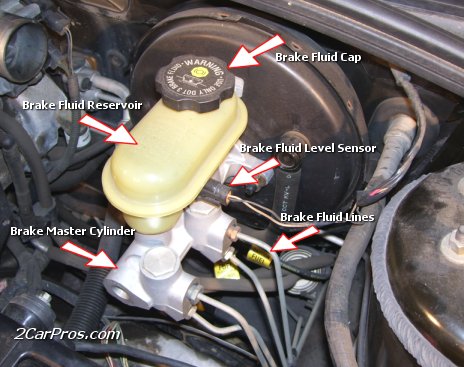
Check the Brake System Fluid Level – Check the level of fluid in the brake master cylinder. It is natural for fluid to be a low if the front or rear brake pads-shoes have worn down, but if they are in good condition and the brake master cylinder reservoir is empty you might have a brake fluid leak somewhere in the system. Inspect front brake calipers, rear wheel cylinders (drums) or rear brake calipers and flex hoses front and rear of vehicle and look for any sign of fluid leakage.

Also check the rear of the brake master cylinder for fluid leaks, if brake fluid is present the master cylinder seals have failed and the master cylinder needs to be replaced. Replace any parts that are leaking or show signs of previous leakage. Refill and bleed the brake system as needed. (Note: if brake fluid has contacted the brake components i.e. brake pads or brake shoes the brake lining material is contaminated and must be replaced) If the brake fluid in the reservoir is full proceed to the next step.

Brake Master Cylinder, Buick Dealer, buick gmc air condition, buying used car, dallas Buick Dealer, Dallas GMC Dealer, dallas GMC Truck, dallas new car, dallas Used Car, dallas Used Truck, dallas Used Truck. New Car, DFW Buick, dfw car dealer, dfw gmc, Fort Worth Buick, fort worth gmc, Fort Worth Truck Dealer, Ft. Worth Buick, Ft. Worth car dealer, ft. worth gmc, GMC Dealer, GMC Truck, Used Car, Used Truck
Brake Master Cylinder

Brake Master Cylinder is Full of Brake Fluid – If upon inspection the brake master cylinder is full of fluid, the brake master cylinder may be bypassing internally. This means the seals inside the master cylinder have failed allowing the fluid from the front of the master cylinder plunger to slip through to the rear of the plunger and back into the fluid reservoir. Allowing the brake pedal to go to the floor with out pressurizing brake fluid into the system. Replace master cylinder with new unit and bleed system as needed.

Failing Axle BearingsThe vehicle axle bearing holds the wheel true to the axle shaft while allowing the wheel to rotate. If the bearing fails it will allow the rotor to move back and forth, forcing the brake pads inward into the caliper. Then as you apply the brake pedal it will go to the floor as the caliper fills with fluid. In this case it may take one or two pumps to the brake pedal to regain normal operation. Inspect and replace failed axle bearings as needed, finish by bleeding and adjusting the system.

Air in Brake SystemWhen brake calipers or rear wheel cylinders fail they can allow air into the system when the brake pedal is released. Bleed the brake system by loosening the air bleeder, if air is observed from the bleeder replace the caliper or wheel cylinder and re-bleed system. This condition is rare but it does happen.

If you believe that you are experiencing any of these problems, bring your Buick, or GMC into Freeman Grapevine immediately so we can take a look at it. The last thing you what while cruising at 60mph on the highway is to encounter a brake failure.

What’s In Your Car’s Emergency Kit

Getting caught with your pants down. It’s a phrase we’ve all used and a few of us have probably experienced. Freeman Grapevine, wants to know if you you have your new car survival kit as to NOT get caught with your pants down in the event of a road side emergency or inconvenience.

What’s in a New Car Survival Kit you ask? All of the essential that will get you, at the very least, off of the side of the roadway and to a safe area you can leave your vehicle until further help arrives.

Jumper Cables
None of us ever leave our lights on on purpose, or run the radio just off of our battery because we know that it will wear down the charge. That’s not even saying anything about having an old tired battery that is on it’s last legs and always seems to struggle when that key is turned over. How many time are you going to cross your fingers hoping that battery has enough of a charge to actually start your car? If you say, “until it doesn’t start any more”, then you’d better have a set of jumper cables in your car. Or better yet, a portable battery charger/jumper. This way you don’t need a good Samaritan to help you in your time of need.

Flashlight
It doesn’t have to be night in order to need a flashlight. Have something to look at in your engine for whatever reason? A flashlight will come in handy. Then again, breakdowns at night always seem to be the norm, or at the very least, Murphy’s Law. Don’t have a flashlight in your new Atlanta GM? Expect to break down when you need light the most.

Tow Rope
It takes up very little space and can really get you out of a jam, quite literally. Now towing your car yourself should be reserved for the experienced, as it can be a little tricky if you don’t have your tow rope at the proper length. Plus, you have to be able to locate the appropriate tow points on your vehicle. A poorly anchored tow rope will pull the bumper off of your car. It’s a good thing to have, just consult your owner’s manual for proper tow points.

Blanket
This is obvious. If it’s cold outside, you are going to want a blanket in the case of a breakdown. Plus, if you travel long distances at any given point and need to pull into a rest area, to take a nap, it will be nice to have a little extra comfort.

First Aid Kit
We all keep a cabinet of first aid items in our home, so why not in the car? It will come in handy for a paper cut, or aid in a more serious situation.

Tire Gauge
I do posts on the importance of proper tire care all of the time. If you don’t own a tire gauge, you need to read my blogs a little more carefully. It’s an invaluable tool, costs less than $5 and is the size of a pen. Just get one already!

Empty Gas Can
I still don’t understand how people run out of gas on the road, but it happens. If you are the type who never looks at your instrument cluster, then it might be a good idea to throw a spare gas can in the trunk of your car. I’ve seen people walking down the road with them, so apparently people still don’t understand that your car will tell you that you are almost out of gas. Regardless, at least they were smart enough to prepare.

Have any other suggestions about what should go in your New Dallas, or Fort Worth vehicle? Tell Freeman Grapevine!

New Drivers Need To Know More Than The Rules Of The Road

If you have a child, it’s inevitable that one day they are going learn to drive and end up wanting to borrow the keys to your car. Of course they are going to go to  a driving school, and you may show them a thing or two in an abandoned parking lot.  However, their automotive education should end there. It’s a very good idea to cover basic car care tips.  Owning a car means more than learning how to get from point A to point B, it also entails knowing how to keep your car running, and knowing how to fix and prevent problems.

“What do you mean I have to change my oil?”

I’m surprised at how many new drivers think that their car operates via some kind of magic and rarely give a second thought to how the thing actually works. Changing the oil is a prime example. Young drivers may go way too long between oil changes, if they even change it at all. A good plan is for you, the driving parent, to walk them around the car and show them under the hood and explain to them how things work.  Here’s some good things to teach them.

  • Explain that all cars, new and old, need regular attention. Make sure your teenager knows and follows the maintenance schedule for her car. In addition to making a car safe to drive, preventive maintenance can save thousands of dollars during a lifetime of driving.
  • Don’t overlook the owner’s manual. This is full of information about the car that your young driver may never know unless he is familiar with this automotive bible.
  • Make it fun. There are myriad sites on the Internet that are fascinating for young and old drivers alike. Some have Q & A sections. Let your teen send the tough questions to the professionals.
  • It’s probably been a while since they went on a field trip. Take them with you to the repair facility, the tire store, the body shop and wherever you have automotive work performed. Get them accustomed to the automotive world-its people, places, jargon and prices.
  • There are hundreds of books available on this subject. Many are written specifically for non-technical audiences; some are even humorous. Buy a few and make them required reading for the licensing process.
  • Make a plan. What happens if the car breaks down, your child has a wreck, or the car gets stolen? What if no adults are home to receive the panic call? Whether you want your teenager to call your family repair facility or Aunt Sadie, give some instruction and put important phone numbers in the glove compartment. [Source: Midas.com]

If you plan on doing any repairs at home, it’s a really good idea to have your new driver help with that service. It give you the opportunity show them the things that you are doing to repair the car. Of course, it goes without saying that, if your teen driver has proved themselves responsible enough to have their own car, swing by Freeman Grapevine and check out our used car selection.

freeman grapevine, air filter, changing air filter, air filter for efficiency, buick gmc, dallas, fort worth

Change Your Air Filter For More Engine Efficiency

 freeman grapevine, air filter, changing air filter, air filter for efficiency, buick gmc, dallas, fort worth

An often overlooked, but an extremely important component in keeping your engine running smoothly and efficiently is your air filter.

Here, we see a lot of need for air filter cleaning, or replacement. It can be hard to adhere to a specific time or mileage figure when a cleaning or change needs to occur, because the life of the filter depends on how much dirt and grime it ingests. We have seen filters that last 20,000 or even 30,000 miles on a vehicle that’s driven mostly on expressways but those same filters may last only a month or two in a rural setting where the vehicle is driven frequently on gravel roads. Changing your air filter annually, or every 15,000 miles for preventative maintenance may be a good recommendation for the city driver, but not its country cousin.

Regardless of the mileage or time, a filter should be replaced before it reaches the point where it creates a significant restriction to airflow. Interestingly, a slightly dirty filter actually cleans more efficiently than a brand new filter. That’s because the debris trapped by the filter element helps screen out smaller particles that try to get through. Eventually every filter reaches the point where it causes enough of a pressure drop to restrict airflow. Fuel economy, performance and emissions begin to deteriorate and get progressively worse until the dirty filter is replaced.

httpv://www.youtube.com/watch?v=r0nSeZcdVLM

If you think that your car could be performing better, or you don’t seem to be getting the gas mileage you believe you should, it might be time to change your air filter. Call Freeman Grapevine if you have any questions or need any assistance.

Did You Just Blow a Gasket?

How do you know if you have a blown head gasket…aside from bringing it in to me to check it out? You can perform a test in your own driveway. Take a look at the video below for a step by step instruction.

httpv://www.youtube.com/watch?v=QA7KVQq9vKA&feature=related

Of course, if you find that you have blown a head gasket, I’d advise you to bring it too a service professional. There are a lot of mistakes that can be made when trying to go the home repair route. Just give me a shout and we can take a look at it for you.

The Best Road Trip You Will Ever Take

freeman grapevine, texas road trips, dallas buick, dallas gmc, fort worth buick, fort worth gmc, texas wineries, see texas, go texan

I realized something today. I don’t write about taking road trips around Texas in your Buick, or GMC nearly enough. Maybe it’s because I don’t ever have the time to do so. Maybe it’s because…yeah…I just don’t have the time. There really is no other reason why everyone shouldn’t just jump in their GM cars, trucks and SUVs and do a little exploring one weekend.

I mean, have you ever taken the time to really think about what Texas has to offer? I mean really think about it. We have nearly every type of climate from tropical humidity on the Gulf Coast, to the cold plains in the panhandle during the winter months. We have forests to the east of Dallas and deserts out west. We have 2 Major League Baseball teams, two football teams, soccer and hockey. We have multiple state universities with campuses spanning the state. We have some of the largest and most culturally diverse cities in the nation. We have huge music and art festivals and thousands of amazing restaurants. We even have 24 wineries! (I’ll bet you weren’t aware of that!)

https://www.youtube.com/user/gotexantv

So, why don’t we get out of our comfort zone and take a few days to explore Texas? Too busy? That’s a bad excuse. Make time. You will be absolutely astounded at the history and majesty of this great state.

If you need me, I’ll be on this computer at Freeman Grapevine hopefully planning my own Texas road trip soon…all I have to do is make the time.


What are the Best Tires for your Truck?

Are these the right Tires for your Truck?

If you own a GMC Truck, or any truck for that matter, you know that when it comes time for tire replacement it can be a costly venture in more ways than one. What exactly do I mean? Well, I know you’ve heard the saying, “You get what you pay for”. Well when it comes to new truck tires, this adage may be more truth than philosophy.

If there’s one part of your vehicle that demands attention, but usually doesn’t get as much as it should it’s your tires. Remember they are the only things that are between you and the road…I’d say that was pretty important.

So, when it comes time to replace your truck tires, Fort Worth, which are the best for you? What makes Tire A better than Tire B? What brands are the best? What type of performance do you expect to get out of your tires? To answer all of these questions and more, I turned to a trusted resource: Consumer Reports.

Our tread-wear test is more than double the mileage that’s required by the government for grading tires per the Uniform Tire Quality Grading System (UTQGS). While the government test is based on a total of 7,200 miles, we run on the same West Texas course to 16,000 miles. We believe the added mileage provides a better assessment of a tire’s true wear potential, upon which our ratings are based.

For the official UTQGS test, manufacturers assign the grades. A tire graded at “200” indicates it will wear twice as long as one graded “100.” The truck tires we tested have grades typically in the 500 to 600 range. Tire tread-wear grades can be found the on new tire label and embossed on the sidewall of the tire. (See our tire buying advice for more information on reading tires.)

In all, when viewing tire models that compete head-to-head, you may see similar warranties and UTQGS tread-wear grades. Often the differences are less impressive than what we find from our tread-wear test. For example, results from our test showed one tire model wore out at above 100,000 miles; the fastest wearing tire model lasted less than 50,000 miles. Despite the difference, you wouldn’t know it by the tread-wear warranties on those tires, which are only 5,000 miles apart (65,000 and 60,000 miles, for the long- and fast-wearing tires, respectively).

The longer-wearing tires do command a higher purchase price, however. A set of four tires cost us $673 in our test size (P265/70R17)—a premium of $145 over the fast-wearing model. Buying cheap tires is one way to go and a common practice of many consumers looking for new tires, based on our research. (Read: “Survey: Car tire shoppers satisfied with retailers, but their research falls flat.”) But that isn’t the best strategy for getting the performance and longevity you want.

Tire prices vary quiet a bit from model to model. But if you want to save lots of cash, don’t consider the initial purchase price alone without considering tire tread life. Think about it: Not only could you be replacing tires twice as often, but you will be doubling tire installation cost. If you plan on keeping your truck for years to come, the long-wearing tires are a bargain – with a $100 installation fee, the total comes to $743. But to get the same mileage with the cheaper, fast-wearing tires means buying two sets of four and two installation fees for a whopping $1,255. That’s an added cost of $512. So, spending more up front in this case is the smarter buy.

Don’t discount tire performance, either. Always put safety before price — even above tread life. When it comes time to buy, look for tires that do well in our tests for braking, handling, and resistance to hydroplaning. Winter traction should also be considered, if applicable. Let tread wear, ride comfort, noise, and rolling resistance be tiebreakers.

Make sure you check the tire-buyers guide provided by Consumer Reports. It will really shed some light on the many different styles, performance options and tread wear that can make choosing the right set a difficult task.

If you have any further questions, bring your GMC truck, or SUV by Freeman Grapevine and we can work together to get you the right set.