All posts by Ozzie

All-New Duramax 6.6L Diesel Is Our Most Powerful Ever

(This article originally appeared on GMC.com)

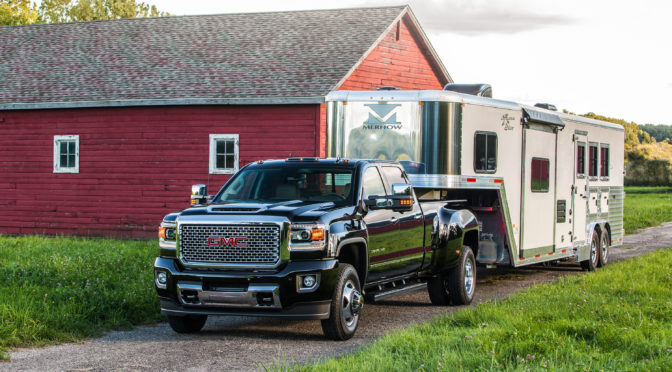
2017 GMC Sierra Denali 3500HD © General Motors

Greater horsepower, torque supports more confident trailering on 2017 Sierra HD

DALLAS — When it comes to horsepower from a diesel engine, the 2017 GMC Sierra HD tops the segment with an SAE-certified 445 hp (332 kW) from an all-new Duramax 6.6L V-8 turbo-diesel. And when it comes to the torque that enables effortless trailering and hauling, it also delivers more than ever: an SAE-certified net 910 lb.-ft. of torque (1,234 Nm) to make easier work of the heaviest loads.

The 2017 Sierra HD was introduced today in Texas, where more heavy-duty pickups are sold than in any other state, and where Dallas and Houston are two of the largest markets for the top-of-the-line Sierra Denali HD, which accounts for approximately 50 percent of Sierra HD sales nationally.

“GMC Sierra HD trucks and the Duramax diesel have a long-established legacy of offering customers confidence-inspiring capability for the largest tasks,” said Duncan Aldred, vice president of GMC Sales and Marketing. “With the new Duramax and additional enhancements, the 2017 Sierra HD takes the combination of refinement and capability to an unprecedented level.”

Along with a 19 percent increase in max torque over the current Duramax 6.6L and segment-best horsepower, the redesigned turbo-diesel’s performance is quieter and smoother, for greater refinement and more confidence when trailering or hauling.

The new Duramax 6.6L is a next-generation redesign of the venerable turbo-diesel engine and incorporates a new, GM-developed control system. The Duramax’s signature low-rpm torque production hasn’t changed, offering 90 percent of peak torque at a low 1,550 rpm and sustaining it through 2,850 rpm — an attribute that contributes to the Sierra HD’s confident pulling power.

A new, patent-pending vehicle air intake system — distinguished on the Sierra HD by a bold hood scoop — drives cool, dry air into the engine for sustained performance and cooler engine temperatures during difficult conditions such as trailering on steep grades. Cooler air helps the engine run better under load, especially in conditions where engine and transmission temperatures can rise quickly. That allows the Duramax to maintain more power and vehicle speed when trailering in the toughest conditions.

Driveline enhancements were made to increase strength and enhance durability, including a stronger front prop shaft and larger U-joints compared to previous Duramax-equipped Sierra HD models.

Read the entire article on GMC.com!


Dealer Or Independent For Service: Which Do You Use?

This is a topic that Freeman Grapevine has a lot of personal experience with. I’m sure the answer, for the most part, really is up to the individual consumer. If you think you are going to get better service from an independent garage you are going to want to get all of the facts about that establishment before you decide to let them tinker under your hood.

I’m obviously going to want to steer you to Freeman Grapevine, as I believe we have one of the best service departments  in DFW. However, I know that there are a few people who choose to stay tried and true to their mechanic because they haven’t had a better experience at a dealership, in regards to service. It can happen. That’s why you should really weigh your options thoroughly before choosing either a dealer or an independent mechanic to service your vehicle.

In doing research to see who the majority of people preferred to service their vehicle, I found a great article at Edmunds.com that has some very good things to think about before you make a potentially bad decision. Here are a few excerpts from the article:

Dealers do have a distinct advantage when it comes to facilities. Dealers get manufacturers’ assistance with start-up costs and equipment. They get first dibs on any of the manufacturers’ newly developed service tools, specifications and, as noted above, recall and service bulletins. That way, the manufacturer keeps the latest information on new cars and the hardware to best service them “in-house,” at least for awhile. (This translates to keeping your money in-house, as well.)

Size also matters. Dealers usually have larger facilities and that means more service bays are available to accommodate customers. This can, but doesn’t always, translate to quicker turnaround time. You may find it more difficult to get prompt service at large, busy dealerships, especially if you go in without an appointment.

Dealer facilities are often cleaner, more organized and better maintained than smaller shops. At a dealer facility, you may find a waiting room, clean bathrooms, a place to buy car accessories, even the availability of drinks, snacks and television. They may even wash your car before returning it to you. This can make the overall experience a lot more pleasurable.

So how can small repair shops compete with dealers on facilities? The short answer is: They can’t.

I thought this was an interesting section as well:

Dealer service departments have a distinct advantage when it comes to manufacturer recalls and technical service bulletins. If you’ve moved since you first bought your car, or if the manufacturer simply doesn’t have your correct address on file, you may have no clue there’s an open recall on your car. Dealers should automatically check for recalls when you come in for service.

The more I kept looking into it, I found even more reasons to use the dealership as opposed to an independent. I would be remiss not to mention, however, that smaller shops have their benefits as well. It just seems, and I know this from personal experience, that you will have more mechanics, tools and brains hard at work which will directly translate into a job well done the very first time you bring your vehicle in for service. Don’t believe me? Try me. Bring your car to Freeman Grapevine the next time you need service and I’ll prove the value you of dealing directly with the dealership in regards to service.

Keeping Your Leather Seats Looking Great

leather seat cleaning conditioning

Your Dallas Fort Worth Buick GMC dealer, Freeman Grapevine knows there’s nothing quite like leather car seats. Of course in our Texas heat, leather can dry and crack if you don’t maintain it properly.

Now I know what your may be thinking, “I thought leather was supposed to be low maintenance?” You are right. It is actually very easy to take care of, but you should also keep in mind that you need give it some attention from time to time. In fact, keeping leather car seats clean is simple with the use of two-part cleaner and conditioners that can be found at an auto parts store.

The application process is very easy and will not only extend the good looks of your leather car seats, but cleaning and conditioning will also help prevent rips and tears that are commonly found in under-conditioned leather.

Keep in mind that leather must be carefully cleansed before it can be properly conditioned. As leather ages, it loses essential guards infused into the leather during the manufacturing process. That leaves the leather susceptible to dirt, oils, and UV damage. To keep leather looking and feeling its best, you must first clean it and then replace the lost moisture and protection.

If you aren’t sure if you are properly cleaning your leather seats, or would just rather have someone do it for you, feel free to bring your vehicle by Freeman Grapevine. We can restore most damaged leather to its “like new” state.

Do you Know What Steps to Take When you Sell your Car

buying used car, selling used carsBuying and selling a car can be a laborious and often frustrating task. It’s not like you can just knock on your neighbor’s door and sell them your vehicle. The State of Texas has certain requirements and protocols that must be followed or your risk voiding the transaction. That’s when the real mess starts.

Of course, if you decide to sell your vehicle it is much easier to bring it to Freeman Grapevine. We have bought and sold a countless number of vehicles, so we have a pretty firm grip on the State of Texas Requirement for vehicle trans actions.

If you are considering buying a new vehicle, but are looking to sell your old car on your own, there are a few things that you need to know. First, before you do anything check the FAQS section of the Texas Department of Motor Vehicles web site. They answer almost all of the questions you may have when deciding to sell. The also have the answers to the question you never even thought about asking, so check there.

I pulled this excerpt from txdvm.gov for your convenience. Take a look at it, so you know what you are in for when trying to sell your Dallas or Fort used car.

Keep your license plates and transfer them to your new vehicle.

When you keep your license plates, the buyer has to transfer the vehicle title and this helps to protect you.

When you take off the plates, the buyer will need a Vehicle Transit Permit to drive the vehicle to the county tax office to re-title the car or truck.

Provide the buyer with all the documents needed to transfer the title:

  • A signed title
  • A signed vehicle title application
  • The vehicle’s latest registration receipt
  • Any other supporting documents, such as a release of lien, power of attorney, etc.Then, accompany the buyer to the county tax office to verify the buyer files a new vehicle title application under his/her name. If you sell or trade in your vehicle to a dealer, or if the buyer can’t go to the tax office, you need to notify us of the sale by filing a vehicle vehicle transfer notification within 30 days of selling the vehicle.

Now this was a dealership video, but the same information holds true. Be honest and understand the laws inherent in selling a used car in Texas. Expect to make multiple phone calls to the tax office in regards to transferring your title and relinquishing ownership of your vehicle.

Of course, If you’d rather not go through the hassle of selling your car yourself, you can bring it to Freeman Grapevine and we’ll buy it from you and get you a great price towards a new Buick Or GMC.

What Are The Best Tires For Your Truck?

truck tiresIf you own a truck, you know that when it comes time for tire replacement it can be a costly venture in more ways than one. What exactly do I mean? Well, I know you’ve heard the saying, “You get what you pay for.” Well when it comes to new truck tires, this adage may be more truth than philosophy.

If there’s one part of your vehicle that demands attention, but usually doesn’t get as much as it should it’s your tires. Remember they are the only things that are between you and the road…I’d say that was pretty important. Under-inflated tires…over-inflated tires…tires that are simply the wrong choice for your vehicle, there are a lot of pitfalls when it comes time to replacing the tires on your Dallas Fort Worth Truck. Do you really know to shop for new tires?

So, when it comes time to replace your truck tires, Fort Worth, which are the best for you? What makes Tire A better than Tire B? What brands are the best? What type of performance do you expect to get out of your tires? To answer all of these questions and more, I turned to a trusted resource: Consumer Reports.

Our tread-wear test is more than double the mileage that’s required by the government for grading tires per the Uniform Tire Quality Grading System (UTQGS). While the government test is based on a total of 7,200 miles, we run on the same West Texas course to 16,000 miles. We believe the added mileage provides a better assessment of a tire’s true wear potential, upon which our ratings are based.

For the official UTQGS test, manufacturers assign the grades. A tire graded at “200” indicates it will wear twice as long as one graded “100.” The truck tires we tested have grades typically in the 500 to 600 range. Tire tread-wear grades can be found the on new tire label and embossed on the sidewall of the tire. (See our tire buying advice for more information on reading tires.)

In all, when viewing tire models that compete head-to-head, you may see similar warranties and UTQGS tread-wear grades. Often the differences are less impressive than what we find from our tread-wear test. For example, results from our test showed one tire model wore out at above 100,000 miles; the fastest wearing tire model lasted less than 50,000 miles. Despite the difference, you wouldn’t know it by the tread-wear warranties on those tires, which are only 5,000 miles apart (65,000 and 60,000 miles, for the long- and fast-wearing tires, respectively).

The longer-wearing tires do command a higher purchase price, however. A set of four tires cost us $673 in our test size (P265/70R17)—a premium of $145 over the fast-wearing model. Buying cheap tires is one way to go and a common practice of many consumers looking for new tires, based on our research. (Read: “Survey: Car tire shoppers satisfied with retailers, but their research falls flat.”) But that isn’t the best strategy for getting the performance and longevity you want.

Tire prices vary quiet a bit from model to model. But if you want to save lots of cash, don’t consider the initial purchase price alone without considering tire tread life. Think about it: Not only could you be replacing tires twice as often, but you will be doubling tire installation cost. If you plan on keeping your truck for years to come, the long-wearing tires are a bargain – for argument’s sake, let’s say that with a $100 installation fee, the total cost of your new tires comes to $743. But to get the same mileage with the cheaper, fast-wearing tires means buying two sets of four and two installation fees for a whopping $1,255. That’s an added cost of $512. So, spending more up front in this case is the smarter buy.

Don’t discount tire performance, either. Always put safety before price — even above tread life. When it comes time to buy, look for tires that do well in our tests for braking, handling, and resistance to hydroplaning. Winter traction should also be considered, if applicable. Let tread wear, ride comfort, noise, and rolling resistance be tiebreakers.

Make sure you check the tire-buyers guide provided by Consumer Reports. It will really shed some light on the many different styles, performance options and tread wear that can make choosing the right set a difficult task.

If you have any further questions, bring your truck or SUV by Freeman Grapevine and we can work together to get you the right set.

Wearing Your Seat Belt Isn’t Just The Law, It’s Your Guardian Angel

Now, I know I’ve posted something similar to this before, but it is certainly worth repeating.
WEAR YOUR SEAT BELT!

I ran across an accident last evening just out side of Grapevine, Tx and happened to be pulling into a gas station just as the emergency crews were arriving.

Let me first state that it appeared that the driver and her passengers had some minor injuries, but all seemed to be relatively OK. Considering the catastrophic nature of the accident, they are lucky to be alive.

HMMMMM…I what could have prevented them all from being injured seriously or even killed?

http://www.youtube.com/watch?v=e6Qhmdk4VNs


Remember, if you are in an accident and aren’t wearing your seat belt, you cease being a passenger and become a dangerous and deadly projectile. You are now required by state law for every passenger even if you are sitting in the back. Wrecking a new car is one thing you can get over, dealing with the aftermath won’t be so easy if there are injuries to you, your passengers or others.

The bottom line is that without use of your belt, you are just waiting to be a statistic. Freeman Grapevine really wants to stress to you that, even though you might not think that anything will ever happen to you, it is that exact type of thinking that causes thousands of needless fatalities due too lack of seat belt use.

Buckle up and Arrive alive.

“Slime” your tires to help prevent flats

ghostbustersAs much as I wish I was talking about the movie Ghostbusters, I’m, in fact, talking about a product that will reduce the likelihood of having to change a flat tire on the side of a busy highway. It’s called Slime PowerSpare Flat Repair and it can be a lifesaver if you were to pick up a nail or chunk of metal while on the  road. Of course, in the video demonstration below, it’s an ice pick and the Slime still seals the leak with no problem. Check it out:

According to Slime.com:

The 48-piece kit includes 24-ounce bottle of Slime tire sealant, heavy-duty powerful 12V tire inflator with built-in light and pressure gauge, 25-foot coiled air hose and an adapter for inflatables, 10-piece tire tackle kit, 30 black plugs, t-handle reamer and plugger, tire gauge, alligator power-clip, slime decal set and instructions in both English and Spanish. Suggested MSRP is US$89.99

So the next time you pick up a nail on the road, instead of braving the dangers of a busy highway, freeway or road, fill you tire with some slime and have the powers of a self-sealing tire work for you. If you have any questions about this product or others, feel free to contact Freeman Grapevine Service. They can point you in the the right directions.

Is Your Steering Wheel Covered In Bacteria?

clean steering wheel
How clean is your steering wheel?

The short answer is, “Yes.” Keeping the last theme of car cleanliness going from my last post, have you ever thought about how much bacteria and unpleasant microbes are covering your Buick or Gmc’s steering wheel? Probably not. When was the last time you actually gave your steering wheel and antibacterial rub down? Never? Think about this scenario for a second…it’s happened to all of us. You get in the car and turn the steering wheel and you feel something sticky on the back of it which probably came from your hands in the first place. Remember that big greasy burger you ate in the car before your last meeting? However, you kind of just ignore it but eventually your hand touches it again, and again, and again. When you stop touching it and realize that you should probably clean it off? Or, do you even care? Maybe you should.

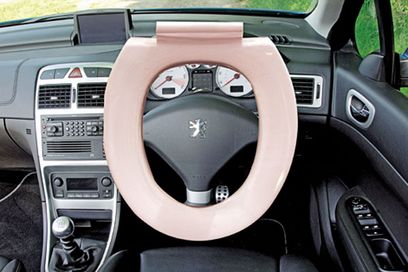
Researchers at Queen Mary University in London claim that there are, on average, 700 different kinds of bacteria per square inch of steering wheel. That compares to 80 distinct bacteria types on a public toilet seat. Even worse, the trunk has 1,000 bacteria types per square inch. The most common form of bacteria was bacillus cereus, which can cause food poisoning.

The reason cars are filthy is simple; we simply don’t clean them. While we vacuum, dust and disinfect our home on a semi-regular basis, only one third of study participants cleaned their vehicle once a year or more. That sounds pretty crazy (and a bit lazy), but think about it. You may jettison the trash and vacuum the carpet on a somewhat regular basis, but how often do you wipe down that nasty steering wheel? And when you think about how many Americans regularly eat in their vehicles, our cars could be a reason why we are sick as often as we are. Now we know why valet parking attendants tend to wear white gloves.

As a side note, even beyond cleanliness, the study also shows that many drivers know next to nothing about their vehicles. For example, two-thirds of us don’t know how to change a tire, while one third of those surveyed don’t even know how to put air in the tires. It’s a sad, sad world.

So are you officially grossed out? You better run and get your car cleaned!! Let me know if you are interested in keeping your Buick or GMC bacteria free.

Running on empty can damage your car!

Even though gas prices have come down some, it still hurts the wallet. And to avoid that sting, some people are driving their vehicles until they have used every last drop in the gas tank, literally. Which means not only could they end up on the side of the road because they ran out of gas, but running on empty can cause costly damage to your vehicle. We’ve seen it first hand here at Freeman Grapevine.

Most people on the road don’t realize that if you are running on empty, you may be putting your vehicle at risk by causing damage to the fuel pump. The electric fuel-pump motor uses the gasoline as a coolant, so when you are low the pump may suck in air which creates heat and that is not a good thing. Replacing the fuel pump will cost a couple hundred dollars to fix which leaves you in a position of shelling out even more money!

Besides costly fuel pump damage, running on a low tank of gas could possibly leave you stranded on the side of a road or could possible be the cause of an accident if your vehicle suddenly stops running. Being stranded puts both you and your vehicle at risk. Hopefully a friend can help out by bringing you some gas, but you will need to be prepared to take some heat for letting your car run out of gas in the first place!

Thankfully, you can prevent these situations by following the tips below:

  • Fill up once your tank reaches 1/4 full.
  • Before driving on a long trip, fill up. You never know what the traffic might bring that day and you may end up with a longer trip than planned.
  • If you do get low enough on fuel for your car to ding or warn you, fill up as soon as possible.  Don’t hope that you can get just a little bit further as you never can be sure how far you can get.
  • Find the cheapest gas near your house instead of driving to the other side of town. There are some apps out there that can help find the cheapest gas.

Don’t take your chances by running your vehicle on empty. Even though you may think you are stretching your dollar further, you will run the risk of potentially having costly as well as dangerous situations running on a near empty gas tank. One way to make sure you are getting the best MPGs possible is to have your tires properly inflated and your vehicle properly maintained. You can always bring your vehicle by Freeman Grapevine and we can help you out!

News Wire: GMC Canyon Extends Momentum with Broader 2017 Lineup

(This article originally appeared on GMC.com)

2017 GMC Canyon Denali © General Motors

New Canyon Denali, All Terrain X expand choices, offer new propulsion system

DETROIT – Building on the momentum of an 18-percent sales increase so far this year, GMC today announced a broader 2017 GMC Canyon lineup led by the new, range-topping Canyon Denali and new, off-road-inspired All Terrain X.

Like all GMC Denali models, the new Canyon Denali is distinguished by chrome exterior details and unique wheels, along with exclusive interior trim and content. It also features a new 3.6L V-6 engine that’s paired with a segment-first eight-speed automatic transmission.

This new propulsion system is offered across the 2017 Canyon lineup, including the new All Terrain X package, which takes the popular All Terrain model farther down the trail, with Goodyear DuraTrac all-terrain tires, all-weather floor liners and more.

“Canyon continues to carve out its own niche as the only premium truck in the midsize segment,” said Duncan Aldred, vice president of GMC Sales and Marketing. “With a broader 2017 Canyon lineup and the redesigned Acadia, GMC is offering more choices for finding the premium truck or SUV that matches customers’ design preferences and capability needs.”

Additional new and revised features for the 2017 Canyon lineup include:

  • New IntelliLink radio with 7-inch-diagonal color touchscreen
  • Standard Teen Driver Mode through IntelliLink
  • Available heated steering wheel
  • Exterior colors Dark Slate Metallic, Mineral Metallic and Red Quartz Metallic

Canyon Denali

In addition to its Denali-signature chrome grille, the 2017 Canyon Denali features specific wheels — 20-inch ultra-bright machined aluminum with painted accents — along with tubular chrome assist steps, polished exhaust tip (V-6 only) and spray-on bedliner.

Inside, a Jet Black interior features unique leather-appointed, heated and ventilated front seats — exclusive content in the Canyon lineup — along with unique instrument panel and console trim and Denali-logo sill plates and floor mats.

Read the entire article on GMC.com!