All posts by Ozzie

Waze will now warn you if a road has a history of crashes

Waze’s latest feature focuses on safety and will give you the knowledge needed to make an informed choice about the route you’re taking. The Google-owned navigation app has launched crash history alerts, which will send you a notification if you’re driving along a crash-prone road. Waze will publish a prompt that says “history of crashes” in-app before you reach, say, a curve that’s particularly tricky to navigate. That way, you can slow down or be on the lookout for anything that could derail your vehicle.

The app decides whether to show you a notification based on reports from the Waze community and an AI analysis of your route, such as its traffic levels, its elevation and whether it’s a highway or a smaller local road. It will not show you crash alerts for routes you usually take in order to minimize distractions, which suggests that its main purpose is to give you a heads up if you should drive with more caution than usual in places you’re not familiar with. 

Waze has released several protective features intended to keep you safe on the route you’re planning to take over the years. A few years ago, it started sending out real-time accident data so that you can take an alternate route if needed and first responders can get to accident sites sooner. In 2020, it also rolled out guidance prompts telling you to get in the right spot for an upcoming merge or exit before you get there. 

Right turn on red? With pedestrian deaths rising, US cities are considering bans

CHICAGO — Sophee Langerman was on her way to a bicycle safety rally in Chicago’s Lakeview neighborhood in June when a car turning right rolled through a red light and slammed into her bike, which she was walking off the curb and into the crosswalk.

The car was moving slowly enough that Langerman escaped serious injury, but the bicycle required extensive repairs. To Langerman, it’s another argument for ending a practice that almost all U.S. cities have embraced for decades: the legal prerogative for a driver to turn right after stopping at a red light.

A dramatic rise in accidents killing or injuring pedestrians and bicyclists has led to a myriad of policy and infrastructure changes, but moves to ban right on red have drawn some of the most intense sentiments on both sides.

Washington, D.C.’s City Council last year approved a right-on-red ban that takes effect in 2025. New Chicago Mayor Brandon Johnson’s transition plan called for “restricting right turns on red,” but his administration hasn’t provided specifics. The college town of Ann Arbor, Michigan, now prohibits right turns at red lights in the downtown area.

San Francisco leaders recently voted to urge their transportation agency to ban right on red across the city, and other major cities such as Los Angeles, Seattle and Denver have looked into bans as well.

“Drivers should not have the option to decide for themselves when they think it’s safe,” said Langerman, 26. “People are busy. People are distracted.”

But Jay Beeber, executive director for policy at the National Motorists Association, an advocacy organization for drivers, called it a “fallacy” to assume such blanket bans would make streets safer.

He cited an upcoming study by his association that analyzed California crash data from 2011-2019 and found that drivers turning right on red accounted for only about one pedestrian death and less than one bicyclist death statewide every two years.

“What’s really behind this movement is part of the agenda to make driving as miserable and as difficult as possible so people don’t drive so much,” Beeber said.

Safety advocates counter that official crash reports are often mislabeled, undercounting the dangers.

The United States is one of few major countries that generally allow right turns on red. Concerned that cars idling at stop lights could compound an energy crisis, the U.S. government warned states in the 1970s that they could risk some federal funding should cities prohibit right on red, except in specific, clearly marked areas. Although another energy-conscious provision capping speed limits at 55 mph has long been abandoned, right on red has endured.

“It’s an example of bad policy,” said Bill Schultheiss, director of engineering at Toole Design Group, which consults with public transportation agencies. “It made sense in the context of the gas crisis, but it was way oversold on what it would achieve. It’s a mandate that doesn’t consider the full consequences.”

Right on red has never been allowed across most of New York City, where large signs alert Manhattan’s visitors that the practice is prohibited there. But it was the default policy practically everywhere else in the U.S. until last year’s vote in the nation’s capital.

Safety advocates who pushed for the change in Washington, D.C., are bracing for blowback from drivers, particularly if the city also allows the so-called Idaho Stop in which cyclists are permitted to go through a red light after stopping to make sure the coast is clear.

“There are just some battles, in terms of public opinion, where you have to be content to sacrifice that for the safety of the people,” said Jonathan Kincade, communications coordinator at the Washington Area Bicyclists Association. “It doesn’t make sense to treat cars and bikes the same. They’re not the same vehicle, and we’ve seen the outcomes of that.”

Critics argue that banning right on red will not only inconvenience motorists but also slow down commuter buses and deliveries. The United Parcel Service hasn’t taken an official position on right on red but has long directed its drivers to avoid left turns whenever possible, viewing them as inefficient.

Priya Sarathy Jones, deputy executive director at the Fines and Fees Justice Center, is concerned penalties from right-on-red bans will fall disproportionately on lower-income drivers who have to drive to work because they can’t afford housing near public transit. If there’s more enforcement at red lights, more cameras are certain to follow, she said. And in the Chicago area, any discussion of red light policy often conjures up memories of the region’s vilified red-light camera program, which spurred bribery charges against public officials accused of trying to influence the high-profit contracts.

“It generates a lot of money for the city, instead of our decisions being driven by safety strategies backed by evidence,” she said, suggesting that road infrastructure improvements would be a much more effective way to reduce accidents.

There are no recent, nationwide studies of how many people are hurt or killed by right-turning drivers.

According to a national report by the Governors Highway Safety Association, more than 7,500 people walking were struck and killed by automobiles in 2022, the highest number since 1981. The spike, which included all accidents — not just those involving right turns on red, was attributed in part to an increase in larger vehicles such as SUVs and pickup trucks on the road.

The Insurance Institute for Highway Safety found that the odds a pedestrian would be killed when struck by an automobile turning right were 89% higher when the vehicle was a pickup and 63% higher when it was an SUV, due to larger blind spots and the deadlier force associated with heavier models.

“These big, blunt front hoods, they knock people down and run over them, as opposed to before when people would crumple onto the hood,” said Mike McGinn, a former Seattle mayor who is the executive director of America Walks, a national nonprofit that advocates for pedestrian-friendly neighborhoods.

Much of the research looking directly at the impact of right-on-red policies is years if not decades old, but both sides argue it’s still relevant.

The National Highway Traffic Safety Administration in a 1994 report to Congress looked at four years of crash data from Indiana, Maryland and Missouri and three years of data from Illinois, counting a combined 558 injury crashes and four fatalities stemming from right turns on red. Advocates of a ban point out that study came before the nation’s vehicle fleet grew much larger and more lethal.

But Beeber said the National Motorists Association study of California found that even when there was an accident associated with right turns on red, at least 96% of the injuries sustained by pedestrians or cyclists were minor.

“One injury or death is too many,” said Washington state Sen. John Lovick, the primary sponsor of a bill this year that would have prohibited right on red statewide near schools, parks and certain other locations. “If it were me at that intersection crossing, I would want something done.”

Lovick’s bill didn’t make it out of committee, but Seattle this year made it the default policy to prohibit right on red when new traffic signals are added.

Melinda Kasraie testified on behalf of Lovick’s bill at a legislative hearing, sharing her experience being struck by a car turning right on red in Seattle. She needed a total knee replacement, had to give up her 20-year job and moved to a small town in part due to her newfound fears of crossing the street.

“He just needed to wait 20 more seconds and he would have had a green light, and that 20 seconds made a big impact on me,” Kasraie said.

Toyota Neo Steer Prototype First Drive Review: Feet-free motoring is pretty groovy

In addition to Toyota’s mind-bending simulated powertrains for EVs, the company had another unique driving prototype for us to try at its test center outside of Nagoya, Japan. Toyota calls it Neo Steer, and it was first revealed at the Japan Mobility Show. As you likely gleaned from the headline, the unique aspect of it is that all of the vehicle’s steering and propulsion is controlled from the yoke. The idea is that it could offer both interesting packaging options as well as open up driving to a wider group of people, specifically those without the use of their feet and legs. And while it may not be as unique as something like a manual EV, this one actually seems like it has more practical applications for the future.

The Neo Steer system leans heavily on the steer-by-wire steering yoke design that Toyota will be offering on the Lexus RZ electric car – we already tried that out once, but Toyota’s made some changes in between then and now. That said, the way it operates in principle is the same. Because there’s no physical connection between the wheel and the steering rack, it opens up the ability for Toyota to significantly shorten the ratio between steering wheel inputs and the resultant degree of front-wheel steering, all without resulting in super heavy steering, and with the ability to add other assists if needed. This is all important, as one of the targets Toyota wanted to hit for Neo Steer was to ensure that not only would you not have to go hand-over-hand for tight corners, but to also reduce the amount of steering lock necessary for people with limited shoulder and arm movement. And even without that in mind, with the throttle and brake controls on the yoke, Toyota wouldn’t want any driver getting crossed up or uncomfortable while using those other controls.

Toyota Neo Steer

Those “other controls” are extremely similar to motorcycle controls. The throttle consists of a twisting, spring-loaded collar on the right side of the steering yoke. For braking, there’s a bicycle-style pull lever on the left side. Presumably, there isn’t any reason these couldn’t be swapped, or even for Toyota to put redundant controls on each side. In fact, the more finished concept designs (shown here) show brake levers on each side. Additionally, controls that usually sit on steering column stalks such as the turn signals and wipers have buttons and switches mounted to the yoke for use via one’s thumbs. This is practical, as the idea is your hands are always in the same position on the wheel.

The prototype we drove had controls that were a bit more rudimentary than the concept. The yoke was just the same unit from the RZ, and the twist throttle was a simple gloss plastic piece with a raised section to offer some leverage and reference for the amount of throttle applied. The brake lever really did seem to be taken from a bicycle, though the lever movements were translated to a brake-by-wire transmitter that would send inputs to the receiver on the master-cylinder unit that would in turn operate the hydraulic brakes.

The first impressive thing we noticed pulling away from the prototype Toyota bZ4X‘s parking space was the smoothness and comfort of the twist throttle. Certainly, having a bit of motorcycle experience makes it feel a bit more natural, but light spring tension and plenty of throttle travel made it easy to find the right amount of throttle and hold it. Plus, inputs weren’t jumpy. The entire right handle doesn’t twist, either, just the collar at the top, so you can sort of roll it between your thumb and forefinger, which helps avoid uncomfortable wrist positions as well as ensuring you maintain a good grip on the yoke.

Toyota Neo Steer

The brake lever didn’t feel quite as polished. It didn’t have the precision or smoothness of operation of the throttle, and it was a little tricky to figure out just how much squeeze would engage the brakes. But the positioning was very comfortable, and it was easy to operate, which really is the most important aspect. There could be some very interesting potential in providing force feedback through the brake lever, too, similar to what you might find on modern PlayStation and Xbox controllers.

The steering was the biggest surprise. At low speeds and in tight maneuvers, it’s fast enough that it can be a little jumpy, with lots of steering resulting from small movements. But at quicker speeds with less steering lock needed, it was fun. The result is something that genuinely feels go-kart- or race car-like. And that shouldn’t be surprising, since that’s how those vehicles have their steering set up. But of course, the steering effort was extremely light, so you don’t need huge muscles to manage. On slightly wider corners, it didn’t take long to be smooth and steady holding the line. A little bit more weight and some of the progressive feedback from the regular RZ steer-by-wire system would be nice, but again, that’s an easy change.

So, what does this mean for the future of Toyota and Lexus? The really obvious potential of Neo Steer is as an accessibility device for people who can’t use foot pedals. And if steer-by-wire becomes more common, it could be a really easy way to offer that extra accessibility, since it could potentially only require different software and a different wheel plugged in to make a vehicle accessible. It would also eliminate bulky hand controls that have to work with existing vehicle inputs. There’s also potential for this system to play nicely with autonomous systems, since you could have all your manual controls packed away neatly in the wheel and retractable for autonomous driving, without having to fuss with pedals. It could even offer more foot room for the driver and more comfortable leg positioning for all drivers, since there wouldn’t be pedals in the way. Steer-by-wire in general, even without the hand throttle and brakes, offers the potential for freeing up space and improving packaging for car parts, people and cargo. There’s even the potential for offering a variety of different steering programs – that are much more varied than today’s common “comfort” vs. “sport” steering settings that largely just change steering effort – to adjust based on personal preference (speed, feedback, etc.).

With all the possible benefits and the fact that Toyota’s system feels well-developed as-is, we think we’ll see more about it in the coming years. And that should be good news for drivers of all kinds with all abilities.

Related Video:

.embed-container { position: relative; padding-bottom: 56.25%; height: 0; overflow: hidden; max-width: 100%; } .embed-container iframe, .embed-container object, .embed-container embed { position: absolute; top: 0; left: 0; width: 100%; height: 100%; }

Now you can join in on the Ford Bronco Off-Roadeo program without owning a Bronco

One of the perks of picking up a new Ford Bronco is the complimentary Off-Roadeo program, which is a 10-hour off-road school for new owners. But that was the only way to join in on the fun, until now. Ford has opened up the program at three locations with shortened programs for non-owners so that they can experience off-roading, as well as the big Bronco SUV.

The new program is shortened to four hours compared to the owner version, but is otherwise similar to the full thing. Participants get to drive the big Bronco at famous off-road locations with guidance from trail experts, and they get the same access to the main basecamp locations and provided amenities such as snacks. The other main difference is that Ford provides the Bronco for off-roading, rather than participants using the SUV they just purchased.

While participants may not have their own Bronco for this experience, Ford is definitely hoping that they might pick one up after. According to a Ford representative, just over 8% of guests to the regular events ended up buying a new Ford not long after, and 63% of those purchases were Broncos.

Since this public Off-Roadeo program doesn’t involve buying a Bronco, Ford does have a fee to join in. The company charges $795 per vehicle, and that includes the driver and up to three guests. Drivers must be at least 18 years old with valid drivers’ license to book a reservation and drive in the program. Up to three guests can come, and they must be at least 12 years old. Guests can drive also, but unless they book a vehicle separately, your time will be split up among all the drivers in the vehicle. For an extra $75, you can get a damage waiver that will limit the costs you’re liable for in the event of some crash to $3,500. And there are three locations open to the public: Mt. Potosi, Las Vegas; Moab, Utah; Horseshoe Bay, Texas. Ford is taking reservations now.

Related Video:

.embed-container { position: relative; padding-bottom: 56.25%; height: 0; overflow: hidden; max-width: 100%; } .embed-container iframe, .embed-container object, .embed-container embed { position: absolute; top: 0; left: 0; width: 100%; height: 100%; }

Autoblog’s Editors’ Picks: The Complete List

Filed under:
,,,,,,,,,,,,,,,,,,,,,,,,,,,,,,,,,,,,,,,,,,,,,,,,,,,

Continue reading Autoblog’s Editors’ Picks: The Complete List

Autoblog’s Editors’ Picks: The Complete List originally appeared on Autoblog on Wed, 1 Nov 2023 10:00:00 EDT. Please see our terms for use of feeds.

Permalink | 
Email this | 
Comments

Autoblog’s Editors’ Picks: The Complete List

Filed under:
,,,,,,,,,,,,,,,,,,,,,,,,,,,,,,,,,,,,,,,,,,,,,,,,,,,

Continue reading Autoblog’s Editors’ Picks: The Complete List

Autoblog’s Editors’ Picks: The Complete List originally appeared on Autoblog on Wed, 1 Nov 2023 10:00:00 EDT. Please see our terms for use of feeds.

Permalink | 
Email this | 
Comments

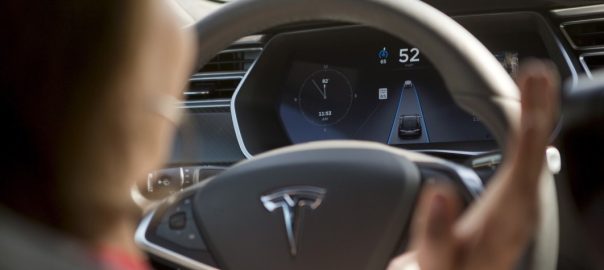
Tesla wins first US Autopilot trial involving fatal crash

Tesla on Tuesday won the first U.S. trial over allegations that its Autopilot driver assistant feature led to a death, a major victory for the automaker as it faces several other lawsuits and federal investigations related to the same technology.

The verdict represents Tesla’s second big win this year, in which juries have declined to find that its software was defective. Tesla has been testing and rolling out its Autopilot and more advanced Full Self-Driving (FSD) system, which Chief Executive Elon Musk has touted as crucial to his company’s future but which has drawn regulatory and legal scrutiny.

The outcome in civil court shows Tesla’s arguments are gaining traction: when something goes wrong on the road, the ultimate responsibility rests with drivers.

The civil lawsuit filed in Riverside County Superior Court alleged the Autopilot system caused owner Micah Lee’s Model 3 to suddenly veer off a highway east of Los Angeles at 65 miles per hour (105 km per hour), strike a palm tree and burst into flames, all in the span of seconds.

The 2019 crash killed Lee and seriously injured his two passengers, including a then-8-year-old boy who was disemboweled, court documents show. The trial involved gruesome testimony about the passengers’ injuries, and the plaintiffs asked the jury for $400 million plus punitive damages.

Tesla denied liability, saying Lee consumed alcohol before getting behind the wheel. The electric-vehicle maker also argued it was unclear whether Autopilot was engaged at the time of the crash.

The 12-member jury announced they found the vehicle did not have a manufacturing defect. The verdict came on the fourth day of deliberations, and the vote was 9-3.

Jonathan Michaels, an attorney for the plaintiffs, expressed disappointment in the verdict but said in a statement that Tesla was “pushed to its limits” during the trial.

“The jury’s prolonged deliberation suggests that the verdict still casts a shadow of uncertainty,” he said.

Tesla said its cars are well designed and make the roads safer. “The jury’s conclusion was the right one,” the company said in a statement.

Tesla won an earlier trial in Los Angeles in April with a strategy of saying it tells drivers that its technology requires human monitoring, despite the “Autopilot” and “Full Self-Driving” names.

That case was about an accident where a Model S swerved into the curb and injured its driver, and jurors told Reuters after the verdict that they believed Tesla warned drivers about its system and driver distraction was to blame.

Bryant Walker Smith, a University of South Carolina law professor, said the outcome in both cases show “our juries are still really focused on the idea of a human in the driver’s seat being where the buck stops.”

At the same time, the Riverside case had unique steering issues, said Matthew Wansley, a former general counsel of nuTonomy, an automated driving startup, and associate professor at Cardozo School of Law.

In other lawsuits, plaintiffs have alleged Autopilot is defectively designed, leading drivers to misuse the system. The jury in Riverside, however, was only asked to evaluate whether a manufacturing defect impacted the steering.

“If I were a juror, I would find this confusing,” Wansley said.

Tesla shares closed up 1.76% after rising more than 2%.

During the Riverside trial, an attorney for the plaintiffs showed jurors a 2017 internal Tesla safety analysis identifying “incorrect steering command” as a defect, involving an “excessive” steering wheel angle.

A Tesla lawyer said the safety analysis did not identify a defect, but rather was intended to help the company address any issue that could theoretically arise with the vehicle. The automaker subsequently engineered a system that prevents Autopilot from executing the turn which caused the crash.

On the stand, Tesla engineer Eloy Rubio Blanco rejected a plaintiff lawyer’s suggestion that the company named its driver-assistant feature “Full Self-Driving” because it wanted people to believe that its systems had more abilities than was really the case.

“Do I think our drivers think that our vehicles are autonomous? No,” Rubio said, according to a trial transcript seen by Reuters.

Tesla is facing a criminal probe by the U.S. Department of Justice over claims its vehicles can drive themselves. In addition, the National Highway Traffic Safety Administration has been investigating the performance of Autopilot after identifying more than a dozen crashes in which Tesla vehicles hit stationary emergency vehicles.

Guidehouse Insights analyst Sam Abuelsamid said Tesla’s disclaimers give the company powerful defenses in a civil case.

“I think that anyone is going to have a hard time beating Tesla in court on a liability claim,” he said. “This is something that needs to be addressed by regulators.”

Best cheap SUVs: You don’t have to pay a lot to get a lot

Filed under:
,,,,,,,,,

Continue reading Best cheap SUVs: You don’t have to pay a lot to get a lot

Best cheap SUVs: You don’t have to pay a lot to get a lot originally appeared on Autoblog on Sat, 28 Oct 2023 08:00:00 EDT. Please see our terms for use of feeds.

Permalink | 
Email this | 
Comments

Best cheap SUVs: You don’t have to pay a lot to get a lot

Filed under:
,,,,,,,,,

Continue reading Best cheap SUVs: You don’t have to pay a lot to get a lot

Best cheap SUVs: You don’t have to pay a lot to get a lot originally appeared on Autoblog on Sat, 28 Oct 2023 08:00:00 EDT. Please see our terms for use of feeds.

Permalink | 
Email this | 
Comments

GMC and AEV reveal Sierra Grande upfit SEMA concept

Filed under:
,,,,,

Continue reading GMC and AEV reveal Sierra Grande upfit SEMA concept

GMC and AEV reveal Sierra Grande upfit SEMA concept originally appeared on Autoblog on Fri, 27 Oct 2023 11:00:00 EDT. Please see our terms for use of feeds.

Permalink | 
Email this | 
Comments