Tag Archives: new truck

Dear America, you don’t need as much power as you think

I recently won a 0-20-mph drag race against a Chevrolet Volt. A day later I smoked a Tesla Model 3. “Um OK,” you’re thinking, “that can’t be that hard.” Well, except that the vehicle I was piloting featured a hybrid powertrain of a Bosch electric motor and 40-year-old human legs. That’s right, I out accelerated automobiles on a bicycle.

On another occasion, I found myself driving behind my wife in her 2023 Kia Niro EV. The specs say it accelerates from zero to 60 mph in 7.8 seconds, a time that’s six-tenths off the pace of Kia’s rear-motor-only EV6, a vehicle I’ve repeatedly read being described as “slow.” The Niro, therefore, must be extra-slow. And yet, as she turned left onto a highway onramp, she rocketed forward leaving me in a Mercedes-AMG C43 and every other car in the left turn lane in the distance.

I share these anecdotes not to boast about my cycling ability, nor my wife having a lead foot. No no. I’m crap and she really doesn’t. Instead, I want to point out that most drivers accelerate very slowly. The notion of “bigger is better” will forever be engrained in the American psyche, but when it comes to horsepower largesse, today’s cars hilariously exceed both the expectations and driving habits of most drivers. Most car buyers just don’t have a frame of reference when it comes to equating 0-60 times, output figures and the actual feeling of acceleration.  

Chevy Volt sedan in black

Eat my dust, Mr Volt!

Now, we in the automotive-reviewing media absolutely share some of this blame. We like accelerating quickly and cars that accelerate quicker are bound to reap more positive reviews. At the very least, we’re obligated to point out when a car’s acceleration is slower than a certain competitor’s or the segment’s average.

However, just because Car A is slower than Car B doesn’t make Car A slow. It makes it slower. For example, the dual-motor EV6 may be 2 full seconds quicker from 0-60 than the rear-motor model ­– a relatively massive difference – but barring a back-to-back drive or a wealth of comparative knowledge, it’s laughable to think that the average driver could possibly deem the rear-motor version “slow.” Because it isn’t.

The near-universal use of turbocharging, the popularity of all-wheel-drive and increased proliferation of electric motors has resulted in this rapid drop in 0-60 times that’s outpacing customer expectations and driving habits. Zero-to-60 times starting with the numbers 4, 3 and, my goodness, 2 were not too long ago the realm of high-end performance cars and exotics. The idea of something accelerating in less than 2 seconds was just absurd. Now, people think something is slow if that 0-60 time doesn’t start with such numbers. That’s just nonsense.

Ultimately, I’m probably just saying here that “0-60 times are a bit dumb,” or at least they don’t fully express the feeling of acceleration. Because of turbocharging and electric motors, near-instantaneous torque has become so commonplace that cars can easily feel much quicker than their 0-60 times and engine output would imply because of how eagerly they jump off the line or punch their way into an open spot in moving traffic. It’s about power delivery, not power amount.

Similar 0-60 times, but only the teal one feels slow. 

The perfect example of this is the surprisingly excellent Buick Envista currently in my driveway. It has a 1.2-liter turbocharged inline-three cylinder, which sounds like something they’d flock to in France, not the good ‘ol U.S. of A. The output of 137 horsepower and 162 pound-feet of torque doesn’t sound any more indicative of America, nor does the 9.4-second 0-60 time that Motor Trend measured. You know what, though? It does not feel slow.

Now, rivals with similar 0-60 times like the Honda HR-V and Subaru Crosstrek absolutely do, but that’s because they have naturally aspirated engines. Again, it comes down to power delivery. The Envista’s little turbo triple produces its max torque at a low 2,500 rpm, and as a result, it feels energetic when accelerating around town. Its traditional six-speed automatic doesn’t hunt for gears like a nine-speed would, doesn’t stutter into action like a DCT or generally suck like a CVT. Ample sound deadening helps too, as it only lets into the cabin a nice, muffle snarl of the little triple when accelerating hard. All told, this technically “slow” powertrain is enough to easily get me up to speed quicker than the cars (and bikes) around me. Sure, accelerating onto the highway from a stop will indeed reveal the Envista running out of steam if you absolutely need to gun it, but that’s pretty much the only scenario in which its 0-60 time is indicative. Even then, I still routinely managed to leave behind all those other cars waiting at the double-left onto the same onramp. Now, had my wife been there next to me in her Niro, that’s a different story.

At the same time, that rinky-dink engine that achieves more realistic acceleration helps keep the Envista’s price below $30,000 despite equipment, quality and design that suggest something higher. Fuel economy also benefits. I was getting better than its estimated 32 mpg highway on my round-trip drive between Agoura Hills and Palm Springs, Calif. That’s among the best in the subcompact segment along with the HR-V and Crosstrek.

In the EV realm, less powerful single-motor models can go further on a charge or even utilize smaller battery packs and therefore resources. And again, even the slowest EVs don’t feel slow unless you put them up against the Plaids and Taycans of the world.

To be clear, if you want a Plaid or a Hellcat or all the damn power money can buy, that’s great! No qualms there, let’er rip. I know I want all the damn power my money can buy. My point is people shouldn’t dismiss single-motor EVs or small-engined cars like the Envista just because their outputs and acceleration times seem underwhelming relative everything else in the automotive realm. Take a test drive. I bet their acceleration habits will be perfectly in line with what’s on offer (even if it’s an HR-V or Crosstrek, which people still buy in droves). I also hope that more car companies offer choices like the Envista so that people don’t have to pay more for performance they definitely don’t need.

Buick Envista Luggage Test: How much cargo space?

Filed under:
,,,,,

Continue reading Buick Envista Luggage Test: How much cargo space?

Buick Envista Luggage Test: How much cargo space? originally appeared on Autoblog on Mon, 2 Oct 2023 10:00:00 EDT. Please see our terms for use of feeds.

Permalink | 
Email this | 
Comments

What is traction control?

Traction control is an electronic monitoring system that senses if a wheel (or multiple wheels) is spinning faster than it should and reduces power to regain grip. In 2012,, all passenger cars sold in the U.S. were required to include traction control, along with antilock brakes and stability control. This feature predates the requirement by decades, though.

Traction control can go by many different names, depending on the carmaker, but they all operate in a similar fashion. Each wheel has a speed sensor that relays that information to the main computer. Under normal conditions, all wheels are spinning at the same speed. Under low-grip situations such as rain, snow, and gravel, it’s common for one or more wheels the lose traction and spin faster. In an instant, the computer identifies which wheel needs to be slowed and either cuts power or applies some braking. 

.embed-container { position: relative; padding-bottom: 56.25%; height: 0; overflow: hidden; max-width: 100%; } .embed-container iframe, .embed-container object, .embed-container embed { position: absolute; top: 0; left: 0; width: 100%; height: 100%; }

In the early days of traction control, the power coming from the engine was cut or reduced to all wheels, resulting in rather inelegant lurches. As the technology evolved, the power cut was less jarring, and control over individual wheels became more common. Nowadays, most drivers won’t even notice when traction control kicks into action.

What does traction control do?

There are several adaptations of traction control. In off-road applications, it ensures that you’ll get the maximum amount of traction and power when ascending steep climbs. Hill descent control is somewhat related and in most cases applies the brakes to an individual wheel to regain control. Some vehicles offer specific traction control tunings for different road conditions, too.

In performance cars, traction control can help drivers shorten their lap times as they can begin applying power earlier as they come out of a curve. In drag racing, the system is often referred to as launch control and distributes the optimal amount of power for the conditions. Traction control is banned in most professional motorsports as it represents an unfair advantage over driver skill.

Should you ever turn traction control off?

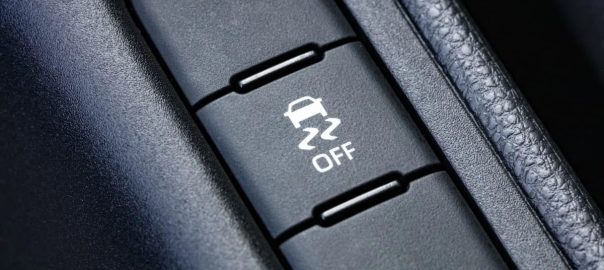
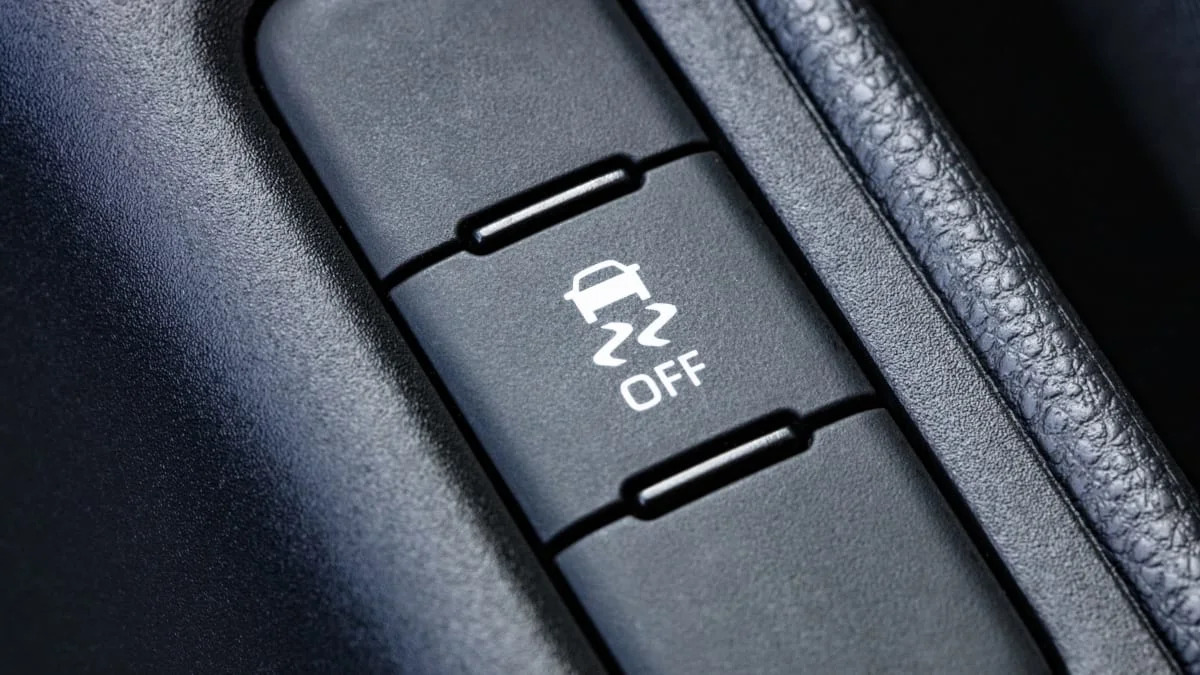
Traction control is typically always active, but in some circumstances, you may want to disable it. In low-traction situations, it may be advantageous to spin the wheels in order to dig down to a harder surface or to simply power out of whatever you’re stuck in. In most vehicles, this can be done by tapping the traction control button which is often represented by a rearview pictogram of a car with squiggly lines trailing off the tires. Sometimes it only takes one press, but some vehicles require a long press of a few seconds, so be sure to consult your owner’s manual.

What is stability control?

Traction control is related to but not as sophisticated as stability control. Stability control includes traction control data and augments it with speed, steering angle, and other systems to ensure the vehicle stays on its intended path. According to the National Highway Traffic Safety Administration (NHTSA), in the first five years after requiring traction and stability control, approximately 7,000 lives had been saved as a result.

That leaves no doubt as to traction control’s efficacy and contribution to road safety. For even more proof, there are countless fail videos of drivers leaving their cars and coffee events with the feature disabled, resulting in some embarrassing wrecks into curbs. Traction control isn’t perfect of course, and it can’t keep you safe in all situations, but the added assurance is most certainly an advantage.

What is the traction control system and why does it matter?

Traction control is an electronic monitoring system that senses if a wheel (or multiple wheels) is spinning faster than it should and reduces power to regain grip. In 2012,, all passenger cars sold in the U.S. were required to include a traction control system, along with antilock brakes and stability control. This feature predates the requirement by decades, though.

Traction control systems can go by many different names, depending on the carmaker, but they all operate in a similar fashion. Each wheel has a speed sensor that relays that information to the main computer. Under normal conditions, all wheels are spinning at the same speed. Under low-grip situations such as rain, snow, and gravel, it’s common for one or more wheels the lose traction and spin faster. In an instant, the computer identifies which wheel needs to be slowed and either cuts power or applies some braking. 

.embed-container { position: relative; padding-bottom: 56.25%; height: 0; overflow: hidden; max-width: 100%; } .embed-container iframe, .embed-container object, .embed-container embed { position: absolute; top: 0; left: 0; width: 100%; height: 100%; }

In the early days of traction control systems, the power coming from the engine was cut or reduced to all wheels, resulting in rather inelegant lurches. As the technology evolved, the power cut was less jarring, and control over individual wheels became more common. Nowadays, most drivers won’t even notice when traction control kicks into action.

What does a traction control system do?

There are several adaptations of a traction control system. In off-road applications, it ensures that you’ll get the maximum amount of traction and power when ascending steep climbs. Hill descent control is somewhat related and in most cases applies the brakes to an individual wheel to regain control. Some vehicles offer specific traction control system tunings for different road conditions, too.

In performance cars, traction control systems can help drivers shorten their lap times as they can begin applying power earlier as they come out of a curve. In drag racing, the system is often referred to as launch control and distributes the optimal amount of power for the conditions. Traction control is banned in most professional motorsports as it represents an unfair advantage over driver skill.

Should you ever turn traction control off?

Traction control is typically always active, but in some circumstances, you may want to disable it. In low-traction situations, it may be advantageous to spin the wheels in order to dig down to a harder surface or to simply power out of whatever you’re stuck in. In most vehicles, this can be done by tapping the traction control button which is often represented by a rearview pictogram of a car with squiggly lines trailing off the tires. Sometimes it only takes one press, but some vehicles require a long press of a few seconds, so be sure to consult your owner’s manual.

What is stability control?

Traction control is related to but not as sophisticated as stability control. Stability control includes traction control data and augments it with speed, steering angle, and other systems to ensure the vehicle stays on its intended path. According to the National Highway Traffic Safety Administration (NHTSA), in the first five years after requiring traction and stability control, approximately 7,000 lives had been saved as a result.

That leaves no doubt as to traction control’s efficacy and contribution to road safety. For even more proof, there are countless fail videos of drivers leaving their cars and coffee events with the feature disabled, resulting in some embarrassing wrecks into curbs. Traction control isn’t perfect of course, and it can’t keep you safe in all situations, but the added assurance is most certainly an advantage.

Traffic fatalities declining from pandemic highs, NHTSA says

A downward trend in traffic fatalities appears to be emerging as the country shakes off the effects of the Covid-19 pandemic, the National Highway Traffic Safety Administration said in a preliminary report released Thursday. Based on early numbers, the agency says that fatalities on U.S. roads have decreased for five straight quarters, resulting in a 3-percent drop in fatalities in the first half of 2023. 

“After spiking during the pandemic, traffic deaths are continuing to slowly come down — but we still have a long way to go,” U.S. Transportation Secretary Pete Buttigieg said. “Safety has always been the core mission of this department, and thanks to President Biden, we are delivering unprecedented resources to communities across the country to make their streets safer.”

And while this is good news on spec, NHTSA included two caveats. First, these are preliminary numbers and they may change when the F.A.R.S. system is fully updated. Second, the improvements weren’t universal; the downward trend presented itself in 29 states; 21 states, Puerto Rico, and the District of Columbia are projected to show increases in traffic fatalities when all the data are in.   

While data released earlier this year suggested that driver fatalities declined in 2022, the same report indicated that pedestrian, cyclist and motorcyclist deaths were offsetting those improvements. American roads were the most hazardous they’ve been in decades during the height of the pandemic, when NHTSA observed a spike in fatalities of more than 10%

“While we are encouraged to see traffic fatalities continue to decline from the height of the pandemic, there’s still significantly more work to be done,” NHTSA Acting Administrator Ann Carlson said in the announcement. “NHTSA is addressing traffic safety in many ways, including new rulemakings for lifesaving vehicle technologies and increased Bipartisan Infrastructure Law funding for state highway safety offices. We will continue to work with our safety partners to meet the collective goal of zero fatalities.” 

Next-generation Buick Enclave spotted with Wildcat looks

Filed under:
,,

Continue reading Next-generation Buick Enclave spotted with Wildcat looks

Next-generation Buick Enclave spotted with Wildcat looks originally appeared on Autoblog on Fri, 15 Sep 2023 14:43:00 EDT. Please see our terms for use of feeds.

Permalink | 
Email this | 
Comments

2023 Detroit Auto Show recap | Autoblog Podcast #798

Filed under:
,,,,,,,,,,,,,


We talk Ford F-150, Jeep Gladiator, GMC Acadia, Cadillac CT-5, Mustang GTD and more

Continue reading 2023 Detroit Auto Show recap | Autoblog Podcast #798

2023 Detroit Auto Show recap | Autoblog Podcast #798 originally appeared on Autoblog on Fri, 15 Sep 2023 13:53:00 EDT. Please see our terms for use of feeds.

Permalink | 
Email this | 
Comments

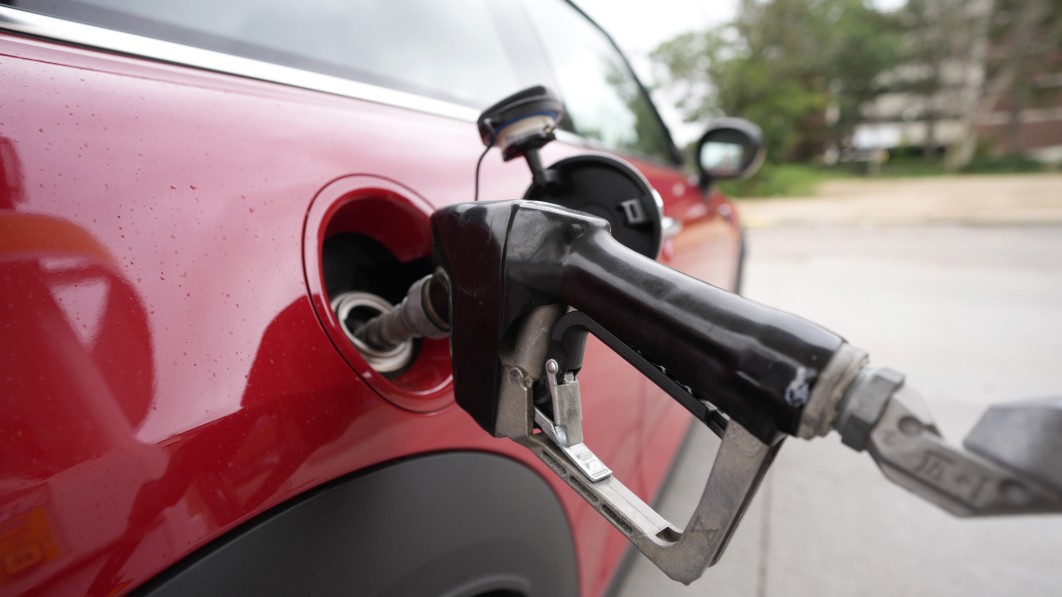
Gasoline prices soar to U.S. seasonal record

Gasoline prices have surged to a record high for this time of year in the U.S., jeopardizing the fight against inflation that’s dogged President Joe Biden

Average regular gasoline now costs $3.866 a gallon, a seasonal record on a trailing-12-months basis, according to data from the American Automobile Association. Prices have risen by 7.8% in just eight weeks in a rare late-summer rally. 

The gains have been driven by increases in the price of oil, which jumped about 20% in the past two months. Top analysts from International Energy Agency and Organization of Petroleum Exporting Countries have warned of a crude-market deficit through end-2023, underpinned by the extension of production curbs by Saudi Arabia and Russia.

Gasoline costs already accounted for over half of the increase in the August consumer price index. The continued escalation will likely stoke inflation further while eroding consumer confidence.

Biden last year released a record amount of emergency oil supply in order to tame gasoline’s record summertime surge. This time, the administration is trying to refill the reserves as the vast caverns sit empty, while Biden’s political rivals have seized on high pump prices as a means of criticizing his climate policies.

It’s also unusual to see gasoline climbing at this time of year, after the end of the summer-driving season that boosts U.S. demand. 

Compounding higher gasoline prices is a simultaneous spike in diesel costs. Diesel prices often climb in the fall due to seasonal consumption from farmers, who use the fuel for harvesting, and as demand for heating climbs. But this year, the prices are still much higher than usual.

U.S. refiners have raised operations to near pre-pandemic levels and gasoline stockpiles, though still below normal, rose by the most in more than a year last week. The supply boost will likely fade in the coming weeks as refiners enter fall maintenance — typically scheduled after the peak summer gasoline season to avoid a price squeeze.

UAW strike’s three-pronged attack focuses on popular midsize trucks, SUVs

Filed under:
,,,,,,,

Continue reading UAW strike’s three-pronged attack focuses on popular midsize trucks, SUVs

UAW strike’s three-pronged attack focuses on popular midsize trucks, SUVs originally appeared on Autoblog on Fri, 15 Sep 2023 10:40:00 EDT. Please see our terms for use of feeds.

Permalink | 
Email this | 
Comments

2023 Detroit Auto Show Editors’ Rankings

Filed under:
,,,,,,,,,,,,

Continue reading 2023 Detroit Auto Show Editors’ Rankings

2023 Detroit Auto Show Editors’ Rankings originally appeared on Autoblog on Fri, 15 Sep 2023 10:30:00 EDT. Please see our terms for use of feeds.

Permalink | 
Email this | 
Comments