Tag Archives: new car

Opinion: There’s no such thing as a boring car

Two weeks ago, Associate Editor Byron Hurd and I regrouped at a gas station near Chelsea, Mich., after running back-to-back handling loops in the vehicles we were comparing for an upcoming review. As we stood in the parking lot, a Corvette Z06 slinking along in the background where a Mustang GTD had recently departed, I looked at our Honda CR-V and Kia Sportage hybrids and said, “These cars are neat.”

Byron gave a little shrug and began to say, “Well …”

I get it, Byron. Sure, a couple of efficient commuter crossovers aren’t going to turn heads or raise pulses like some of the other rare metal you’ll see out on the winding roads west of Ann Arbor, but the miles we had driven so far in our humble hybrids had put a smile on my face. The Kia bounded over those unkempt roads like a matte silver hobby horse with a steering wheel full of feedback, while the Honda smoothed out the bumps in the corners while singing a surprisingly lovely song. And there was so much more to unpack from these seemingly prosaic CUVs, as you can read about in the upcoming comparo.

With the right roads and an inquisitive mind, almost any car can be fun, or at least interesting. Sussing any certain car’s capabilities, its kinks and foibles, its design quirks or the odd surprising virtue or unique execution of a particular feature … well, that’s why we still care about the cars we don’t even own, right? Any car’s got something to show you, if you look. Even if you have to critique, or downright criticize. If you think a particular car is boring, maybe it’s just you.

I’m lucky enough in my career that I get the opportunity to talk to the people who actually made the cars I get to drive — the designers and engineers — and while I’ve shifted uneasily in my seat at some of the marketing speak, digging past that and into the nitty gritty of the machines we vroom or putter around in is always interesting. Why is such-and-such element shaped like it is, and how does the location and linkage of some seemingly small part affect how the car drives? I get answers to questions like those. Usually, though, when I have questions about a certain aspect of a car, I don’t have one of its masterminds on hand. Thankfully, there’s a near infinite amount of A/V or reading material no further away than that computer in my pocket.

And just take a look at Murilee Martin’s Junkyard Gems. Some of the cars that entered and left the world without making much of a splash at all still have stories to tell. I found myself reading off history of the Plymouth Neon to my wife. (By the way, did you know the Plymouth brand was named after twine? Does that sound boring to you?)

Even bad cars aren’t boring. The second-gen Honda Insight still takes up way more of my mental real estate than it should, and I wouldn’t kick a Nissan Murano CrossCabriolet out of my driveway. We’ve all got our own personal Edsel that we love to hate (or hate to love — either way, a combination of strong, not boring emotions). You might very well even have some great memories of some sh*tbox from your youth. I love a good sh*tbox car.

So next time you’re tempted to call a car boring, be it an Atlas, EcoSport, Cavalier or Quattroporte, use your imagination a little. Learn a little something about the car, whether that’s scrutinizing it on a good road, poking around under the hood or exploring the car online. I’m sure there’s something about the car that can make it a little more interesting the next time you drive it and etch it into your catalog of memory. You don’t have to like the car. Just remember: there are no boring cars, only boring people.

Alright, bring on the jokes in the comments.

Related video:

.embed-container { position: relative; padding-bottom: 56.25%; height: 0; overflow: hidden; max-width: 100%; } .embed-container iframe, .embed-container object, .embed-container embed { position: absolute; top: 0; left: 0; width: 100%; height: 100%; }

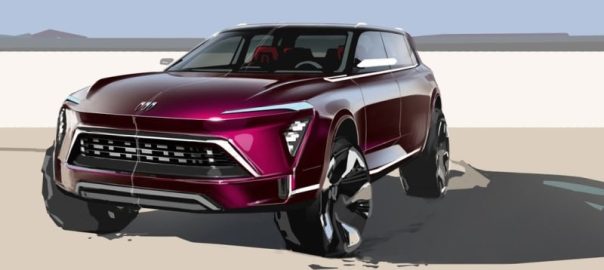
Buick’s big boxy crossover design sketch looks surprisingly good

Filed under:
,

Continue reading Buick’s big boxy crossover design sketch looks surprisingly good

Buick’s big boxy crossover design sketch looks surprisingly good originally appeared on Autoblog on Fri, 1 Sep 2023 10:55:00 EDT. Please see our terms for use of feeds.

Permalink | 
Email this | 
Comments

Best and worst states for teen drivers: Oregon and New York top the rankings

WalletHub has put together a ranking of 2023’s best and worst states for teen drivers. The financial site parsed data from at least 12 outside sources to measure 23 metrics, these metrics covering various aspects of vehicular incidents involving youths ages 13 to 19. The gamut runs from economic issues like a state’s maximum cost of a speeding ticket and average gas pricing, to a state’s driving laws like distracted driving infractions and leniency toward DUI violations, as well as safety aspects such as a state’s number of driving schools per capita, teen DUI infractions per 100,000 teens, and teen driver fatalities. For any wondering why kids as young as 13 are included, that’s because the study also put a number to post-crash financial implications for vehicle occupants. It found that “crashes involving 13- to 19-year-olds result in around $40.7 billion per year in costs from medical expenses and work loss.”

In the overall ranking, Oregon won the belt as the best state for teen drivers with a score of 67.52 out of 100. That’s one point ahead of New York and its score of 66.47. The Pacific Northwest state beat the New England state despite scoring lower on safety, ranked 17th among states compared to New York’s being first among the states, and lower for the economic environment, 36th compared to 25th. This was despite New York having the fewest teen fatalities per teen population and fourth fewest teen DUIs per teen population. Oregon beat New York in the Driving Laws category, however, scoring first among states compared to New York at number five.   

Four of the five most unsafe states for teen drivers are all in the upper West. South Dakota came in at #46, followed by North Dakota, Wyoming, Missouri peeking its head in from the Midwest, and Montana at #50. The Big Sky state was also ranked last for safety and for driving laws, for having the worst rate of teen DUIs per teen population, and was tied for last with Mississippi for teen driver fatalities. Montana ranked 43rd out of the 50 states for its economic environment.

This is timely information for three reasons:

First, vehicle crashes are said to be the leading cause of death among teens aged 16 to 19, and teens cause the most vehicular and financial carnage by being the age group with the highest risk of getting in crashes.

Second, Labor Day Weekend is coming up, and it is the deadliest summer driving holiday, and the second-deadliest driving holiday all year after Thanksgiving.

Third, the results show adults are the group causing havoc over Labor Day, according to a study insurance comparison site Jerry just published about the most dangerous times to drive during the weekend. Men in their 20s are most likely to be involved in fatal crashes over Labor Day, followed by men in every age group up to 60-69. Women in their 20s lead the way for risk, but that risk level is below men in their 60s, above men in their 70s. Teen boys are among the safest, one risk point above men in their 70s, five risk points above women in their 30s. Teen girls are even better, their risk 10 points above women in their 60s and 70s.

So the message might be to let teens be the designated drivers this weekend, but watch them like hawks the rest of the year. Check out WalletHub and Jerry for the full rankings, more context and methodologies for each study.

Tesla diner and drive-in theater in L.A. is one step closer to reality

Looking for a place to hang out with all your Tesla owning friends in L.A.? Or a new diner for Guy Fieri to review in his Food Network show? Well, Tesla CEO Elon Musk’s vision for a drive-in diner and movie theater, is getting one step closer to becoming a reality.

A couple years back, Musk had teased he was working on a grand idea for a Supercharger location in Santa Monica. In a tweet he said, “Major new Supercharger station coming to Santa Monica soon! Hoping to have 50’s diner & 100 best movie clips playing too. Thanks Santa Monica city!”

According to Tesla news site Teslarati, it seems Tesla has received approval from the Los Angeles Department of Building and Safety to build this new Supercharger hangout, but not in Santa Monica, but in West Hollywood, just east of the initial location. (No word on opening date.)

Tesla had said recently that the drive-in movie theater and diner location would have 32 Supercharger stalls, two movie screens, and a restaurant with rooftop seating. Back at its Investor Day in early March, the company also shared a rendering of what this Supercharger location would look like (below).

Big business: As of this spring, Tesla had more than 17,000 individual Superchargers in the United States, across approximately 2,000 stations. Tesla has said there are Supercharger stations in all 50 states. Depending on the success of this location, Tesla may build out more of these deluxe stations in marquee locations in cities like Los Angeles.

Not to be forgotten is Tesla’s big moves in the charging space with other automakers. The company will include EVs from the likes of GM (GM), Ford (F), Mercedes (MBGAF), Rivian (RIVN), and Volvo (VOLCAR-B.ST) in the Supercharger network starting in 2024. (Owners of these vehicles may be able to use this enhanced West Hollywood location too, but that information is not available at this time.) 

Tesla’s deals with other automakers allows them to use 12,000 of the Tesla’s Supercharger stalls, meaning not all locations and stalls will be available to non-Tesla owners.

Tesla’s Supercharger business was once considered just a perk for Tesla owners—the company may have been running network as a break-even or loss producing business just to maintain a competitive edge in the EV space. 

Now with big charging deals in place with major automakers, Wall Street analysts, among others, are starting to see the Supercharger network as its own standalone business. In a report published this morning, analyst Dan Ives of Wedbush said the Supercharger network could generate $10 – $20 billion in revenue by 2030, or roughly 3-6% of Tesla’s total revenues.

Tesla isn’t the only company with its own charger network. Mercedes, Rivian, and Porsche (POAHY) have announced plans for their own charging locations, that will include amenities like dining, shopping, and relaxation spots for users. Rivian, through its adventure network, plans to have its own chargers at destinations like national parks and heavily trafficked outdoor adventure locations.

Pras Subramanian is a reporter for Yahoo Finance. You can follow him on Twitter and on Instagram.

Click here for the latest stock market news and in-depth analysis, including events that move stocks

Read the latest financial and business news from Yahoo Finance

GMC Hummer EV EarthCruiser upfit finally here, for going out there

Filed under:
,,,,,,

Continue reading GMC Hummer EV EarthCruiser upfit finally here, for going out there

GMC Hummer EV EarthCruiser upfit finally here, for going out there originally appeared on Autoblog on Fri, 25 Aug 2023 09:36:00 EDT. Please see our terms for use of feeds.

Permalink | 
Email this | 
Comments

For Anywhere and Everywhere: GMC HUMMER EV EarthCruiser Upfit by EarthCruiser

For Anywhere and Everywhere: GMC HUMMER EV EarthCruiser Upfit by EarthCruiser

The EarthCruiser upfit is fully integrated onto the GMC HUMMER EV Pickup for a complete, zero-tailpipe emissions overlanding solution

2023-08-24

BEND, Ore. – Today, EarthCruiser announced the unveiling of the highly anticipated all-electric GMC HUMMER EV EarthCruiser –– an overland upfit solution from EarthCruiser. This EarthCruiser upfit sets a new standard in zero-tailpipe emission overlanding possibilities through its full integration onto the HUMMER EV Pickup chassis to offer adventurers the perfect blend of state-the-art technology, innovation and comfort to explore on- or off-road.

The fully functional GMC HUMMER EV EarthCruiser upfit will make its public debut at Overland Expo Mountain West in Loveland, Colorado and will be on display between Aug. 25-27.

“We are proud to work with GMC on the design and manufacturing of such an exceptional product. It feels right, it feels like it belongs,” said EarthCruiser CEO and Founder Lance Gillies. “Using our years of overlanding expertise, we have ensured nothing is out of place, unnecessary or wasted in this vehicle. This collaboration with the GMC team has provided the perfect opportunity to demonstrate the zero-tailpipe emission possibilities for overland and recreational vehicle travelers. We have produced a comfortable, capable product, built to a high caliber of excellence – one that our customers can take pride in.”

Crafted with meticulous attention to detail, the GMC HUMMER EV EarthCruiser upfit by EarthCruiser boasts technological and design innovations to help ensure a premium consumer experience, including:

  • A carbon fiber EarthCruiser house fully integrated into the chassis of the GMC HUMMER EV Pickup.
  • Onboard solar power with 605W along with an innovative system of 6 kilowatt hours of 12V lithium battery to provide an estimated seven days of off-grid power, such as the ability to power appliances like a refrigerator/freezer for about a week.
  • The freedom to explore any season with EarthCruiser’s insulated tri-layered pop-up roof.
  • The epitome of intelligent design with EarthCruiser’s exceptional interior, crafted for versatility and storage optimization. EarthCruiser’s leading-edge build quality will empower users to embark on a journey that blends functionality and convenience.
    • Amenities include a curated selection of appliances, indoor and outdoor shower, 120V and 12V outlets, purposeful storage and a flat-pack toilet.
  • An RV full-size bed to provide a comfortable night’s sleep on all terrains.
  • Intuitive, 7-inch-diagonal touchscreen system control panel designed for ease of use.
  • Charging your GMC HUMMER EV EarthCruiser overlander? No problem. Rest in your upfit until you are ready to hit the road again.

The GMC HUMMER EV EarthCruiser upfit is expected to be available to GMC HUMMER EV Pickup owners in 2024 through EarthCruiser. Additional product availability details will be released later this year. The EarthCruiser upfit is not covered by the GM New Vehicle Limited Warranty and GM is not responsible for independent-supplier alterations.

To reserve the GMC HUMMER EV EarthCruiser upfit, please visit: http://www.earthcruiser.com/reserve-your-gmc-hummer-ev-earthcruiser

Additional Product Details:

Specifications:

  • Height: 117 inches in “Camp Mode” with the roof up and 90 inches in “Drive Mode” with the roof down
  • Length: 217 inches
  • Sleeping capacity: 2

Exterior:

  • Carbon-fiber house construction
  • Four-season, tri-layed pop top
  • Outdoor shower
  • Exterior recovery gear storage
  • Exterior filtered water access
  • Lockable utility hook-ups
  • Exterior keypad for lighting and system control
  • Exterior scene lights
  • Integrated rooftop solar
  • 13.5-gallon freshwater capacity
  • 7-gallon grey tank

Interior

  • 80 inches of standing headroom at the entry, 76 inches on the step in the hallway and 35 inches in the bed area
  • Sink
  • Induction cooktop
  • RV full bed
  • Underbed storage
  • Interior filtered and unfiltered water
  • 7-inch-diagonal touchscreen control
  • Refrigerator / freezer
  • Dimmable interior lighting
  • 460Ah lithium 12V battery
  • 1500W inverter
  • Integrated storage drawers and cabinets
  • Onboard 12V water heater

About GMC

GMC offers a range of premium trucks and SUVs designed and engineered to the highest standard. With vehicles like the compact Terrain and full-size Yukon, all-new Canyon and Sierra light-duty, as well as the world’s first all-electric supertruck the GMC HUMMER EV, our trucks and SUVs deliver GMC’s signature combination of intuitive technologies, precise engineering and premium execution. Built on a strong foundation of manufacturing trucks since 1902, GMC now sells in a dozen countries across the world. Details on all models are available at www.gmc.com, Instagram at @GMC, Twitter at @GMC or at www.facebook.com/gmc.

About EarthCruiser 

EarthCruiser is a company of designers, engineers, technicians and, most of all, adventurers with millions of miles of collective, real-world overlanding experience. With its EXP, FX and EC Terranova, Evado models, EarthCruiser designs and manufactures the ultimate world-renowned, self-contained, 4×4 off-road exploration vehicles in Bend, Oregon.

More information on EarthCruiser can be found at https://earthcruiser.com/

Speed limits don’t matter

Back in July, AAA released the findings of a multi-year study it conducted of several speed limit update projects across the United States. The study included cases where speed limits were both raised and lowered, and touched virtually all road types. You can read my summary and find a link to AAA’s discussion in the link above, but the salient points are these: While crash frequency and severity did correlate with higher speeds, the most statistically reliable trends that emerged had nothing to do with property damage or personal injury. It was enforcement outcomes that were most demonstratively impacted. In other words, when speed limits go up, fewer people get tickets; when they go down, the opposite happens. 

Many weren’t happy with AAA’s conclusions (or lack thereof) and it precipitated some rather heated social media discussion, with much of the thermal overload coming from those who took issue with the study’s fundamental validity. But those complaining the loudest weren’t citing other studies like AAA’s, instead they were citing something far more fundamental: physics. And they’re not wrong. Energy increases with the square of velocity; the quicker a car moves, the more exponentially dangerous it becomes to crash it, especially into something (or somebody) else. But AAA wasn’t performing crash tests in a controlled environment; it was studying the behavior that resulted from changing the rules

Inherently, rules exist to impart order to a system that doesn’t inherently provide it. If everybody followed the rules — and I mean every single one of them, from precise adherence to manufacturing specifications and tolerances all the way down to wearing seatbelts, adjusting our mirrors and signaling properly — crashworthiness would be irrelevant. Defective parts? Eliminated. Driver mistakes? Gone. But if I need to explain to you why that’s a pipe dream, then you should probably bail out now and queue up another episode of “Care Bears.” 

It follows then that the more intuitive a given system is, the fewer rules you need in order for people to navigate it. Look no further than Germany — a country known for its fondness for order, yet its open stretches of autobahn are unrestricted straight-line paradises. Highway speeds that would be considered straight-up antisocial here in the USA don’t raise an eyebrow in Bavaria, yet its road fatality rate hovers around 1/3 of America’s. Why? Because the other rules are all so super? Or is it possible that it’s not about the rules at all?

Behavioral science is hardly exact; it becomes far more fraught when we try to measure it using hard math. But quantifying data is the best (and only, really) way of objectively analyzing it. Admittedly, When I first reviewed AAA’s results, I questioned whether the study was worth releasing at all, but even inconclusive data can be useful. In this case, the fervor behind the discussion brought into relief a fact that plagues regulators the world over: at the end of the day, the rules just don’t matter. Whether we’re driving, walking or brushing our teeth, we instinctively operate within our comfort zone.

While it’s probably easiest to believe that speed limits are established by vigorous debate between hard-nosed safety advocates and people with somewhere to be, the reality is that they’re dictated by us. This is the basis for the 85th percentile speed. If you looked at AAA’s study, you saw this term referenced several times. It’s important that you understand the concept, because it upends the notion of speed limits being set by bureaucrats in a closed-door session. 

Its description may be verbose, but the concept is actually quite simple. 85th percentile speed is the average speed at which 85% of drivers travel on a given stretch of road (or one just like it, for the purposes of new construction). For our purposes, consider it synonymous with “the flow of traffic,” and it’s a necessary component in setting real-world speed limits. If 85% of drivers think a given speed is appropriate, it probably is. If it’s not, that means one of two things: either you have an epidemic of speeding on your hands, or the planners screwed the proverbial pooch. 

.embed-container { position: relative; padding-bottom: 56.25%; height: 0; overflow: hidden; max-width: 100%; } .embed-container iframe, .embed-container object, .embed-container embed { position: absolute; top: 0; left: 0; width: 100%; height: 100%; }

[googlemaps https://www.google.com/maps/embed?pb=!1m24!1m12!1m3!1d5596.9010165095415!2d-122.71534760426309!3d45.460728028762134!2m3!1f0!2f0!3f0!3m2!1i1024!2i768!4f13.1!4m9!3e0!4m3!3m2!1d45.454659199999995!2d-122.7203744!4m3!3m2!1d45.4671689!2d-122.71577289999999!5e0!3m2!1sen!2sus!4v1692728574081!5m2!1sen!2sus&w=600&h=450]

With that in mind, let’s take a look at one of AAA’s cases: SW Capitol Highway in Portland, Oregon (labeled C2 in the study). Along this 0.9-mile stretch of collector road, the speed limit was reduced from 35 mph to 25 (the largest swing among the projects AAA studied). It was also the most egregious example of the law of unintended consequences. The road was also widened to accommodate bike lanes and pedestrian sidewalks during the project, which might explain why things didn’t quite go to plan. You see, rather than decreasing by nearly 10 mph to match the change in speed limit, the observed 85th percentile speeds on this stretch went up by 0.5 mph after completion. Why? I already told you: Speed limits don’t matter

The new SW Capitol Highway is certainly more bike- and pedestrian-friendly than it was before (take a look at the before/after photos here), but in terms of managing driver speeds? Not so much. If the 85th percentile speeds increased, that means drivers are more comfortable traveling at — or even above — the speeds they managed back when it was a tight two-lane road with a dirt gutter and no bike lanes. Travel times along this stretch for vehicles also decreased while traffic citations increased. AAA says there are no data available for changes in fatality rates, but there were single-digit increases in accidents causing either injury or property damage during the study period. Remember, this is the slower, “safer” version of this road. 

Now, I want you to think about your daily driving routine. Are there stretches of surface street where a true majority of the traffic goes noticeably quicker than the posted limit? Picture those roads. Are they wide, with big medians and deep building setbacks, few crosswalks and perhaps even traffic lights without pedestrian controls at all? I’m betting yes. These are cues that tell drivers they can safely open it up. How do drivers behave when these same roads are clogged by commuters or event traffic? I’m betting on aggression ruling the day, because the conditions aren’t allowing traffic to move at the speed where the majority of drivers feel comfortable. 

Many urbanists will say that the only way to design roads safely is to force drivers to feel uncomfortable going faster than the target limit, but if you ask me, that’s looking at this from the wrong perspective. The trick is to design a 25 mph road, not design just any road and stick a 25-mph limit on it. Think about your daily driving habits again, but this time, visualize roads where you’ve caught yourself unconsciously driving slower than you might otherwise — those streets where your head tells you that you’re doing a pleasant 7 mph over the limit, but you look down to find you’re actually dead-on or even under. Now, think about what those roads have in common; I’m betting they’re nothing at all like what I described above. 

Roads exist to quickly and efficiently move traffic of all kinds and should be engineered to that purpose. If Portland’s experiment has demonstrated anything, it’s that people, cars and bikes can actually coexist without dragging each other down. The result of the overhaul is a road that carries vehicular traffic at the same exact rate as before without any penalty to travel times or driving speeds. If the city simply adhered to the 85th percentile rule and raised the limit back to 35 mph, citations should return to normal (something AAA’s study actually established to a statistically significant degree) without any detriment to driver, pedestrian or cyclist safety. 

No rule is going to eliminate speeding; as long as we live in a society, antisocial behavior will exist, but artificially low speed limits and aggressive and/or automated enforcement serves nobody except the bean counters in charge of police budgeting. Forget about correcting behavior through arbitrary limits and focus instead on building good infrastructure that meets the needs of the communities it serves. As Portland inadvertently demonstrated, a good road doesn’t have to be hostile to anybody.

Oil battles interest rates, demand uncertainty

HOUSTON – Crude oil fell into negative territory as it battled possible U.S. interest rate increases and uncertainty around future Chinese demand on Monday.

Brent crude was at $84.48, down 33 cents, at 11:41 CDT (1641 GMT) after briefly turning negative.

U.S. West Texas Intermediate crude was off 8 cents at $81.17 a barrel.

In Monday’s session both crudes have been up $1 and then turned negative.

Interest rate increases by the U.S. Federal Reserve to tame inflation are driving down U.S. economic activity while China continues to tarry in returning to pre-pandemic levels, said John Kilduff, partner at Again Capital LLC.

“It seems that (China’s recovery) is not going to happen,” Kilduff said. “It’s doubtful they’re going to be buying. They bought a lot of crude for storage earlier in the year. They’re sitting on a lot of crude.”

Both front-month benchmark prices snapped a seven-week winning streak last week with a weekly loss of 2% on concern that China’s sluggish economic growth will curb oil demand, while the possibility of further increases to U.S. interest rates also overshadows the demand outlook.

China’s central bank trimmed its one-year lending rate by 10 basis points and left its five-year rate unmoved. That was a surprise to analysts who had expected cuts of 15 bps to both as recovery in the world’s second-largest economy has been slowed by a worsening property slump, weak spending and tumbling credit growth.

Top exporter Saudi Arabia’s July shipments to China fell 31% from June while Russia, with its discounted crude, remained the Asian giant’s largest supplier, Chinese customs data showed.

China’s crude oil imports from Saudi Arabia are expected to remain depressed through the third quarter, analysts said.

China is drawing on record inventories amassed earlier this year as refiners scale back purchases after prices were driven above $80 a barrel by supply cuts implemented by the OPEC+ group comprising the Organization of the Petroleum Exporting Countries (OPEC) and allies including Russia.

“We still see a tight oil balance for the remainder of the year, which suggests that prices still have some room to run higher,” said Warren Patterson, ING’s head of commodities research, adding that the dollar was also providing support.

A weaker dollar makes oil purchases less expensive for holders of other currencies, potentially boosting demand.

(Reporting by Erwin Seba in Houston, Natalie Grover and Paul Carsten in London, Florence Tan in Singapore and Mohi Narayan in New DelhiEditing by David Goodman, Mark Potter, Barbara Lewis and Nick Macfie)

2024 GMC Hummer EV pickup gets a price hike – with a catch

Filed under:
,,,,,,,

Continue reading 2024 GMC Hummer EV pickup gets a price hike – with a catch

2024 GMC Hummer EV pickup gets a price hike – with a catch originally appeared on Autoblog on Mon, 21 Aug 2023 14:00:00 EDT. Please see our terms for use of feeds.

Permalink | 
Email this | 
Comments

Trucks with the best gas mileage for 2023

Filed under:
,,,,,,,,,,,,,

Continue reading Trucks with the best gas mileage for 2023

Trucks with the best gas mileage for 2023 originally appeared on Autoblog on Sat, 19 Aug 2023 11:00:00 EDT. Please see our terms for use of feeds.

Permalink | 
Email this | 
Comments