Tag Archives: colleyville

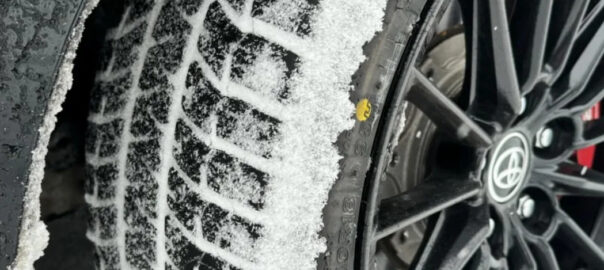
Bridgestone Blizzak WS90 tire review: Emerging from Maine winter

Autoblog may receive a share from purchases made via links on this page. Pricing and availability are subject to change.

I was recently fortunate enough to get my hands on a 2024 Toyota GR Corolla Premium without a markup here in Maine, but the car’s January delivery date meant I’d need to immediately swap the factory Michelin Pilot Sport 4 tires or risk a costly traction-related accident. After a bit of research, I asked Bridgestone for a set of Blizzak WS90 tires for testing, and just a few days later, I was in business. The GR Corolla wears 235/40 R18 tires, making them far cheaper than the larger wheels on other sporty cars, so I will swap between the Blizzaks and Michelins when the temps start rising here in Maine.

You might be wondering why a rally-bred, all-wheel-drive hatchback would need winter tires. The high-performance Michelin Pilot Sport 4s have a tread pattern and rubber compound that are designed to work safely and reliably in warm weather. They provide fantastic grip and handling at the expense of longevity, but they’re not designed for use in cold or snowy weather. The same tread pattern that provides water evacuation and traction in warm temperatures can’t hold up to snow and slippery conditions. Additionally, the rubber compounds in summer tires can crack and become brittle when temperatures fall below 40 degrees Fahrenheit.

Depending on where you live, you might need winter tires for part of the year, or you might be able to get away with all-season tires, which have a longer life than summer tires but are not as great at winter traction as snows. Here in Maine, some drivers opt for studded tires in winter, which is overkill in all but the worst conditions and too loud for many to live with on a daily basis. I am lucky to have a short commute to get the kids to school, and everything in my small town is nearby, so I could get away with an all-season tire, but I wanted the stability of a dedicated winter tire and to retain the warm-weather performance delivered by the Pilot Sport 4s. While maintaining two sets of tires, storing them, and changing over between seasons is annoying, it’s a hassle I’m willing to deal with to get the most out of my car.

What’s it like to drive with Bridgestone Blizzak WS90 tires?

The first and most notable differences between Blizzaks and summer tires are in the sound and feel. Even when driving well outside of their recommended temperature range the first few days I had the car, it was easy to tell that the Michelins were quiet and responsive. The Blizzaks’ sound was immediately apparent on dry pavement. Still, it’s important to note that the GR Corolla is already one of the loudest cars inside that I’ve driven, thanks to less sound-deadening materials to save weight. With their deep treads and beefier design, the Bridgestones generate a surprising amount of droning, and at low speeds, it’s possible to hear the individual treads as they scrape across the street.

The driving feel is also quite different, though a less stripped-down car would likely hide some of it. There’s almost a “blocky” feel at first, as the chunky tread pattern is much more pronounced than the Pilot Sport 4s. The GR Corolla doesn’t have the most communicative steering in the world, but there’s a significant difference in steering feel than with the summer tires. There’s a slight vibration but nothing serious at low speeds, and things smooth out at higher speeds.

Would I buy the Blizzak WS90?

All of the downsides I’m listing for the Bridgestone tires also apply to every other winter tire. They are all noisy, feel different than summer or all-season tires, and are all a hassle to deal with when it comes to swapping back and forth. That’s a long way of saying that, yes, I would buy these tires with my own money. They provide a sense of security in the often poor weather conditions we have in Maine winters, and they are competent enough that I don’t feel like I gave up a ton of performance with the GR Corolla to get that confidence. At the same time, it’s important to note that I always advise people to take a close look at how and when they drive, as many of us could get away without needing a second set of tires.

Bridgestone Blizzak WS90 alternatives

The Bridgestone Blizzaks are among the most popular and well-reviewed winter tires, but they’re far from the only option available.

You might have to program the name into your computer’s spellcheck, but the Nokians are a serious winter tire. The company offers them in a a few different configurations, including studded tires, and Nokian manufactures tires using sustainable practices that help lessen their environmental impact. Some sizes are also available with run-flat features, giving an added layer of peace of mind.

Michelin X-Ice Snow Tires

There’s an old saying I love: “Just pay for the Michelins.” While often more expensive than comparable rival tires, Michelins offer solid longevity and performance, and the X-Ice Snow tire is a well-reviewed model with low rolling resistance for better fuel economy. They are also three-peak mountain snowflake rated and come with a 40,000-mile warranty.

Pirelli Winter Sottozero 3

Pirelli tires are known for their performance, and the Winter Sottozero 3 is an excellent alternative to the Bridgestone Blizzaks. They offer run-flat tech and a unique tread pattern that channels moisture and snow, while the wide contact patch brings excellent grip in a wide range of conditions.

FAQs

Tires aren’t the most complicated part of your vehicle, but there’s enough nuance to warrant questions.

What are three-peak mountain snowflake tires?

Tires earn the three-peak mountain snowflake (3PMSF) designation by passing a limited winter-weather testing regimen that includes acceleration runs. No braking or turning tests are included in the designation, though some offer better-than-expected performance that could make them a year-round tire for many.

Are winter tires required?

Some local areas may require them, but snow tires are generally not required – even in Maine. That said, they can make the difference between control and complete chaos, so snow tires are a good idea when there’s bad weather ahead. It’s worth noting that there are rules governing the use of studded tires, with places like Maine limiting their use to winter months to prevent road wear and accidents.

Are all-season tires fine for snow?

You might get away with using snow tires and not have an accident, but they are not designed to handle heavy snow and ice. You’ll find less predictable stopping distances, less grip for acceleration, and may have difficulty steering in heavy snow with all-season tires.

Can I drive with winter tires all year?

It’s certainly possible, but it’s a bad idea. The same rubber compounds that help winter tires stay pliable and grip the snow in winter can become too soft and wear quickly in warm weather. Additionally, they don’t do the best job in heavy rain and don’t provide the best performance when temps are well above freezing.

Pros:

  • Bridgestone offers an extensive range of sizes
  • The Blizzaks look like mini all-terrain tires
  • Great grip and stability in challenging winter conditions

Cons:

  • The tires are loud on dry pavement, especially at highway speeds
  • Not the best tire for fuel economy savings

Road rage: How to avoid it, and the one traffic move that most causes it

Road rage can endanger drivers and their passengers, raise their blood pressure and their insurance costs — and, in more than a few cases, kill them. Such are the sobering findings of a detailed survey conducted by the Insurify group, who say that drivers who are cut off by another car are most likely to react angrily on the road.

These “angry” behaviors or reactions may include honking, cursing, blocking the offending driver from changing lanes, or in rare cases, confronting another driver or forcing him or her off the road. And these confrontations may be the least of it, Insurify reports: Road rage shooting deaths more than doubled between 2018 and 2022, accounting for 141 deaths and more than 413 injuries in 2022, the survey says.

More than a thousand American drivers in the United States responded to the survey, with more than half expressing behaviors consistent with road rage (but only 41 percent admitting to having road rage sometimes). Insurify also analyzed the most recent road rage statistics from the National Highway Traffic Safety Administration (NHTSA) and National Safety Council (NSC).

Men, the report found, are 20 percent more likely than women to yell or curse at other drivers — banging on the steering wheel is a fairly common reaction. Perhaps surprisingly, women were slightly more likely than men to express one particularly dangerous road rage behavior: forcing another driver off the road.

As far as relating age to inciting road rage behavior, Gen X drivers between 43 and 58 are more likely to engage in that. But more millennials (52 percent) admit to road rage behaviors than any other age group.

While being cut off was the top reason for drawing anger — it had an “anger score” of 3.6 out of 5 — here are some of the other more infuriating behaviors:

  • Drivers weaving in traffic (anger score 3.2);
  • Being stuck in traffic (3);
  • Drivers not using turn signals (2.9);
  • Driving slower than the speed limit (2.8);
  • Other drivers making gestures (2.8).

Regarding insurance rates, the group says that reckless driving offenses often overlap with road rage behaviors. Drivers with a reckless driving record spend an average of $851 more annually for a full-coverage policy than those with a clean record — second highest only to drivers with a DUI record.

The Insurify report offers some advice to counter road-rage triggers. Seeing a psychotherapist is one. Also, “taking at least one deep breath immediately after a difficult traffic situation can greatly reduce the risk of extreme road rage behaviors,” Mark Bingel-McKillips, a licensed clinical social worker, is quoted in the report. “Deep breathing has a neurophysiological impact on the fight, flight, freeze, or fawn stress response of the brain.”

You can learn more from the full report here.

GMC Yukon spy shots show refresh with Acadia-style interior

Filed under:
,,,,

Continue reading GMC Yukon spy shots show refresh with Acadia-style interior

GMC Yukon spy shots show refresh with Acadia-style interior originally appeared on Autoblog on Wed, 20 Mar 2024 12:40:00 EDT. Please see our terms for use of feeds.

Permalink | 
Email this | 
Comments

American drivers can’t catch a break on car insurance rates

If cruising the highway is an American birthright, it’s also become an expensive one.

The cost of owning and operating a car has skyrocketed in the aftermath of the pandemic. And just as one element of car ownership has gotten more affordable, another is now wrecking the budget.

The latest pinch for drivers is the cost of auto insurance, which is up 20.6% year over year as of February — the biggest jump in the cost of car insurance in government data going back to 1985. It’s also the biggest price jump for February in the 28 categories Yahoo Finance has been tracking since 2021.

Car insurance doesn’t get nearly as much attention as headline items such as food, gasoline, and rent. 

Yet it’s now one of the few spending categories keeping the overall rate of inflation stubbornly high

Overall inflation is down sharply from the peak of 9% in June 2022. But it ticked upward from 3.1% in January to 3.2% in February, causing fears that inflation may not be on the way out, after all.

Car insurance accounts for 2.5% of the basket of goods and services the government measures when calculating the overall rate of inflation and is among categories counted towards the “core” inflation measure — which strips out food and energy — that the Federal Reserve keeps a close eye on. Core inflation rose 0.4% over the prior month in February and 3.8% over the prior year. 

Drop Rick Newman a note, follow him on Twitter, or sign up for his newsletter.

Insurance now costs the typical car owner $212 per month, or $2,545 per year, according to Bankrate

For buyers who take out a loan, the typical monthly payment is about $530 for a used car and $740 for a new model. Insurance boosts the monthly cost of ownership by 25%-40%, money some buyers forget to account for when making a purchase.

The other thing keeping inflation high is the cost of housing, with the index for shelter, another element of core inflation, rising 5.7% year over year. Shelter costs, the BLS said, account for over two-thirds of the increase in core inflation over the last year.

Other important items, however, are heading in the right direction, such as groceries, up just 1% year over year. And some things are actually getting cheaper, including appliances, electronics, and toys.

No single cause

Frustratingly for consumers, there’s no single cause for spiking insurance rates

COVID-related supply chain challenges have created a shortage of new vehicles during the last few years, pushing up prices, which in turn pushes up the cost of repairs. Modern vehicles are also stuffed with electronics and other systems that make them costlier to fix. 

Americans also appear to be driving faster, which makes crashes worse. All of this raises insurance costs.

And as anybody who has tried to buy a car lately knows, this comes after a huge run-up in car prices that changed the affordability equation for many drivers. 

Year-over-year price hikes for new cars hit 13% in 2022 while used car inflation exceeded 40%. A shortage of semiconductors and other components slashed the output of new cars in 2021 and 2022, which pushed a lot of buyers into the used car market, accounting for unprecedented inflation.

Car prices have moderated as supply shortages eased, but overall prices are still way higher than pre-COVID levels. New car prices are 21% higher than they were four years ago, right before the COVID outbreak. Used car prices are up 31%. 

The average cost of a new car is now $47,401, according to Kelley Blue Book. — though J.D. Power just calculated that the average transaction price took a $4,700 drop last month. The typical used car lists for nearly $26,000.

Fueling a car is no bargain, either. Gasoline prices are down about 4% year over year to around $3.40 per gallon. But gas is still 32% more expensive than four years ago, and some drivers are still fuming about prices that hit $5 per gallon in 2022, the highest nominal price ever in the United States.

There are a few bright spots, especially for buyers who can afford to be patient, however. 

A glut of electric vehicles is causing double-digit price drops for some models, including Teslas, which seems likely to continue. Gas prices in 2024 could be a bit lower than in 2023. And transaction prices, though high, have dipped during the last few months, which should continue as automakers get back to more normal production levels. 

Rick Newman is a senior columnist for Yahoo Finance. Follow him on Twitter at @rickjnewman.

Click here for political news related to business and money policies that will shape tomorrow’s stock prices.

Read the latest financial and business news from Yahoo Finance

The biggest gas-guzzlers of 2024: ‘The Meanest List’ is the opposite of greenest cars

Filed under:
,,,,,,,,,,,,,,,,,,

Continue reading The biggest gas-guzzlers of 2024: ‘The Meanest List’ is the opposite of greenest cars

The biggest gas-guzzlers of 2024: ‘The Meanest List’ is the opposite of greenest cars originally appeared on Autoblog on Thu, 14 Mar 2024 17:00:00 EDT. Please see our terms for use of feeds.

Permalink | 
Email this | 
Comments

How much does car insurance cost in 2024?

As boring and annoying as it can be, car insurance is a part of almost everyone’s lives. With few exceptions, every driver must have auto insurance before hitting the road, and states have different minimum requirements on coverage for things like bodily injury and liability. If you’re wondering how much car insurance costs, we’ve got you covered and can help you find ways to save money on your next car insurance policy.

How much does car insurance cost in 2024?

Car insurance prices vary wildly from place to place and from driver to driver, but the national average for full-coverage insurance on a vehicle is a little less than $2,000 per year, or around $165 per month. That rate is for a driver with a clean record and good credit, and it can climb quickly with accidents and dings on the driver’s credit report. 

Nerdwallet found that a good driver with bad credit can pay as much as 61% more than those with good credit scores. Interestingly, having an accident didn’t cause the average rate to rise as much, but a DUI conviction almost doubles the national average cost.

Minimum coverage is much cheaper, totaling $549 for good drivers with good credit. Similar increases apply to people with bad credit, accidents, and DUIs. It’s important to note that minimum coverage should not be viewed as a simple way to save money, however, because the costs to repair your vehicle after an accident can easily surpass any potential savings from a lower level of insurance coverage.

Insurers also charge men more for car insurance, though the gap between average insurance costs for men and women narrows as their age increases. Insurance costs for young men are more than $500 more expensive than for young women, but by age 35, the difference is just $25. At age 50, men and women pay roughly the same, with women paying slightly more than men in some cases.

What is the cheapest car insurance?

It pays to shop around — the following statements are on average, in general, so you need to compare rates for your own car and your own situation. That said, USAA tends to be the cheapest insurer for many drivers, but it’s only available for active, retired, and separated veterans with an honorable discharge. For everyone else, State Farm offers the second-most-affordable rates, on average. Travelers and American Family are next, though AmFam is only available to drivers in 19 states.  

You might find a regional insurer that offers better rates, and you may be eligible for discounts that lower your monthly payment further. There may also be job-specific or profession-specific insurance companies, such as California Casualty, which is only available to educators, healthcare professionals, and others.

Which states have the most and least expensive car insurance?

Drivers in Florida paid more than anyone else in the country, with an average insurance cost of $3,797 per year. Wyoming is on the opposite end of the spectrum, where drivers pay $1,069 for full coverage. Insurers tend to charge more in states and areas where more drivers are involved in car accidents

Several states tilt toward the more expensive end of the spectrum, including Louisiana at $3,608 per year, Rhode Island at $3,341 per year, and Kentucky at $2,965 per year.

How much is car insurance for teens and young adult drivers?

Young drivers pay more for car insurance than more experienced vehicle owners. With a clean driving record, the average 20-year-old driver pays $4,110 for full-coverage insurance. Rates for young drivers are also more sensitive to changes in credit scores and traffic citations. Poor credit can impact the average annual insurance costs by up to 50 percent, as 20-year-olds with clean driving records and bad credit paid $6,597. 

Vehicles with higher insurance costs

Car insurance costs can vary significantly between vehicle types, and there are a few that tend to cost more. Sports and luxury cars, which are expensive to buy and repair after a crash, are often more costly to insure. Sports cars are also more likely to help you earn a speeding ticket and may be driven more spiritedly than mainstream cars, increasing their risk and cost to insure. Insurance companies also look at how often specific car models are stolen to determine if there’s an increased risk of damage repairs or vehicle replacement. The recent TikTok-inspired thefts of some Hyundai and Kia models are a great example, as some insurers have declined new policies on those vehicles.

Finally, electric vehicles might be more expensive to insure in some cases, as their batteries are shockingly pricey to replace. They are also packed with tech from nose to tail and, in many cases, carry the latest safety tech. All those sensors, cameras, and other electronics are expensive and may require specially-trained technicians to install.

Car insurance discounts

Car insurance can be expensive, but the good news is that most insurance companies offer discount programs, and many people qualify for more than one. Some of the most common programs include good student discounts for younger drivers, teachers and school administrators, law enforcement and first responders, veterans and active military, good drivers, and more.

Some insurance companies offer discounts for installing a monitoring device that tracks your driving speed and style. If the information shows that you were a safe driver and did not drive aggressively or too fast, your insurer gives a small discount as a reward. The tradeoff is that you’re also giving up some privacy and may share more information than you want.

Why is my car insurance so high?

Your car insurance rates can increase when you have a wreck or if your driving record changes for the worse. That means speeding tickets, at-fault accidents, alcohol- or substance-related citations, and more. Insurance companies are constantly monitoring risk, and can adjust your rates accordingly if there is reason to believe that you’re a riskier driver than before. 

Students and young drivers often get discounts for good grades and other incentives, so an increase in rates could be related to no longer receiving those benefits. Finally, upgrading to a new car with higher replacement costs can drive your rates higher. 

Is a car insurance agent better than a company?

Most agents sell insurance products from a major insurer, so you’re not getting completely different coverage options by going with a local agent. That said, many have access to promotions and other savings options that could help reduce your costs. You may also find that a local agent gives you more customer service options and that it’s easier to get information from a face-to-face interaction over waiting on hold with a distance call center. 

How to save money on car insurance

There are several ways you can save money on car insurance, and only one requires you to reduce your level of coverage. Shopping around is one of the best ways to get a reasonable rate on your car insurance. You can compare insurers and may be able to pit them against each other to get the best price. Some insurers offer lower monthly rates in exchange for a higher deductible, but it’s a good idea to do the math to determine how much you’ll save compared to the higher payout down the road.

Keep track of available discounts to ensure you’re getting every possible cost reduction, and monitor your credit score to prevent surprises when applying for new coverage. One of the best ways to save money is to maintain a clean driving record, which includes staying out of trouble for things like speeding and DUIs.

If none of those things apply to you and you still need to save money, reducing your level of coverage could be a possible last resort. 

What is liability car insurance, and is it worth the risk?

If you have full coverage insurance on your car, moving to a minimum coverage or liability-only plan can save you hundreds of dollars a year. However, be aware that doing so will change your situation after a crash. If you remove full coverage insurance and are involved in a collision, you may be on the hook to pay for your own repairs and could be faced with big bills if you damage property or incur a citation in the process.

2024 Buick Envista Avenir Interior Review: A real winner from Buick

Filed under:
,,,

Continue reading 2024 Buick Envista Avenir Interior Review: A real winner from Buick

2024 Buick Envista Avenir Interior Review: A real winner from Buick originally appeared on Autoblog on Tue, 12 Mar 2024 10:00:00 EDT. Please see our terms for use of feeds.

Permalink | 
Email this | 
Comments

Your car may be ratting you out to your insurance company

Manufacturers of connected cars are sharing way more data than customers may realize, the New York Times reported Monday, and that’s only half the problem. According to the report, automakers may be sharing statistics about customer driving habits with their insurance companies directly. If you drive a car with built-in telematics in a way that you’d rather your insurance company not know about, you may want to keep reading. 

So far, the Times has only linked the activity to instances where customers voluntarily opt into various connected features, but how customers agree (not to mention whether they understand exactly what they’re agreeing to) varies by manufacturer. In the cases of OEMs like Tesla, who provide their own insurance either in-house or via a partnership, customers are made aware that the service will monitor their driving behavior. Some third-party insurers even offer electronic monitoring devices that interface with the universal on-board diagnostic (OBD) port located on every mass-market vehicle. 

In other instances, however, the data collection is less transparent. NYT called out General Motors in particular for sharing data with third parties with little (or ambiguous) documentation. GM’s optional OnStar Smart Driver service offers to track customer driving habits for them, ostensibly to help them behave more safely and economically, but does not obviously disclose that the collected statistics may end up in databases like LexisNexis that available to insurance companies. Multiple owners of high-performance GM vehicles claimed they were targeted by insurance companies for rate hikes after taking their cars to the track while the service was active. In some cases, those customers may have been enrolled in the service at the dealership as part of a larger OnStar bundle. 

Other automakers acknowledged arrangements with third-party data collection firms, but in more limited and situational contexts. Subaru’s Starlink service has a feature that allows customers to enable insurance tracking, but only if they explicitly request that it be used to generate insurance quotes. Otherwise, it shares only odometer data with third-party providers. Acura, Honda, Hyundai, Kia and Mitsubishi all offer an optional driver score feature that includes data collection and transmission to insurance databases, NYT reports, but all require the customer to opt in. 

If you own a connected car — and especially one sold by GM — the story deserves a careful read. 

2025 GMC Terrain spy photos show it inside and out

Filed under:
,,

Continue reading 2025 GMC Terrain spy photos show it inside and out

2025 GMC Terrain spy photos show it inside and out originally appeared on Autoblog on Wed, 6 Mar 2024 14:50:00 EST. Please see our terms for use of feeds.

Permalink | 
Email this | 
Comments

580 miles, 0 problems. How I drove an EV to Chicago stress-free

Just before the Chicago Auto Show, I messaged Road Test Editor Zac Palmer to ask if I could get a test car to drive out to the event. He came back with two options that were coming in that week: a Mazda CX-90 PHEV and a Kia EV9. Keep in mind, the Chicago Show is in February, and the trip from Detroit takes place mostly in southern Michigan or northern Indiana, depending on your route. Either way, it would most likely be cold. And the distance would be around 290 miles one way, or 10 more than the estimated maximum range of the EV9 Land AWD offered.

Even in a gas car, I’d have to refuel at some point in the round trip journey, but obviously that would be trivial. So the clear choice for hassle-free driving was the Mazda. And yet, for some reason that I still don’t completely understand, I felt adventurous when Zac sent me the options, and I told him to book me time in the Kia. Even as I typed in my response and hit “send,” I was thinking, “Are you really sure about this? This could turn into a massive headache.” I kept staring at my Slack app. But I stuck to my guns. I would pilot the EV9. And guess what? I got a glimpse at how totally uninteresting an EV road trip could be, and it was truly beautiful.

My dog Rusty eagerly waiting for us to get on the road to meet my parents

The trip also sort of started before it, well, started. Between the EV9’s delivery and driving it around a bit for errands and dropping off my dog with my parents (he’s shown above, eager to start the drive), the charge level had dipped below 50%. I still haven’t added a 240-volt Level 2 charger to my house (which is something I would absolutely do if I actually owned an EV, and is still on the to-do list considering my work). So I needed to run it over a couple of miles to my local Meijer, which is home to 350-kilowatt and 150-kilowatt EVGo charging stations. While I was hoping to grab one of the 350s to take advantage of the Kia’s seriously fast charging capabilities, it was apparently a busy night for charging. Both 350s were taken, including one by a Chevy Bolt EV whose owner apparently doesn’t understand that a 350-kW charger will be no better for their car than the very-much-open 150-kW one next spot over. At least all the chargers were working.

After backing up to the slower charger, I braced myself for another possible hurdle: payment. This is one of my biggest peeves. And I need to preface this by noting that we have the payment and refueling process solved with gas stations. You pull up, you swipe your card, you fill up. It’s that simple, and it works every time. You don’t have to sign up for an app for Shell, ExxonMobil, Marathon, BP, Speedway, and many, many more to start up and pay for your fuel. And I bring this up, because so many times, I’ve pulled up to a charger, and the credit card reader is not functioning. Which then means I have to bust out my phone, find the app for the charger, find the charger, and activate it from there. And that’s if I have the app already and don’t have to sign up for it.

That night at Meijer, though, I just plugged into the EV9’s charge port, and the station immediately recognized it was connected to the car. It then swiped my card, and after a few moments, clicks and whirrs, the screen confirmed the EV9 was in fact charging. This is obviously how you’d expect it to go every time, yet no part of the above is guaranteed to work with any regularity. After a leisurely 30 to 45 minutes of grocery shopping, I came back out to find the car charged up to around 80%. I stuck around another 15 minutes or so to get it to 90% and then went home and plugged into 120 volts to finish it off overnight. It was a shockingly promising start to the trip.

Tesla superchargers at a Meijer

To help make sure that became I trend, I did some light research to figure out where best to recharge en route to Chicago. Available in browsers and as an app, PlugShare provides detailed information on the locations of a wide variety of chargers from different chains and of various power levels. It was extremely helpful to be able to view basically everything on the route, and to be able to filter out slower chargers and ones with connectors that might not work for me. I decided I would stop at yet another Meijer, approximately 230 miles away near Michigan City, Ind., where there were Electrify America chargers with full 350-kW charging capability. That Meijer also had loads of Tesla Superchargers (shown above), but without an adapter or a Tesla charging account, I was ruling those out.

The next day, I loaded up the EV9 and found the range estimate to be between 260 and 270 miles. Fortunately, we had a bit of a warm spell, resulting in temperatures in the high 40s and low 50s for the drive. As such, the batteries weren’t too cold and I wouldn’t have to rely so much on the heater, all good news for range. I left the car in Eco mode just to be safe and ensure that maximum range estimate, and began my journey like any other road trip.

Though I stopped on occasion to grab snacks and use the bathroom, the big stop would obviously be the pre-planned pit near Michigan City. As I neared, the car was repeatedly warned of the battery being below 20%, and I even saw a warning that maximum motor power was reduced at one point. Fortunately, whatever power reduction was in effect still left the EV9 more than comfortable driving at highway speeds or needing to accelerate. So if you see such a warning in your own example, don’t panic.

Admittedly, there was still some concern building in the back of my mind. I was going to get to Michigan City with just under 10% charge, and if I arrived to find malfunctioning chargers or a row of near-empty Bolts, I was in a tough spot. Miraculously, I pulled into that Meijer parking lot to find a bank of green-glowing Electrify America stations, all 350s and seemingly all functional. Just as with the EVGo station the night before, I plugged in, tapped my card and, as the EV9 literally says out its front speaker, “charging started.” The estimated time to 80% said about a half hour, and by the time I went into the Meijer, used the restroom and purchased some snacks, that 80% had in fact arrived. Again, I stuck around for a few more minutes to squeeze in some more electrons, which seemed like a good idea since I wasn’t completely sure what the charging situation would be at the McCormick Place Hyatt Regency. With a huge excess of power to complete my journey, I soldiered on to the home of Soldier Field without a care in the world.

Kia EV9 plugged into a 120-volt outlet in a parking garage

Pulling into the hotel parking garage, I was a bit disappointed to see no Level 2 chargers about for somewhat slower charging. But I spotted that someone, clearly another journalist as it was a press vehicle, had found a standard 120-volt household outlet to plug in a slow AC charger. As my EV9 had a charging cord in the cargo area – a standard feature on the EV9 – I proceeded to do the same, leaving it plugged for the entirety of my time in Chicago, ensuring I would have a full battery for my return trip.

That would include a detour to pick up my dog in Indiana, so a different route would be in order. Using PlugShare, I picked a service plaza on the Ohio Turnpike just 195 miles away from Chicago. This would give me a little extra buffer in case the worst happened and I couldn’t charge there. Thankfully, I had the same flawless experience as my previous stops, including returning from a fast food dinner break to find the EV9 back up to 80%. That amount of range meant I could finish my trip without any more charging stops.

Kia EV9 at an Ohio Turnpike charger

I learned a number of things from this trip, all of which point to the fact that EV transportation actually has the potential to be stress-free, and it’s not as far off as it might seem.

For one thing, we actually have charging speeds that are more than acceptable for road trips. No, fueling is not as fast as the 5 to 10 minutes of filling a gas tank. But there’s a key advantage that isn’t usually mentioned: You don’t have to be with the car while it’s filling up. When you’re on a road trip, there’s a good chance you’re still going to pop into the shop to recharge yourself (or drain). Even if you’re really quick, you’re often looking at about 15 minutes in total, maybe 20-30 if you’re waiting on others. As I only needed about 30 minutes in the EV9 to charge to 80% on each stop, recharging didn’t really add any extra time to my drive and was just as convenient. I was even able to refuel at my destination, something you can’t do with a gas car, though dedicated destination chargers are obviously preferable to mooching off the hotel and hoping no one unplugs you.

Planning my trip was pretty easy, too. It wasn’t as carefree as simply punching in my final destination and just filling up when I felt like stopping, but I only ever had to use one site and then my phone’s navigation app (though Kia’s is quite good and starts suggesting charging stations when you approach 20%). I did NOT need to have 10 different apps to charge along the way because I could simply pay with my card. You know, the thing I use to purchase goods and services from literally every other physical retail place in the country.

I experienced the best-case scenario of road tripping with an EV. This is how it’s supposed to work and one assumes will work as the infrastructure continues to be built out. Of course, this is not how it typically goes today. Some combination of charger malfunctions, payment difficulties and crowded stations is still unfortunately the norm, with the prospect of poor weather conditions adding yet another layer. We’re obviously not there yet, but this trip shows that carefree EV road tripping is not fantasy, it can be a reality. Not a common enough reality, but a reality nonetheless. I’m feeling more excited and optimistic that as dependability and availability improves, EV life will be as pleasant, if not more so, than internal combustion life.

Related video:

.embed-container { position: relative; padding-bottom: 56.25%; height: 0; overflow: hidden; max-width: 100%; } .embed-container iframe, .embed-container object, .embed-container embed { position: absolute; top: 0; left: 0; width: 100%; height: 100%; }