Tag Archives: buick

2023 J.D. Power APEAL Study shows new-car customer satisfaction scores slip

Filed under:
,,,,,,,,,,,,,

Continue reading 2023 J.D. Power APEAL Study shows new-car customer satisfaction scores slip

2023 J.D. Power APEAL Study shows new-car customer satisfaction scores slip originally appeared on Autoblog on Thu, 20 Jul 2023 12:00:00 EDT. Please see our terms for use of feeds.

Permalink | 
Email this | 
Comments

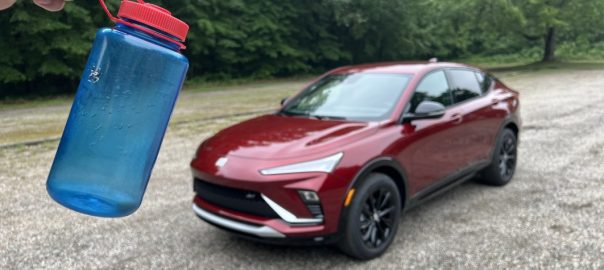
2024 Buick Envista Cupholder Mega Test: Will the Nalgene bottle fit?

Filed under:
,,,

Continue reading 2024 Buick Envista Cupholder Mega Test: Will the Nalgene bottle fit?

2024 Buick Envista Cupholder Mega Test: Will the Nalgene bottle fit? originally appeared on Autoblog on Wed, 19 Jul 2023 06:00:00 EDT. Please see our terms for use of feeds.

Permalink | 
Email this | 
Comments

What the heck is a Poker Run? And why did I do one in W12 Bentleys?

Looking for something more interesting to do with your car-loving friends than just standing around a parking lot on Saturday mornings drinking coffee? How about a poker run?

Never heard of one? Neither had I until I received an invitation to drive a variety of W12-powered Bentleys on a “poker run” tour of greater Los Angeles. To be clear, you do not need Bentleys to do this, nor do you need to cycle through a variety of cars. You also don’t really need to know how to play poker, which is good, since my knowledge of the game begins and ends with watching the crew of the Enterprise play it on “Star Trek.”

This is what happens. Craft a four-stop route of wherever you may live or visit. Coffee or lunch stop, scenic overlook, tourist spot, friend’s mansion, whatever. In this particular poker run, we would be going from the chic Viceroy Hotel in Santa Monica (did I mention we were driving Bentleys?) to the Griffith Observatory by way of Beverly Hills, the Sunset Strip and Hollywood. We’d then drive across Highway 101 (an interstate-style road at this point in L.A.) to the Topanga Overlook in Woodland Hills, down to the Cross Creek plaza in Malibu, and out through the Santa Monica Mountains to Calamigos Ranch for lunch. You can see the route map here.

Was it the most dynamic drive in the world? No, but we saw some stuff. And at each stop, plus at the start, we drew a card from a standard deck. With W12 Bentley branding on them no less. With a fifth and final card drawn at Calamigos, we discarded one to craft the best hand possible. The winner in this case would receive the first press loan of the limited-edition Bentayga Speed Edition 12, but you could make the prize whatever you want. I knew enough about poker (thanks Commander Riker) to know that my hand was probably not going to get it done despite an ace of diamonds and a joker. My other choices were 10 of diamonds, two of hearts and five of clubs. And no, bluffing isn’t allowed even if it could be worked into this. Sure enough, I did not win. It was a fun way to spend the day, though, and an idea I’ll try again sometime with friends.

I’m guessing we won’t be in a colorful collection of Bentleys, though, which is of course the other part of this story. You see, the venerable 12-cylinder Bentley is going away. The classic 6.75-liter V12 already disappeared back in 2020 with the Mulsanne, and after 2024, the twin-turbo W12 will be joining it. This is the engine that helped re-imagine the Bentley brand after it was purchased by Volkswagen Group at the turn of the century. Launched in 2002, the W12 was an entirely different type of engine, in the most basic of terms a pair of VW’s narrow-angle VR6 engines spliced together to pack 12 cylinders in an area roughly the length of a V8.

That was vital for it to fit in an entirely different type of Bentley: the Continental GT. It was based on the same platform as the Volkswagen Phaeton (which could be had with a less powerful naturally aspirated version of the W12), came standard with all-wheel drive and featured rounded styling that was a radical departure from the boxy, ye olde Bentleys of the past. Those had been reworked Rolls-Royces, though, and the 6.75-liter was part of that legacy. The Conti GT and its W12 showcased the future.

We of course know what that future would entail. For the next 20 years, a W12 would find itself in multiple generations of Continental GT, Continental GTC convertible and Flying Spur, plus the Bentayga. Bentley would introduce a new V8 and eventually a hybrid powertrain, but the W12 remained king with multiple updates and two generations (the second was launched with the Bentayga in 2015). In those 20 years, the W12’s power has been increased by 37%, torque improved by 54% and emissions decreased by 25%. It continues to be hand-built in 6.5 hours by a group of 60 workers in Crewe, England, who will be redistributed to other engine production.

It’s been ages since I last drove a W12-powered Bentley, and the first time I’d driven the latest-generation Continental and Flying Spur. I’d never driven a Bentayga before. The power delivery certainly does not disappoint. The 6.0-liter twin-turbo W12 is smooth and abundant with either 626 horsepower (Bentayga and Flying Spur) or 650 hp (Continentals). There’s 664 pound-feet of torque regardless. The exhaust provides a lovely rumble, but honestly, the sound of the engine itself is just as underwhelming as I remember. It sounds like a V6, which isn’t surprising since it’s basically two of them. This would be the reason why so many reviewers (and owners) over the years have stated they prefer Bentley’s “lesser” V8 models than those with the W12, which is found in all of the Speed models I sampled on the Poker Run.

A more emotional, characterful car like the Continental GT therefore seems like a better fit with the more characterful V8, even if its ancestor launched the W12 three generations ago. On the other hand, the W12 seems wasted on the Bentayga, which I found underwhelming. For $321,000, I’d want something that looks and drives more special than what seemed like an extremely fancy Audi Q7 (with an amazing Damson purple leather interior, to be fair).

The Flying Spur seemed like the best match for the W12. This grand sedan is all about quiet, effortless motoring, so the engine note just doesn’t matter as much. At the same time, this is still a grand sedan intended for high-speed grand touring in fine Bentley tradition – if you want to waft down the road, buy a Rolls-Royce. The W12’s 626 hp and 664 lb-ft provided the motivation for a surprisingly adept blitz through the Santa Monica Mountains on Mulholland Highway. Perhaps the beautiful British Racing Green paint and complimentary Porpoise/Cumbrian Green interior with gorgeous engine-turned aluminum trim had a lot to do with it, but it was the Flying Spur Speed that left the strongest impression during this poker run.

As the Rolls-Royce Spectre proved, though, electric motors are perfect replacements for 12-cylinder engines in big, ultra-luxurious cars like the Flying Spur. Bentley has committed to an electric future, and unlike the transitions of some other brands, I don’t think this one will be quite so dramatic. The W12 may be going away, and while a commendable engineering feat and a capable performance engine, I won’t be missing it as much as other layouts when batteries take over.  

Of course, there will forever be something exotic about an engine that starts with the letter W instead of V, I or H. Whether it’s a W12 Bentley, W8 Passat Wagon (yes, that was a thing) or the mack daddy of them all, the W16-powered Bugatti Veyron and Chiron, we car enthusiasts will always be intrigued by that which is different or even quirky. You know, like a poker run.

Critter crossings: Trans-Canada Highway is getting the latest wildlife bridge

Canadian authorities have started building a new bridge over a part of the Trans-Canada Highway located west of Calgary. It’s not for motorists (they’re going under it) or for pedestrians (there aren’t many out there). It was designed to help wildlife cross the four-lane road.

Dialog, the Canadian design firm responsible for the project, has already created six similar bridges, according to Fast Company. These structures aren’t limited to Canada’s vast landscape: North America’s largest wildlife crossing bridge is located between mileposts 61 and 62 on Interstate 90 in Washington state. (The video above shows wildlife using it, and trap cameras even captured a moose on the crossing, a rarity that far south in the Cascades.) You’ll also spot several wildlife bridges if you drive across certain parts of Germany and France and even in Turkey (as seen in the photos below).

Building a bridge is a massive undertaking, but these projects benefit drivers and wildlife alike. A bridge located in Banff National Park has been standing for nearly 30 years, and the same report notes that about 100 elk were killed by cars annually there before it was set up. Fast-forward to 2023, and that number has dropped to nearly zero. Getting wildlife to use a bridge built for them is easier said than done, however.

Wildlife bridges in Banff National Park, top; in Rhineland-Palatinate, Germany, lower left; and near Adana, Turkey. (Getty Images)

Elk don’t read street signs, and grizzly bears don’t use Google Maps, so architects need to work jointly with biologists to design the right type of bridge. The project Dialog has designed starts with a pair of steel arches positioned over the road; it’s the basic foundation that the rest of the bridge will rest on. Workers then add a layer of soil before planting vegetation ranging from small shrubs to big trees such as pines, spruces, and aspens.

“One side of the bridge is going to be higher than the other side of the bridge. So, there’s a lowland condition and [an] upland condition. We’ve tried to mimic that in the planting design so that [it] really feels like on day one it has been there, and then as it grows over time it will continue to mature and feel like a natural, functional part of the ecosystem,” landscape architect Jill Robertson told Fast Company.

The size and location of each bridge varies from place to place, and several factors (including the natural migration patterns of animals) enter this equation. Cost is a concern as well: Beyond building the bridge itself, workers need to put up fences to direct animals to the structure, and they sometimes plant trees on either side of it to keep as much traffic-related noise and light out of the forest as possible. The cost varies, too; the bridge being built along the Trans-Canada Highway should cost less than $12 million (all of it government-funded).

Canadian authorities expect the bridge will be completed in October 2023, though they might wait until 2024 to begin planting trees. For more details on the Calgary project, check out the report in Fast Company.

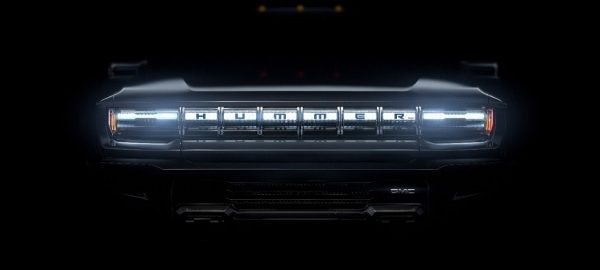
2024 GMC Hummer EV 3X Pickup gets a range boost

Filed under:
,,,,,,,

Continue reading 2024 GMC Hummer EV 3X Pickup gets a range boost

2024 GMC Hummer EV 3X Pickup gets a range boost originally appeared on Autoblog on Thu, 13 Jul 2023 16:00:00 EDT. Please see our terms for use of feeds.

Permalink | 
Email this | 
Comments

Supertruck, Super Far: GMC Introduces Longer Driving Range for the 2024 HUMMER EV 3X Pickup

Supertruck, Super Far: GMC Introduces Longer Driving Range for the 2024 HUMMER EV 3X Pickup

GM-estimated up to 381 miles of electric range on a full charge with available 24-module battery

2023-07-13

DETROIT – Today, GMC announced the extended driving range for the 2024 GMC HUMMER EV 3X Pickup: a whopping GM-estimated 381 miles of range on a full charge on the 3X trim1 with the available 24-module battery (a 26-mile increase over 2023 model year) and GM-estimated 359 miles of range on a full charge for models equipped with the available Extreme Off-Road Package2 (a 30-mile increase over the previous model year).

“For extended road trips, overlanding in remote areas or daily driving, the 2024 GMC HUMMER EV 3X Pickup will take you where you need to go, now with more driving range and confidence,” said Al Oppenheiser, chief engineer, GMC HUMMER EV. “As we expand the limits on our all-electric future, we’re excited to continue improving the range and to take the GMC HUMMER EV farther than ever for our customers and their adventures.”

The sporty 2024 GMC HUMMER EV 3X Pickup is configured for on-road driving dynamics, while the available Extreme Off-Road Package builds upon the truck’s innate off-road capability to tackle the toughest trails.

Standard features on the 3X Pickup trim include:

  • 22-inch wheels and 35-inch All-Terrain tires
  • 4-Wheel Steer with CrabWalk3 diagonal drive capability
  • Air Ride Adaptive Suspension
  • Extract Mode
  • Watts to Freedom4 launch experience
    • 0-60 mph in approximately 3.5 seconds with the standard 20-module battery
    • 0-60 mph in approximately 3 seconds with the available 24-module battery
  • Super Cruise hands-free driver assistance feature with more than 400,000 miles of compatible roads in the United States and Canada5
  • Up to 381 miles of GM-estimated driving range on a full charge1 with the available 24-module battery pack

Building onto the truck’s capability, the available Extreme Off-Road Package on the 3X trim adds:

  • 18-inch wheels and 35-inch Mud-Terrain tires
  • Four additional underbody camera views6 for 18 total camera views
  • Front e-locker and rear virtual locking differentials
  • Heavy-duty ball-spline half-shafts
  • Underbody armor consisting of five skid plates and rocker protection with built-in assist steps, as well as two underbody shields to protect the battery and drive units
  • Up to 359 miles of GM-estimated driving range on a full chargewith the available 24-module battery pack

On sale this fall to current reservation holders, the HUMMER EV 3X Pickup will start at $106,945 with DFC9 without the Extreme Off-Road Package. Production of the 3X Pickup and SUV will begin later this year at GM’s Factory ZERO Assembly Center7 in Detroit and Hamtramck, Michigan, home to GMC’s three all-electric trucks: the GMC HUMMER EV Pickup, HUMMER EV SUV and the upcoming Sierra EV8.

1Available on EV3X equipped with the available 24-module battery. Based on a full charge without the Extreme Off-Road Package. Actual range may vary based on several factors, including temperature, terrain, battery age, loading, use and maintenance.
2Available on EV3X equipped with the available 24-module battery. Based on a full charge with Extreme Off-Road Package. Actual range may vary based on several factors, including temperature, terrain, battery age, loading, use and maintenance.
3Limited to low speeds. Read the vehicle Owner’s Manual for important feature limitations and information.
4Watts to Freedom is intended for use only on a closed course and should not be used on public roads. Read the vehicle Owner’s Manual for important feature limitations and information.
5Always pay attention while driving and when using Super Cruise. Do not use a handheld device. Requires active Super Cruise plan or trial. Terms apply. Visit gmc.com/connectivity-technology/super-cruise for compatible roads and full details.
6Safety or driver assistance features are no substitute for the driver’s responsibility to operate the vehicle in a safe manner. Read the vehicle’s owner’s manual for important feature limitations and information.
7From globally sourced parts
8Sierra EV Denali Edition 1 available early 2024, by reservation only.
9The Manufacturer’s Suggested Retail Price excludes, tax, title, license, dealer fees and optional equipment. Dealer sets final price.

About GMC

GMC offers a range of premium trucks and SUVs designed and engineered to the highest standard. With vehicles like the compact Terrain and full-size Yukon, all-new Canyon and Sierra light-duty, as well as the world’s first all-electric supertruck the GMC HUMMER EV, our trucks and SUVs deliver GMC’s signature combination of intuitive technologies, precise engineering and premium execution. Built on a strong foundation of manufacturing trucks since 1902, GMC now sells in a dozen countries across the world. Details on all models are available at www.gmc.com, Instagram at @GMC, Twitter at @GMC or at www.facebook.com/gmc.

More crashes, fewer tickets: AAA tracks the impact of raising speed limits

The past decade has been a weird one for motorists. With the emissions era seemingly long behind us and modern chassis and tire tech far surpassing what was possible when the interstate system was first envisioned, state governments have taken it upon themselves to push for higher speed limits for limited-access highways. Meanwhile, modern urbanists have championed road diets and reduced limits in cities, towns and their surrounding suburbs. But whatever the results of individual projects may be, it’s difficult to measure the broader efficacy of these initiatives without years of hard data. Enter AAA

Over the past five years (with 2020 excluded as an outlier due to the pandemic), AAA conducted a study of several speed limit adjustment projects nationwide. The study included cases of speed limits being raised and lowered, and looked at projects based on roadways in four major categories — interstate highways, principal arteries, minor arteries and collectors — from all over the USA. While your local project may not have made the list, chances are there’s something comparable in the mix. Let’s take a look at some of the key takeaways.

Raising speed limits may lead to more fatal accidents

While fatalities increased on three of the roads where limits were raised, they fell on two others; a sixth showed no change. Two of the cases studied with increased fatalities were I-70 and I-95; I-84 saw a decline during the same period. While the combined total of fatalities between the three interstates increased, it was not to a statistically significant degree, AAA said. The deviations in fatalities across all three interstates were small (single digits). Those tight variances point to a small sample population; a longer-term study would likely be able to provide more definitive analysis. 

Moving away from interstates, the data get even more murky. Fatalities increased or decreased by only low-single-digit amounts on surface streets. In two cases, they increased. In two others, they went down. The remaining two showed no records for either the study period or control period. AAA also provided data for accidents resulting in non-fatal injuries or property damage only. Their trends followed those of fatal accidents, lending credibility to those figures despite the smaller sample population. 

Changing the limit doesn’t necessarily change drivers’ speeds

Conventional wisdom might dictate that higher speed limits result in higher speeds. While that’s generally true, AAA found that drivers on interstates where limits were raised don’t necessarily go hog-wild with their newfound freedom. On three interstates where the limit was increased by 5 mph (I-70 in Maryland, I-95 in Maine and I-84 in Oregon), 85th-percentile speed increases were less than 3 mph. I-84 in Oregon showed the largest mean speed increase — 4 mph — but even there, 85th percentile speeds only increased by 2.8 mph. AAA says the change made no statistically significant impact on travel times over any of the three routes, nor was there an appreciable change in traffic volume attributable to the higher speed limit.    

This also held true on arterial roads. A 5 mph increase on TX-289 (Preston Rd) resulted in an 85th percentile speed increase of just 2.1 mph. An identical change on Victory and Obama Boulevards in California resulted in an 85th percentile speed increase of 2.4 and 1.6 mph, respectively. In all three cases, AAA saw compelling evidence of reduced travel times. 

And what about cases where speed limits were reduced? AAA wasn’t able to study any interstates with reduced speed limits during the window of this study, but six arterial and collector roads were examined, five of which had their limits reduced by 5 mph. The sixth — a stretch of Southwest Capitol Highway in Oregon — was reduced by 10 mph. In only three of these cases did the observed mean or 85th percentile speed of drivers decrease: Division Street in Oregon saw an 85th percentile drop of 2.2 mph despite the mean speed of all drivers increasing by 0.8 mph. Northeast Marine Drive (also in Oregon) saw an 85th percentile drop of 1.5 mph against a mean decrease of 0.3 mph, while 85th percentile speeds on Southwest Capitol Highway increased by 0.4 mph against an average drop of 1.5 mph — and that’s on a street where the speed limit was reduced from 35 mph to 25. 

But before you grab your pitchfork and go after City Hall for dragging down your local speed limit, would you care to guess how many of those changes caused an increase in travel times? Yeah, the number’s zero. Driving 25 mph in the city might suck, but as it turns out, it’s not actually holding anybody back. Total traffic volume was unaffected, AAA says. 

Raising speed limits reduces speeding infractions

Of the conclusions suggested by AAA’s study, the most compelling was its analysis of speeding infractions. In every case where the speed limit was raised, speeding infractions declined. In the five cases where data was provided for roads whose limits were reduced, those infractions became more widespread. And unlike the fatality data we discussed above, AAA says the infraction trends were statistically significant. The increase in ticketing was especially pronounced immediately after the speed limit was reduced, which makes sense, as many drivers used to their routines were likely caught unaware by the change. Taken with the above, this suggests that drivers tend to choose their speed based on their comfort level on a given stretch of road, rather than blindly adhering to posted speed limits. 

2020-21 Ford Escape SUVs investigated over doors that could open suddenly

Most drivers don’t pay too much attention to the doors of their cars … unless they open when they shouldn’t.

In the case of Ford Escape SUVs built in 2020 and 2021, the situation has become problematic. The National Highway Traffic Safety Administration said Tuesday that it’s received reports of 25 minor injuries to occupants when doors opened while the vehicles were in motion because they failed to securely latch when closed.

According to NHTSA documents, the agency has had 118 complaints that spot welds in a door assembly bracket can fail. Many Escape owners contacted by the agency reported a popping noise when they opened the door as a bracket begins to separate. The agency says continued use could dislodge the door, and it could fail to latch when closed.

The investigation is looking at 346,000 Escapes to determine if the problem poses an “unreasonable risk” to safety and could prompt a recall by Ford. Ford says it’s cooperating.

Two years ago, the manufacturer recalled certain 2021- and 2022-model-year Escape and Bronco Sport crossovers for improperly manufactured rear brake pads that wouldn’t stop the vehicles within the government-mandated distance.

2024 Buick Envista First Drive Review: Budget belle

Filed under:
,,,,

Continue reading 2024 Buick Envista First Drive Review: Budget belle

2024 Buick Envista First Drive Review: Budget belle originally appeared on Autoblog on Tue, 11 Jul 2023 09:00:00 EDT. Please see our terms for use of feeds.

Permalink | 
Email this | 
Comments

Which electric cars can charge at a Tesla Supercharger?

The difference between
Tesla charging and non-Tesla charging.
Electrify America; Tesla
  • Tesla’s advantage has long been its charging technology and Supercharger network.
  • Now, more and more automakers are switching to Tesla’s charging tech.
  • But there are a few things non-Tesla drivers need to know about charging at a Tesla station.

A lot has hit the news cycle in recent months with regard to electric car drivers and where they can and can’t plug in. The key factor in all of that? Whether automakers switched to Tesla’s charging standard.

More car companies are shifting to Tesla’s charging tech in the hopes of boosting their customers’ confidence in going electric. 

Here’s what it boils down to:

If you currently drive a Tesla, you can keep charging at Tesla charging locations, which use the company’s North American Charging Standard (NACS), which has long served it well. The chargers are thinner, more lightweight and easier to wrangle than other brands. 

If you currently drive a non-Tesla EV, you have to charge at a non-Tesla charging station like that of Electrify America or EVgo — which use the Combined Charging System (CCS) — unless you stumble upon a Tesla charger already equipped with the Magic Dock adapter. For years, CCS tech dominated EVs from everyone but Tesla. 

Starting next year, if you drive a non-Tesla EV (from the automakers that have announced they’ll make the switch), you’ll be able to charge at all Supercharger locations with an adapter. And by 2025, EVs from some automakers won’t even need an adaptor. 

Here’s how to charge up, depending on which EV you have: 

Ford

2021 Ford Mustang Mach-E.
Tim Levin/Insider

Ford was the earliest traditional automaker to team up with Tesla for its charging tech.

Current Ford EV owners — those driving a Ford electric vehicle already fitted with a CCS port — will be able to use a Tesla-developed adapter to access Tesla Superchargers starting in the spring. That means that, if you own a Mustang Mach-E or Ford F-150 Lightning, you will need the adapter in order to use a Tesla station come 2024.

But Ford will equip its future EVs with the NACS port starting in 2025 — eliminating the need for any adapter. Owners of new Ford EVs will be able to pull into a Supercharger station and juice up, no problem.

General Motors

Cadillac Lyriq
Cadillac Lyriq.
Cadillac

GM will also allow its EV drivers to plug into Tesla stations.

Much like Ford, GM EV drivers can start to use the Tesla charging network even before the automaker equips its cars with NACS.

Starting next year, whether you’re driving a GMC Hummer, Cadillac Lyriq, or other GM electric car, you can use a Tesla charger, so long as you have an adapter.

GM will build its EVs with the NACS port starting in 2025. From that point on, GM EV drivers won’t need an adapter to charge at a Tesla location.

Rivian

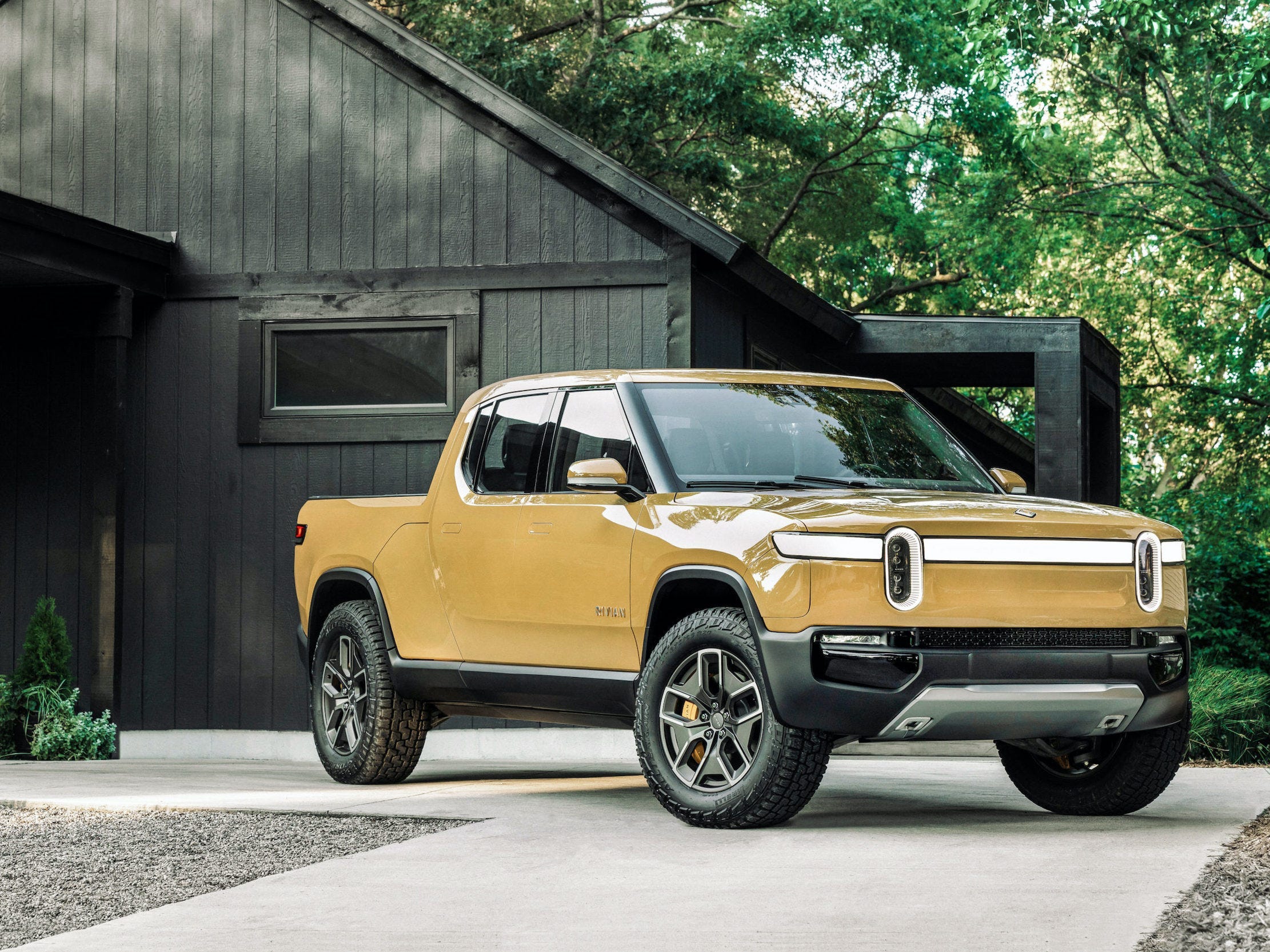
Rivian R1T.
Rivian R1T.
Andi Hedrick/Rivian

As for Rivian drivers, an adapter will also be available, in the spring.

Then, Rivian will build its R1T vehicles and upcoming R1S platform with the NACS port as standard beginning in 2025.

Volvo

The Volvo EX90 electric SUV.
The Volvo EX90.
Volvo

Current drivers of Volvo EVs can start to use an adapter to use Tesla chargers sometime mid-next year.

Those who buy an electric Volvo starting in 2025 can expect the cars will be made with the NACS port from then onward.

Polestar

The 2025 Polestar 4 electric SUV.
The 2025 Polestar 4.
Polestar

The same rules apply for owners of Polestar EVs.

You can start using the chargers in 2024 with an adapter, and expect the full experience a year later with a model year 2025 Polestar.

Mercedes-Benz

The Mercedes-Benz EQS SUV.
Mercedes-Benz

The German automaker just announced it will adopt Tesla’s NACS.

Mercedes-Benz EV drivers will have access to the Tesla network via an adapter beginning next year.

Mercedes will implement the NACS port into its vehicles built starting in 2025. 

Some automakers have not yet announced that they will make their EVs compatible with Tesla chargers. For example, Lucid is not planning on making the switch right away.
A silver Lucid Air Grand Touring Performance electric car in a driveway, with trees and blue sky in the background.
The
Lucid Air Grand Touring Performance.
Tim Levin/Insider

Lucid CEO Peter Rawlinson recently said he’s not yet convinced about the industry-wide switch to the Tesla NACS tech, but it’s likely the startup will eventually follow suit. That means Lucid drivers have to charge at a location where CCS is readily available.

Stellantis

Jeep officially unveiled its first electric SUV, the Jeep Avenger, at the Paris Motor Show.
Jeep officially unveiled its first electric SUV, the Jeep
Avenger, at the
Paris Motor Show.
Stellantis

The Jeep-maker told Reuters in a recent statement it would evaluate a potential switch to NACS.

Hyundai

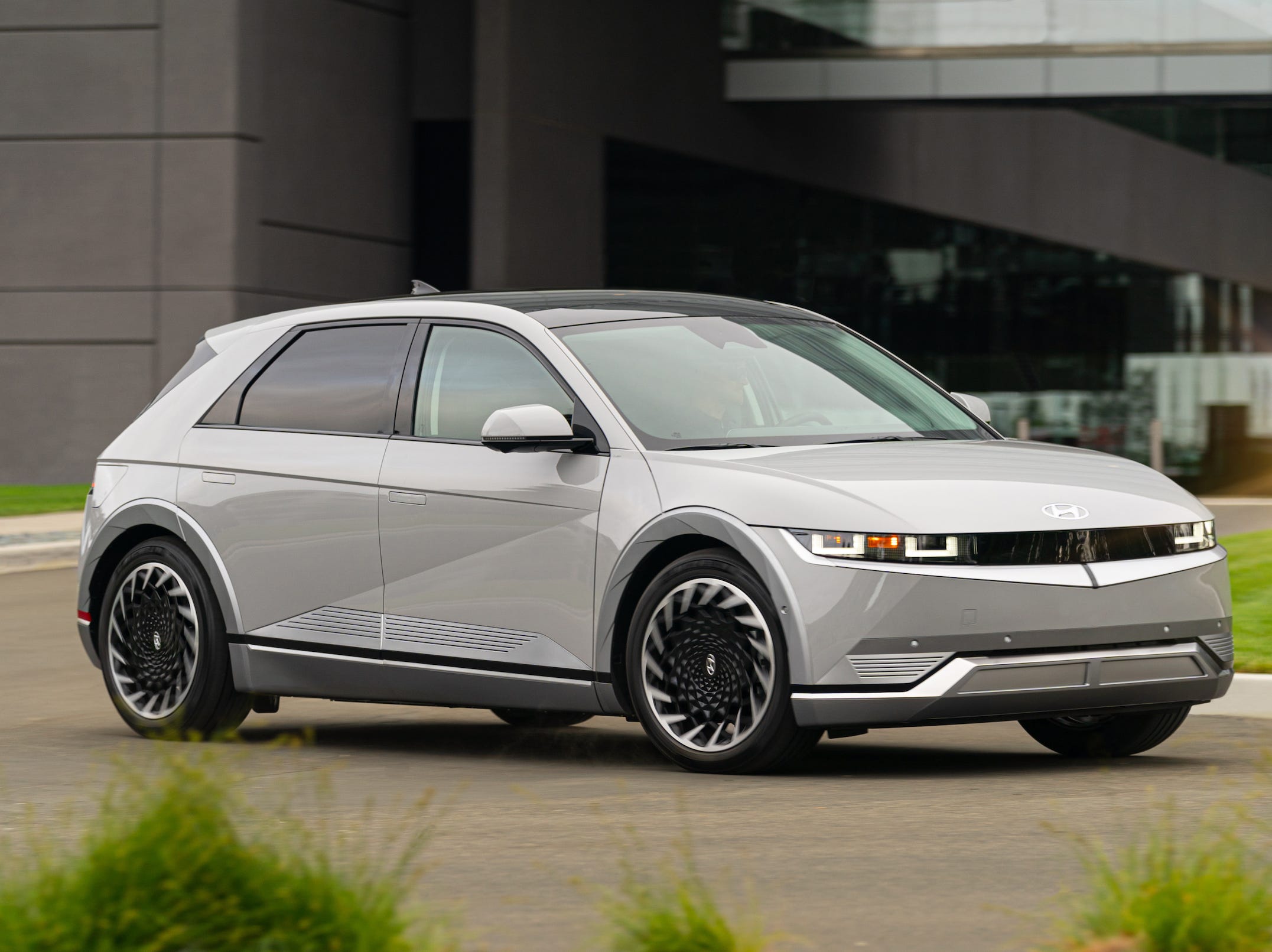
The 2023 Hyundai Ioniq 5.
Hyundai

Hyundai said it is also considering it.

It gets tricky when you look at other charging stations
Large Electrify America Chargers 258
Electrify America.
Electrify America

Currently, non-Tesla EV drivers can plug in at an Electrify America or EVgo charger given both the vehicles and the stations are equipped to handle CCS-enabled charging.

Several charging companies are now planning to convert their equipment to NACS. (You can keep an eye on which companies that is with this helpful tracker from consultancy EVAdoption.)

That means that for drivers of non-Tesla EVs, built with the NACS port in the future (for many of them, starting in 2025), these non-Tesla stations will also be able to accommodate them.

There’s a lot to keep track of in the world of EV charging. But given how important charging is to an EV owner’s experience, the space is bound to get more exciting in the coming years. 

Are you a non-Tesla EV owner? Are you planning to use the adapter to be able to charge at Tesla stations starting next year? Do you wish you waited to buy your EV until after it was built with the NACS port? Do you have a tip or opinion to share? Contact this reporter at astjohn@insider.com.

Read the original article on
Business Insider