All posts by Ozzie

GM reportedly developing 2.5-liter turbo four-cylinder

Filed under:
,,,

Continue reading GM reportedly developing 2.5-liter turbo four-cylinder

GM reportedly developing 2.5-liter turbo four-cylinder originally appeared on Autoblog on Mon, 15 May 2023 11:00:00 EDT. Please see our terms for use of feeds.

Permalink | 
Email this | 
Comments

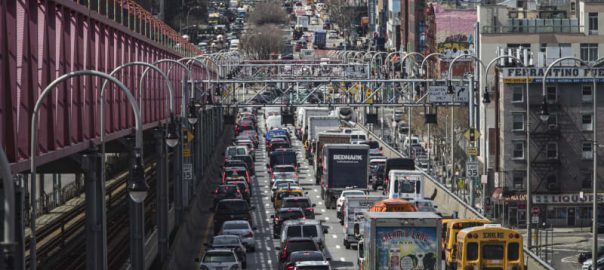
Manhattan drivers may pay congestion toll starting April 2024

New York City may begin charging motorists traveling into major parts of Manhattan as soon as April 2024. 

The congestion pricing plan — the first of its kind in the U.S. — is expected to get final approval next month. It will charge E-ZPass motorists driving south of 60th street, the city’s central business district, as much as $23. 

The Metropolitan Transportation Authority, which runs the city’s subways, buses and commuter rail lines, released on Friday a final environmental assessment of the plan that includes new concessions for low-income motorists as well as Uber and Lyft drivers.

The transit agency anticipates the U.S. Department of Transportation will give final approval after a 30-day public review period, a significant milestone that will allow construction to begin on the tolling gantries. 

“Congestion pricing means less traffic, cleaner air, safer streets, better transit,” Janno Lieber, the MTA’s chief executive officer, said during a media briefing about the plan on Thursday.

MTA officials expect congestion pricing to bring in $1 billion in new revenue a year that the agency will bond against to raise $15 billion. Those funds will help finance major capital projects like expanding the Second Avenue Subway to Harlem, updating the subway signal system and adding more elevators and escalators to stations to make them accessible. 

A six-member Traffic Mobility Review Board will determine the specific tolling structure and discounts or exemptions. Drivers using an E-ZPass may pay as much as $23 during peak hours and $17 during off-peak periods. But the final environmental assessment includes concessions. 

Passenger cars, taxis and for-hire vehicles like Uber and Lyft would only be charged once a day. 

“The MTA’s solution for rideshare would be an infeasible logistical nightmare,” a spokesperson for Lyft said in an emailed statement. “Instead of burdening drivers further, the MTA should acknowledge that our industry has for years already paid them a congestion pricing fee and focus on ensuring the program is funded fairly across all who use our roadways.”

A spokesperson for Uber declined to comment. 

For the first five years of the program, E-ZPass drivers making less than $50,000 a year would get a 25% discount starting on their 11th trip within a calendar month. The MTA estimates there are about 16,000 drivers in the area who would qualify for that reduced rate, Lieber said.

Residents of the Manhattan district with incomes below $60,000 will be granted a state tax credit. The final review also includes lower overnight tolls than what the MTA projected in August, an attempt to encourage truck drivers to pay the new fee rather than bypass Manhattan and drive through the Bronx. 

Officials estimate the tolling plan will reduce the amount of daily vehicles entering the district by as much as 20% and help boost mass-transit ridership, according to the final environmental review. 

The MTA needs the additional riders. While subway usage has steadily increased since its pandemic-lows, weekday subway ridership is about 70% of 2019 levels, according to MTA data. And systemwide ridership may only reach 80% of pre-pandemic usage by the end of 2026, the transit agency estimates.

While New York Governor Kathy Hochul backs the plan, not everyone is on board. New Jersey Governor Phil Murphy has pledged to stop its implementation. He believes New Jersey residents shouldn’t have to pay for the MTA’s revenue troubles. US Representatives Nicole Malliotakis, a Republican from the New York City borough of Staten Island, and Josh Gottheimer, a Democrat from New Jersey, say congestion pricing would increase pollution and traffic in their districts while adding another toll for their constituents.

Lieber said the tolling initiative may face lawsuits.

“We studied the traffic intersections going down almost to Philadelphia, every possible air quality scenario, all the social justice and physical impacts,” Lieber said. “I’m confident that if anyone challenges this, this is going to stand up and that we’re going to implement congestion pricing for New York.”

GM recalls nearly 1 million vehicles for airbag defect

Filed under:
,,,,,,,

Continue reading GM recalls nearly 1 million vehicles for airbag defect

GM recalls nearly 1 million vehicles for airbag defect originally appeared on Autoblog on Sat, 13 May 2023 10:07:00 EDT. Please see our terms for use of feeds.

Permalink | 
Email this | 
Comments

Junkyard Gem: 1982 Buick Riviera Diesel Coupe

Filed under:
,,,,,

Continue reading Junkyard Gem: 1982 Buick Riviera Diesel Coupe

Junkyard Gem: 1982 Buick Riviera Diesel Coupe originally appeared on Autoblog on Fri, 12 May 2023 15:00:00 EDT. Please see our terms for use of feeds.

Permalink | 
Email this | 
Comments

What Do Cold Air Intake Systems Do For Cars, Trucks, SUVs – Cold Air Intake Kits In Stock & On Sale

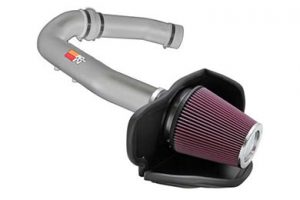
If you’re looking for a quick, easy and relatively inexpensive way to bolster your vehicle’s horsepower, a cold air intake is the way to go. One of the most popular aftermarket accessories of all time, the cold air intake, or CAI as enthusiasts know it, is a proven way to increase your engine’s output. But, instead of just installing one because everyone else is, lets ask what do cold air intakes do, and how cold air intakes work.

Choosing the Right Air Intake System

Source: What Do Cold Air Intake Systems Do For Cars, Trucks, SUVs – Cold Air Intake Kits In Stock & On Sale

Traffic Stinks!

We all have complained about traffic before. I do it, you do it, everyone does it. Because it stinks. There’s really no way around it. It’s a time-waster and we can all think of other places we’d rather be than stuck behind an old car with a bad exhaust problem for an hour or so after work. To put things in perspective, TomTom has released a very informative study that they’ve conducted that shows the worst cities for traffic. Some of it may surprise you, some of it probably won’t.

Top 10 Most Congested Cities in the United States
(report is for both North and South America)

4. Los Angeles (no shocker there)
6. San Francisco
7. Honolulu
8. Seattle
10. San Jose
11. New York City
14. Miami
15. Washington D.C.
16. Portland
17. New Orleans

The real shocker?

39. Dallas-Fort Worth

Maybe I think it’s worse when I’m stuck in it, but I was surprised by DFW being ranked number 39. It also makes me not want to travel to Los Angeles or San Francisco anytime soon. The top three most congested cities across the Americas are Rio De Janiero, Mexico City and Sao Paulo. That makes feel wonder just how bad it is down in Brazil with the World Cup going on right now.

A few more interesting findings on the report are the lightest and heaviest days for traffic. In Dallas – Fort Worth, the lightest morning commute is on Friday, while the heaviest is Tuesday. The lightest evening commute is Monday, while the heaviest is Friday, which doesn’t surprise me at all. Anyone who has been in traffic here in DFW on a Friday evening knows that it’s a parking lot all over the metroplex.

Houston and Austin are both above Dallas-Fort Worth on the list (number 23 and 25, respectively).

Check out the full report here and see where your city ranks!


Save

Why does buying a car seem so hard?

Recently a customer came by our store and, in idle conversation, asked, “Why is car buying so difficult?”  I understand why she said that, because it can be very challenging, not to mention a bit scary and can be as equally frustrating for both a customer and the dealer.  As an insider, let me explain why.

There are three main components to buying a car:  price, trade in and financing.  Today I’ll review price.

Are You a Frustrated Buyer?

Price should be the easiest part of the car buying process.  When a customer researches & test drives a car, truck, SUV or crossover and gets quotes from multiple dealerships, they should compare apples to apples. Meaning that you want to make sure you’re comparing the same vehicle with the same equipment and options.  A simple way to do this is to make sure the MSRP’s are the same.

As a salesperson, the hardest question to answer for a customer is “what’s your best price?”  When asked that question, I’ve told my sales people to show customers the invoice.  This shows what the dealer paid on that car.  Most good dealerships will gladly show you the invoice so you see in black & white where their numbers are coming from.  You should calculate in any rebates, as well as a small profit, which all dealers are entitled to make.  It’s that easy.

Here, check out this video..the audio isn’t Grammy quality, but you can still learn a lot from it

httpv://www.youtube.com/watch?v=GGWvf3jOPqU

Has your experience been that the price is the most difficult part of the car buying process? Share your experience here and check back for part two:  trading in your vehicle.  Of course, if you want to talk in person, just swing by and I’ll make it the easiest experience you’ve ever had.

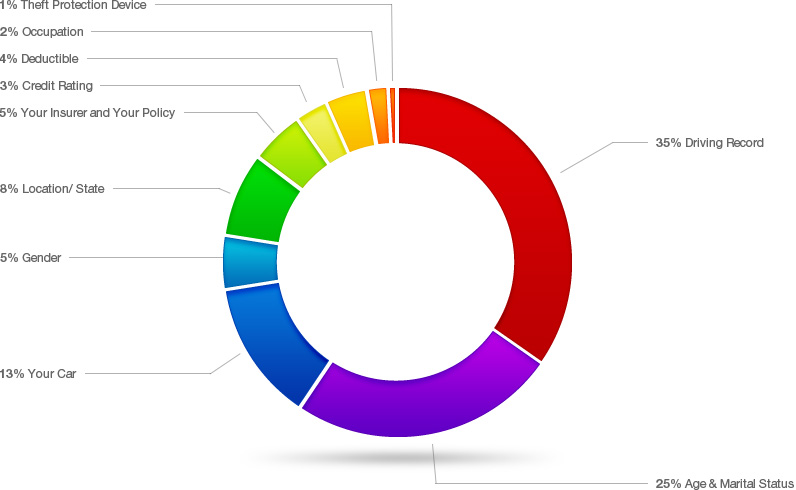
The factors that influence your insurance rates

There are many factors that influence insurance coverage

Love it or hate it, you are required to hold insurance on every vehicle you drive…period. Now don’t go trying to run to another state to escape having to hold insurance coverage, as every state requires it. Now that we’ve gotten that out of the way, let’s say that you’ve got a good driving record and all of the added claimed factors that could mess up your insurance rates are absolutely in your favor. Yet, your car insurance is still high. . Yet your unemployed, accident prone, ticket collecting buddies across the US pay less for their car insurance?

Now, I know this doesn’t seem fair, but there are many factors that go into your car insurance rate. Some of it you can change and some of it you can’t change.

You can’t change:

  • Your age
    Dick Clark and Sophia Loren notwithstanding, aging is unavoidable. And while you may be a mature-looking teen or a youthful octogenarian, the oldest and the youngest drivers are far more likely to have accidents.
  • Gender
    Whether it’s the mothering instinct or fewer NASCAR fantasies, women statistically make safer drivers.
  • Marital Status
    OK, you can change this, but there have been no reports of people marrying simply to lower their insurance rates.

You can change:

  • Geography
    Where you live matters. For instance, those living in rural America are far less likely to have a collision or a stolen car than those living in a city. But, sometimes even just moving across the street can change your rate.
  • Driving violations
    Speeding tickets, running red lights, failure to yield, etc. all count toward your auto insurance rate.
  • Your vehicle
    If you must have that cherry red Corvette or the Ferrari GTO, be prepared to pay for it. Your insurance premiums will be higher.
  • Accident claims
    While you can’t change the past, keeping your slate clean and free of accidents will hold you in better stead than lots of fender benders.
  • Credit rating
    That’s right -” many insurance companies view having a poor, or even no credit history as suggestive of higher risk.”
  • Occupation
    A little easier said than done. Believe it or not, insurers have found correlation between your occupation and risk. Makes sense that the pizza delivery guy could be a higher risk!

Even when you think you have everything in your favor there are still a few other things that can affect your insurance rates such as:

  • Miles driven per year
  • Distance to work
  • Occupation
  • Years of driving experience
  • Business use of the vehicle
  • Whether or not you currently have auto insurance
  • Theft protection devices (often results in discounts)
  • Multiple cars and drivers (another opportunity for discounts)

Now that you are thoroughly overwhelmed, your best bet is to take your time and comparison shop. It will certainly pay off in the long run.

Do you use child restraints properly?

I found a perfect example of the how important it is to not only use a protective child seat, but to understand how to install it properly. Read below. I found this story at consumer reports. Not only does it emphasize the importance of child restraints, but also wearing YOUR seat belt as well!

You never think it’s going to happen to you. I was driving up to visit a friend for a playdate, both kids, 2 and 4, in the back. This was a tough winter in the northeast, and the roads were not perfect.

I was trundling along at the speed limit, not talking on the phone, not texting, when I hit some ice on the road. I completely lost control of the car, which hit the snow bank on the side of the highway. The car rolled one-and-a-half times and ended up upside down on the side of the highway.

I was trapped in the seatbelt (thank goodness!) and the kids were suspended from their carseats. Four or five cars stopped, reaffirming my faith in human nature, and helped us all out of the car, which was totaled. The kind strangers stayed with us until the police and ambulance arrived. Bottom line, we were all OK (except for the car).

This is what I took away from the incident: We were very lucky, but it wasn’t just luck that protected us that day. I was driving a Consumer Reports recommended vehicle. The kids were in Consumer Reports’ top-rated, carseats, which happen to be inexpensive. The seats were properly installed. The kids were correctly buckled in. My 4 year old, being just under 40 pounds (he’s a skinny one), was still using the 5-point restraint.

Things could have been, and likely would have been, very different if I didn’t use Consumer Reports ratings and follow Consumer Reports advice. My kids and I walked away from a horrific accident without a scratch. It’s not an exaggeration to say that I owe my life and my family to the people here who work day in and day out to provide this information to the public.

This is just one story out of the 1,000’s of serious accidents that happen every year. Luckily, this one had a happy ending, but not all are as lucky.

httpv://youtu.be/EVu7VNUvFbc

A properly used and installed car seat is paramount when driving with children. Further, you can teach them the importance of using their seatbelts as they get older. Hopefully, by the time hey start driving, using their seatbelt will be automatic.

Just have a baby? If you have any questions on how to properly install your car seat, swing by and we’ll show you!

Save

Is Filling Your Tires With Nitrogen Better Than Oxygen

Is filling your tires with nitrogen better than filling them with oxygen? The short answer is: “Yes”.

Here’s the science to support that fact. You may be surprised to learn that the air we breathe is roughly 78% nitrogen and 22% oxygen. That same air mixture gets pumped into your tires every time you fill up. You may be thinking, “Well, if it’s 78% already, shouldn’t that be enough? I mean, does 22% oxygen really make that much of a difference?” Again, the short answer is: “Yes”.

The key is how much oxygen gets displaced by that extra nitrogen. When the nitrogen content is increased from 78% to 99%, the oxygen content drops from 21% to less than 1%. The reason that this is good is that oxygen really isn’t that great for your tires to begin with. The problem with oxygen is that it expands when the tires get hot, this causes over-inflation and actually leaks out of the tires’ sidewalls at a much faster rate than nitrogen which is a much larger molecule. Ironically, this naturally occurring “over-inflation” directly causes “underinflation” which contributes to the degradation of the rubber. As if that isn’t enough, plain air contains water vapor which is corrosive to the metal rims as well as the tire pressure sensors.

Nitrogen has been used for many years in aircraft tires, racing cars and military vehicles, but how does it affect the average passenger car? Well, that really depends on the type and the amount of driving you do, as well as how faithfully you check your tire pressure. Not everyone has tire pressure monitors, though they are becoming standards on most new vehicles.

Your best bet is to give our service department a call and we can evaluate and advise you on whether or not nitrogen filled tires are right for you and your driving habits and circumstances.